Learn more about the scientific community coming into office in January
By Mary Randolph edited by Claire Cameron
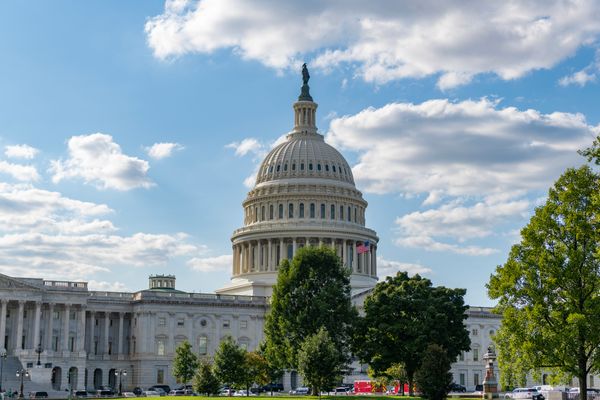 The upcoming Congress could surpass the current record of 20 physicians in elected positions. Just dance via Shutterstock
Tuesday’s midterm elections saw dozens of historic wins across the country. Some of these newly elected officials to the Senate, House of Representatives and state governorships are health care professionals, scientists or engineers.
The current Congress includes 20 physicians, a record that the upcoming Congress could surpass.
Here’s what you need to know about some of the politicians who will be bringing a scientific background into public office.
On supporting science journalism
If you're enjoying this article, consider supporting our award-winning journalism by subscribing. By purchasing a subscription you are helping to ensure the future of impactful stories about the discoveries and ideas shaping our world today.
Abdul El-Sayed
Democrat Abdul El-Sayed, an epidemiologist by training, was elected to the Senate for the state of Michigan. El-Sayed, who previously led Detroit’s public health department, told Scientific American in October that he sees many parallels between the practice of science and public policy.
“Once you train in the sciences, you don’t leave that scientific approach to thinking and that rigor of thinking,” he said. “And I try to bring that to policy problems.”
Annie Andrews
Democrat Annie Andrews flipped a Senate seat in South Carolina, defeating the incumbent Republican Darline Graham, who succeeded her brother, Lindsey Graham, after his death. Andrews worked as a pediatrician in South Carolina and Washington, D.C., until earlier this year.
Amy Acton
The Ohio public first came to know Amy Acton when she served as the state’s chief public health officer during the COVID pandemic. Now Acton, a Democrat, will serve as Ohio’s governor.
She beat biotech billionaire Vivek Ramaswamy to become Ohio’s second Democratic governor in 35 years and the state’s first elected female governor.
Josh Green
Democrat Josh Green, a physician, won a second term as governor of Hawaii on Tuesday, beating Republican challenger Gary Cordery by 45 percentage points. He and Acton are the only two physician-governors in the country.
Jasmine Clark
Jasmine Clark, a microbiologist at Emory University, won a House of Representatives seat in Georgia’s 13th district. Clark, a Democrat, will represent parts of the city of Atlanta and will be the first Black woman with a science Ph.D. in Congress.
Rebecca Bennett
Democrat Rebecca Bennett, a former Navy pilot, who worked in the health care industry and has a degree in chemical engineering, flipped New Jersey’s seventh congressional district, which stretches across the northern and central parts of the state. She beat the two-term, incumbent Republican Tom Kean, Jr.
Christina Bohannan
Christina Bohannan flipped Iowa’s first district, which stretches from the Des Moines suburbs to the southeastern corner of the state. Also a Democrat, Bohannan has worked as an environmental engineer and a lawyer. She beat Republican incumbent Mariannette Miller-Meeks, a physician, by nearly 10 points.
Michell Berman
Democrat Mitchell Berman, an emergency room nurse, flipped Wisconsin’s first district, narrowly beating incumbent Bryan Steil and turning the district, which covers southeastern Wisconsin, blue for the first time in more than 30 years.
A newcomer to politics, Berman spent more than a decade as a nurse at the U.S. Department of Veterans Affairs.
Elaine Luria
Elaine Luria worked as a nuclear engineer for the U.S. Navy for two decades. She won the House seat for Virginia’s second district, which covers Virginia Beach and parts of the state’s coast. A Democrat, she previously served as the district’s representative from 2019 to 2023.
Adam Hamawy
Democrat Adam Hamawy, a plastic surgeon and former U.S. Army physician, won New Jersey’s 12th district. He served as a trauma surgeon in Iraq and has since served as a volunteer doctor in war and disaster zones, including Haiti, Sudan and Gaza.
Daniel Biss
Daniel Biss, a mathematician and former assistant professor at the University of Chicago, won the House seat in Illinois’s ninth district in a landslide after serving as the mayor of Evanston, Ill., for five years.
Richard Pan
Richard Pan, a Democrat and a pediatrician, won the House seat for California’s sixth district, which covers northern and west Sacramento. Pan was a member of the California State Senate from 2014 to 2022, when he championed vaccine mandates and protections, and unsuccessfully ran for mayor of Sacramento in 2024.
Jacqui Irwin
Jacqui Irwin, who worked as a systems engineer before entering politics, won a House seat in California’s 26th district, which covers most of Ventura County.
John Cowan
Republican John Cowan, a neuroscientist, won a House of Representatives seat in Georgia’s 11th district. It will be his first position in public office after he unsuccessfully ran against then representative Marjorie Taylor Greene in the state’s 14th district.
Andy Harris
Republican and former anesthesiologist Andy Harris won reelection as representative of Maryland’s first district, which covers the state’s eastern shore.
Ronny Jackson
Ronny Jackson, a Republican who served as physician to the president during Barack Obama’s second term and Donald Trump’s first term, won reelection in Texas’s 13th district, which includes the Texas panhandle.
John Joyce
Republican John Joyce won reelection in Pennsylvania’s 13th district, where he’s served since 2019. Joyce is a dermatologist by training.
Rich McCormick
Rich McCormick, an emergency physician and a former military doctor, won reelection in Georgia’s seventh district, which includes the northern parts of the Atlanta metropolitan area.
Bob Onder
Republican physician Bob Onder won a second term in Missouri’s third district, beating Democratic challenger and environmental chemist Bethany Mann by eight percentage points.
Ami Bera
Democratic physician Ami Bera won an eighth term in the House of Representatives and will represent California’s third district, which was recently redrawn. Bera previously served as the chief medical officer for the County of Sacramento.
Herb Conaway
Democrat Herb Conaway won a second term as the representative for New Jersey’s third district. A physician specializing in internal medicine, Conaway is currently the only member of the newly elected Congress to hold a medical and law degree.
Maxine Dexter
Democrat Maxine Dexter was elected to represent Oregon’s third district, which includes most of Portland, for a second term. Dexter is a pulmonologist.
Kelly Morrison
Obstetrician-gynecologist Kelly Morrison won a second term in Minnesota’s third district. With the loss of incumbent Republican Roger Marshall in Kansas’s Senate race, Morrison will be the only ob-gyn in Congress.
Raul Ruiz
Democrat Raul Ruiz, an emergency physician, won an eighth term as representative of California’s 25th district, beating Republican challenger Joe Males by nearly 30 percentage points.
Kim Schrier
Democrat Kim Schrier was the first pediatrician elected to Congress in 2018. She won reelection in Washington’s eighth district for a fifth term.
A number of races with scientists or health care professionals in the running have not been called yet. These candidates include Democratic nurse Kristina Knickerbocker in Ohio; Democratic nuclear engineer Chris Jones in Arkansas; Democratic physician Amish Shah in Arizona; Republican physician Scott DesJarlais in Tennessee; Republican physician Mike Kennedy in Utah; Republican urologist Greg Murphy in North Carolina; Democrat and former NASA chief of staff Bale Dalton in Florida; and Democratic Army engineer Dwayne Romero in Colorado.
Editor’s Note (11/5/26): This is a developing story and will be updated.
Great science journalism requires human expertise, time, effort and creativity. And it costs money. That’s why I and the journalists here at Scientific American hope you’ll join our community.
When you subscribe, you are supporting staff and freelance journalists who are passionate about telling science stories that are true, important and compelling. Our editors and reporters are often experts in their fields, which means they understand the nuances of big discoveries and can untangle the breakthroughs from the hype. With a subscription, you are also supporting rigorous fact-checking to ensure the words we publish are precise and accurate. And you’re supporting original illustrations, graphics and photos that bring you closer to an advanced laboratory, an ice sheet in Antarctica or a space mission in orbit. You’re helping us craft other types of high-quality journalism as well: Our newsletters are carefully written, edited and curated by staffers you have or will come to know and love. Our Science Quickly podcast is based on original reporting, collaboration with editors and scientists and exacting production.
Subscriptions keep this engine running so we can continue to deliver thoughtful, rigorous and independent science journalism to you. In an era of viral misinformation, this work is crucial. If you value what we do, I hope you’ll consider joining us as a subscriber