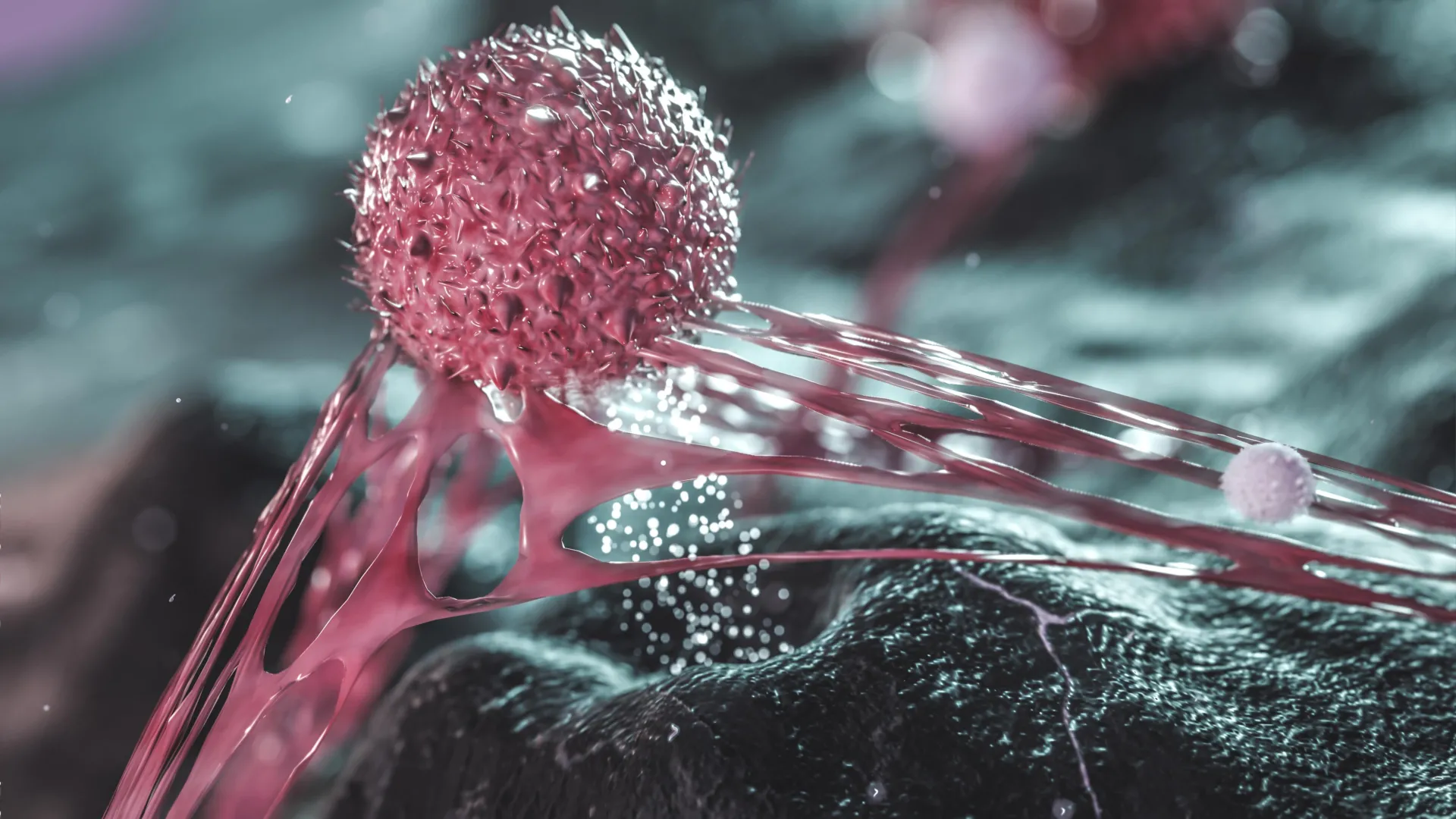
 Scientists have discovered a surprising link between fructose, cholesterol-lowering statins, and the spread of aggressive ovarian cancer, potentially revealing a new vulnerability in cancer treatment. Credit: Shutterstock
A common sugar found in many foods and sweetened drinks may play an unexpected role in helping aggressive ovarian cancer spread. Researchers at The Wistar Institute have discovered that cancer cells surviving chemotherapy can release fructose, which acts as a signal that encourages nearby tumor cells to break free and spread.
The findings, published in Nature Aging, reveal a previously unknown way that cancer cells can continue influencing a tumor even after treatment has stopped them from multiplying. The discovery also raises important questions about whether dietary sugar and commonly prescribed cholesterol medications could affect how cancer progresses.
"Some cancer cells that survive chemotherapy aren't dividing anymore, but they're still biologically active," said Aidan Cole, Ph.D., a postdoctoral fellow in the lab of Katherine Aird, Ph.D., at The Wistar Institute and first author on the study. "Instead, they continue to release molecules that send signals to nearby cells. Our study is among the first to show that a nutrient -- in this case, fructose -- can act as one of those signals."
Why Ovarian Cancer Often Returns After Chemotherapy
Most patients with ovarian cancer receive platinum-based chemotherapy, a treatment that uses drugs containing platinum to damage the DNA of cancer cells and prevent them from reproducing. Although many patients initially respond well, the cancer eventually returns in most cases. It also frequently spreads throughout the abdominal cavity, the space inside the abdomen that contains organs such as the stomach, intestines, and liver.
This spread, known as metastasis, is responsible for approximately 90% of ovarian cancer deaths. Understanding what allows cancer cells to escape from their original location and establish new tumors is therefore a major priority for researchers.
Previous studies have suggested that cancer cells surviving chemotherapy may contribute to recurrence even when they are no longer actively dividing. These surviving cells can continue producing and releasing a mixture of substances that influence the behavior of surrounding cells.
To investigate this process, Cole and his colleagues developed an experiment that separated the surviving cancer cells from the molecules they released. They discovered that these released substances, even without the surviving cells themselves, were enough to significantly increase cancer spread in a preclinical model.
"As far as we know, this is the first time anyone has shown, in a preclinical model rather than just a dish, that it's the molecules these cells release -- not the cells themselves -- that drive the cancer's spread," said Cole.
A Common Sugar Emerges as a Surprising Cancer Signal
The next challenge was identifying which substances were responsible for encouraging cancer cells to spread. The researchers discovered an unexpected culprit: fructose.
Fructose is a naturally occurring sugar found in fruit, honey, and other foods. It is also a component of table sugar and high fructose corn syrup, a sweetener frequently used in soft drinks and processed foods.
The study revealed that cancer cells surviving chemotherapy could produce fructose and release it into their surroundings. Rather than simply serving as an energy source, the sugar acted as a chemical messenger that encouraged neighboring cancer cells to become more capable of spreading.
The researchers also uncovered another concerning possibility. In their preclinical experiments, consuming high amounts of fructose comparable to those found in sugary drinks could promote signals associated with cancer spread even without chemotherapy treatment.
This observation suggests that diet might influence cancer progression through a mechanism scientists had not previously recognized. Fructose consumption is particularly relevant in the United States, where high fructose corn syrup can account for approximately 8% to 20% of daily calorie intake in some individuals.
Unlike many factors that influence cancer risk and progression, dietary fructose intake can be changed. That raises the possibility that nutritional strategies might eventually become part of efforts to limit cancer spread.
However, researchers have not yet tested whether reducing fructose consumption improves outcomes in patients with ovarian cancer. The findings do not establish that eating sugar causes cancer to spread in humans, and additional research is needed before specific dietary recommendations can be made based on this mechanism.
How Fructose Helps Cancer Cells Break Free
To understand how fructose encourages cancer spread, the researchers examined what happens inside cancer cells exposed to the sugar.
They used several advanced methods to investigate the biological changes involved, including a CRISPR screen. This technique allows scientists to systematically examine genes and identify which ones influence a particular cellular process.
The experiments revealed that fructose suppresses cholesterol production in neighboring cancer cells.
Although cholesterol is often discussed in connection with heart disease, it also serves essential functions throughout the body. It is an important component of cell membranes, the thin outer layers that surround cells and help regulate how they interact with their environment.
In this case, cholesterol helps maintain the connections that hold neighboring cells together. These connections act somewhat like biological glue, making it harder for cancer cells to separate from one another.
When fructose reduces cholesterol production, those connections weaken. As a result, cancer cells can detach more easily, potentially allowing them to escape and spread to other locations.
This discovery provides a possible explanation for how a common nutrient can influence one of the most dangerous aspects of cancer.
A Surprising Connection Between Statins and Cancer Spread
The cholesterol finding also led researchers to investigate an unexpected question involving statins, medications widely prescribed to lower cholesterol.
Approximately 39 million people in the United States take statins. These drugs work by reducing the body's production of cholesterol and are commonly used to lower the risk of heart attacks and strokes.
Because fructose appeared to promote cancer spread by suppressing cholesterol production, the research team wanted to know whether statins might produce similar effects.
Their experiments showed that statins alone could weaken the connections between cancer cells, making it easier for them to separate and escape.
The finding raises questions about whether cholesterol-lowering medications could influence the effectiveness of chemotherapy in certain situations. Researchers are now investigating that possibility, but they emphasize that the results have not been demonstrated in patients and are not a reason for anyone to discontinue prescribed statins.
"We haven't tested this effect in patients yet, but it raises questions about combining cholesterol-lowering drugs with chemotherapy, especially since ovarian cancer is most common in postmenopausal women who are often already on statins," said Katherine Aird, Ph.D., professor and co-leader of the Molecular and Cellular Oncogenesis Program in the Ellen and Ronald Caplan Cancer Center at The Wistar Institute, and senior author of the study.
Could Fructose Also Help Other Cancers Spread?
Although the research focused on ovarian cancer, the scientists suspect that the same biological process could occur in other forms of the disease.
Cancers affecting organs within the abdomen and torso can also spread to nearby tissues and organs. If fructose influences the connections between cancer cells in a similar way, the discovery could have implications beyond ovarian cancer.
"We think other cancers that spread within the torso -- pancreatic, colon, liver -- could behave similarly. We can't call it universal yet, but we think the effects are not just limited to ovarian cancer," said Aird.
Aird and Cole have already begun designing additional experiments to determine whether their findings can be reproduced in pancreatic, colon, liver, and other cancers.
The research opens a new avenue for understanding how cancer spreads, particularly after chemotherapy. It also suggests that the relationship between nutrients, cholesterol production, and cancer cell behavior may be more complicated than previously understood.
While the potential implications for diet and medication remain uncertain, identifying fructose as a signal that helps cancer cells break free could eventually point researchers toward new strategies for preventing metastasis and improving cancer treatment.
Materials provided by The Wistar Institute. Note: Content may be edited for style and length.