- Pirelli invests $1.2 billion to boost its Cyber Tire technology
- Sensors are embedded directly into the tire
- Info is transmitted over Bluetooth to improve driver assistance systems
Today’s vehicles are rapidly becoming insanely powerful pieces of technology, with the ability to sense the world around them, drive autonomously and automatically update software over-the-air.
But Pirelli thinks the historically passive tire can work harder, providing data that can interact with a vehicle’s electronics to improve existing Advanced Driver Assistance Systems (ADAS) and even detect road hazards, feeding the information back to local authorities to support infrastructure maintenance planning.
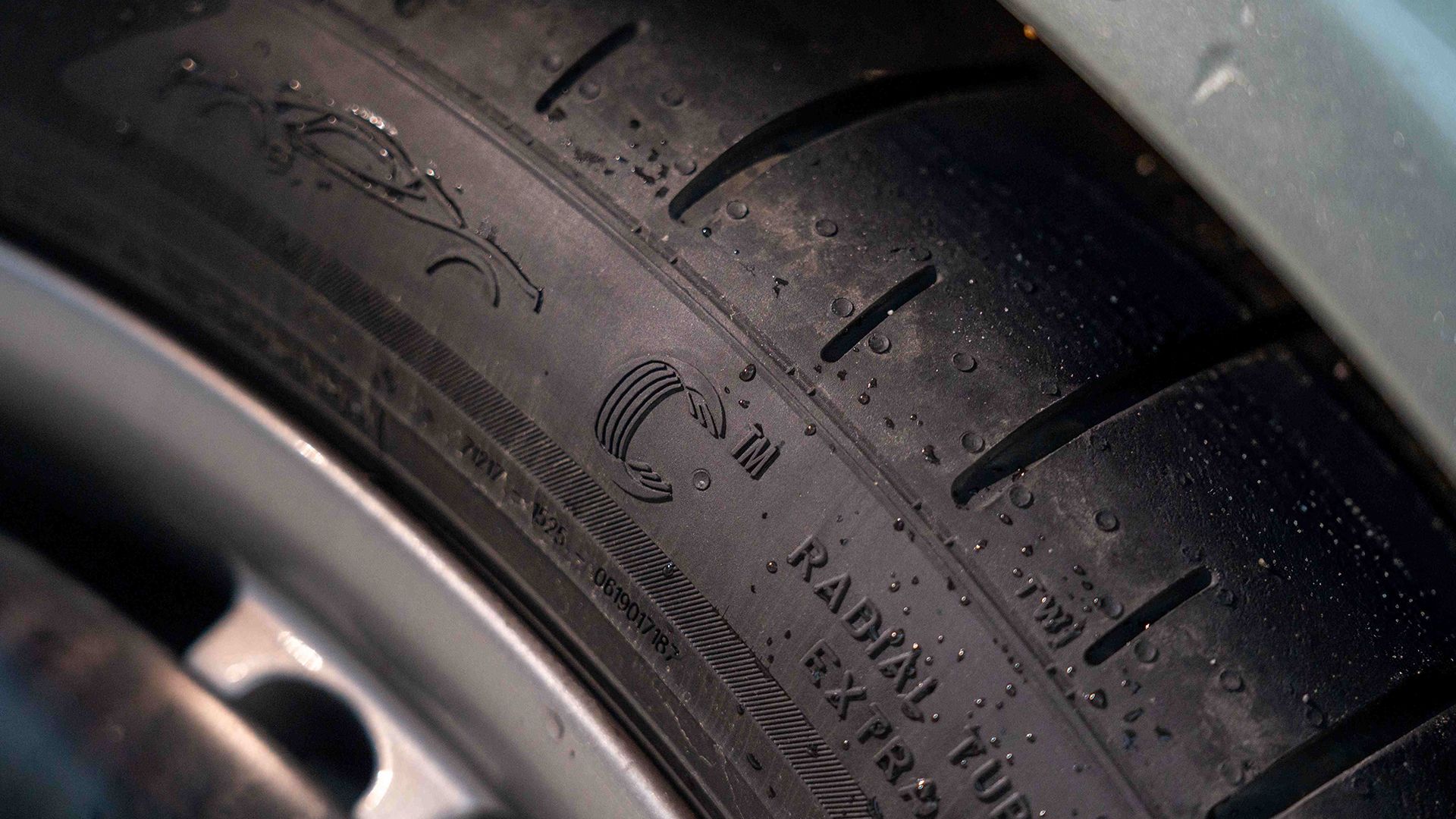
The Italian company’s Cyber Tire is the first of its kind to arrive fresh out of the factory sporting embedded sensors that transfer data to a vehicle via Bluetooth.
Pirelli says the tread collects info on tire pressure, temperature and acceleration, with the ability to detect skid risks at an early stage and prepare the traction control and braking systems to deal with it early.
In high performance machines, the tires can feed real-time temperature, tread depth and rotational data back to the driver and potentially adjust its traction control profile to deal with any minute changes.
Announcing an investment of $1.2 billion, Pirelli says it will create some 1,000 new jobs at its Rome facility to develop the Cyber Tire for wider adoption. In fact, it aims to boost production capacity to approximately six million car tires annually by 2033.
But there’s a slight catch — the first production vehicle to come as standard with Pirelli’s tire technology is the extremely limited-edition, $3.4 million (around £3.1 million / AU$5.12 million) Pagani Utopia Roadster.
In that vehicle, Pirelli’s software, which was co-developed with Bosch, allows the vehicle to recognize the exact tire fitted and automatically adjust the stability control program to suit.
It’s a bit like having Formula 1 race engineers tracking real-time tire data, only without all the fireproof suits and hand signals.
Analysis: Tires could be key to autonomous driving
Almost every single component of the modern vehicle is studying to get smarter, whether that’s rubber that automatically deploys studs when it detects freezing conditions — a la Nokian Hakkapeliitta 01 — or radar-controlled suspension that can sense potholes to soften the blow.
But as our vehicles become increasingly autonomous, carmakers will look to embed sensors in every possible surface in order to collect as much data as possible.
Pirelli’s recent investment in its Cyber Tire technology could be a sign that it sees a profitable future in fitting its cutting-edge rubber to highly autonomous vehicles over the next decade.
The Italian tire-maker says that its technology can collect data on road surfaces and even feedback to local authorities in order to improved infrastructure.
But it goes on to admit this role is expected to become “even more important as autonomous driving technology evolves”.
“Since the tire is the vehicle’s only point of contact with the road, Cyber Tire transforms this interaction into information that the vehicle can use, effectively giving it what Pirelli calls a ‘sense of touch’”, the company writes.
(Image credit: Tesla)However, improvements in tread patterns and rubber compounds already means replacing tires is now arguably more expensive than it has ever been, and the addition of sensors, built-in batteries and Bluetooth modules is likely to see those costs spiral further.
The highly-autonomous connected car feels like a sci-fi dream that’s rapidly being realized, but it’s also increasingly becoming an excuse for automakers and Tier One suppliers to boost their profits.
Only recently, reports surfaced of the small-print that accompanies private ownership of Tesla's highly autonomous Cybercab. Wired described it as a "subscription hell", which includes expensive monthly payments and ownership contracts that essentially sign over all power to Tesla.
There has to come a point when we ask: do we really want this future or would it be better to regain control of our mobility rather than hand it over to massive tech companies?