Samsung S90H review: Two minute review
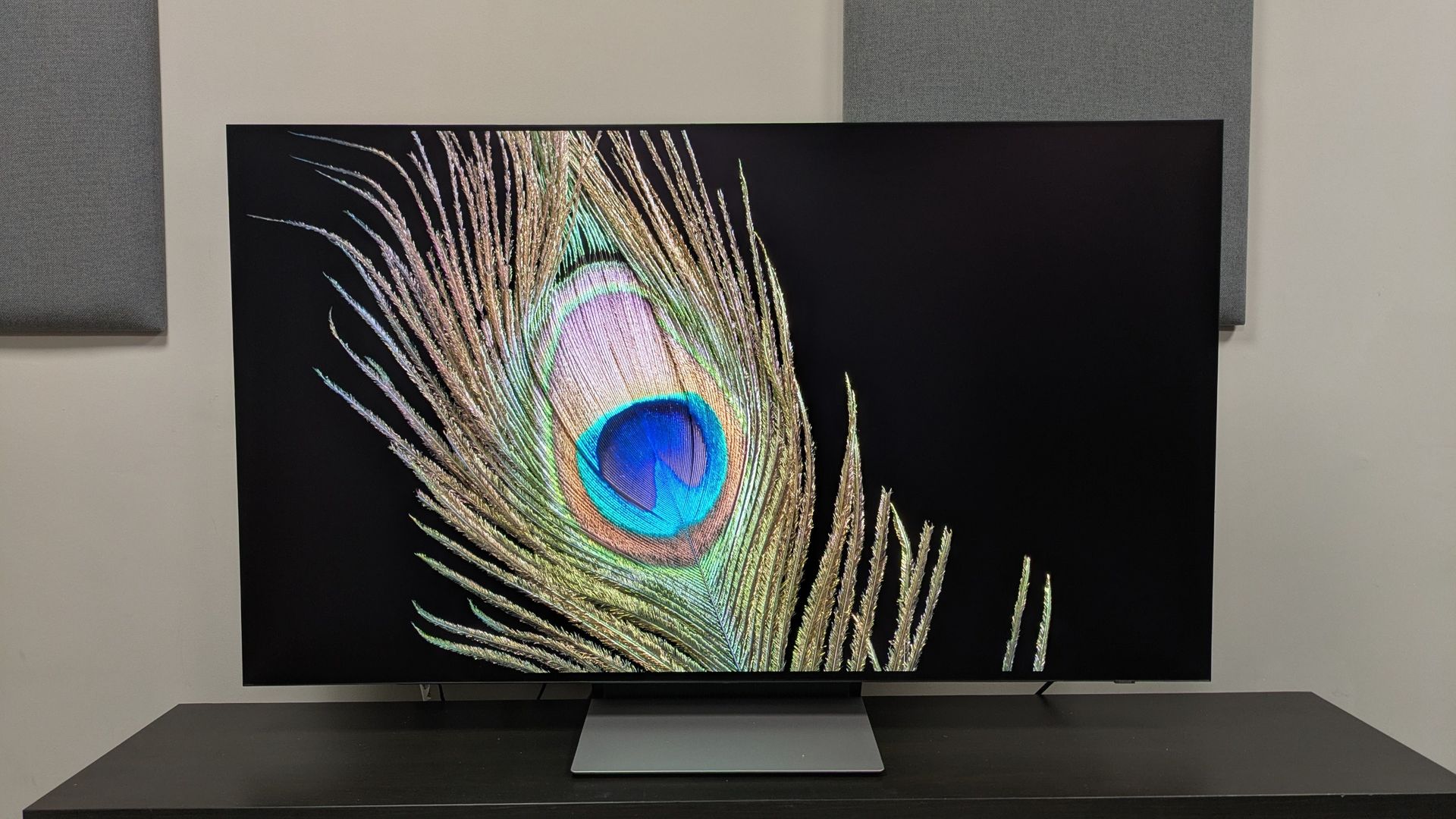
The Samsung S90H is the brand’s mid-range OLED TV for 2026. It delivers brilliant performance and features across the board, putting it up there with the best TVs of the year. While it doesn’t quite dethrone the rival LG C6 for me, the S90H proved to be a worthy opponent when I put the two side-by-side.
Picture quality is the S90H’s best highlight. With an effective anti-glare screen, it’s perfect for OLED viewing in a bright room, without many compromises. It delivers vibrant, punchy colors, powerful contrast and crisp, realistic textures. While there were black crush issues during some scenes, there were settings to mitigate this, meaning the S90H delivers picture quality that’s up there with the best OLED TVs.
The S90H is one of the best gaming TVs on the market. With a full suite of features, including 4K 165Hz and full VRR, and an ultra-low input lag time of 9.2ms (4K 60Hz), the S90H delivers strong gaming performance.
The S90H’s built-in sound is pretty good overall, being accurately connected to the action on screen, with punchy bass and good width. The S90H’s AI Sound is also competent and improves on the standard built-in sound, although I still found speech and mid-tones could get a bit muddled at times. While its built-in speakers are good enough for casual viewing, I’d recommend adding one of the best soundbars to match its fantastic picture.
Priced similarly to its rival LG C6, the S90H is very good value for money. It covers pretty much every base you’ll need and is available in sizes 42-83-inch. A 55-inch model will currently cost you $1,199 / £1,199 / AU$2,995, and while there are cheaper TVs with similar features available, the S90H offers great bang for your buck.
Samsung S90H review: Prices & release dates
- Release date: May 2026
- 42-inch: $999 / £899 / AU$1,995
- 48-inch: $1,099 / £999 / AU$2,395
- 55-inch: $1,199 / £1,199 / AU$2,995
- 65-inch: $1,499 / £1,6,99 / AU$3,995
- 77-inch: $2,499 / £2,499 / AU$5,495
- 83-inch: $3,499 / £3,599 / AU$7,495
As Samsung’s mid-range 2026 OLED TV, the S90H sits above the entry-level Samsung S85H and below the flagship Samsung S95H (known as the S99H in the UK). It’s available in six sizes, from 42-inch to 83-inch. The above prices are what you can expect to pay at the time of writing (November 2026).
The 55-inch model I tested launched for $1,999 / £1,799 / AU$2,995 in May/June 2026. Since its release, prices have fallen in all sizes in the US and UK, with the 55-inch model now priced at $1,199 / £1,199 / AU$2,995. (Prices remain unchanged in Australia.) The 55-inch LG C6, the S90H’s direct rival, currently retails for $999 / £1,199 / AU$2,495, and I expect the S90H’s prices will fall in line with the C6’s soon.
Samsung S90H review: Specs
Screen type
OLED
Refresh rate
165Hz
HDR support
HDR10, HDR10+, HLG
Audio support
Dolby Atmos
Smart TV
Tizen
HDMI ports
4 x HDMI 2.1
Built-in tuner
ATSC 1.0
Samsung S90H review: Benchmark results
Previous1 / 4NextBrightness measurements
HDR Filmmaker ModeHDR StandardSDR Filmmaker ModeSDR StandardSamsung S90HHDR Filmmaker Mode (10% window)1689HDR Filmmaker Mode (Fullscreen)305LG C6HDR Filmmaker Mode (10% window)1427HDR Filmmaker Mode (Fullscreen)247Samsung S95H/S99HHDR Filmmaker Mode (10% window)2739HDR Filmmaker Mode (Fullscreen)44907501,5002,2503,000nitsHDR Filmmaker Mode DataProductHDR Filmmaker Mode (10% window) (nits)HDR Filmmaker Mode (Fullscreen) (nits)Samsung S90H1689305LG C61427247Samsung S95H/S99H2739449Samsung S90HHDR Standard Mode (10% window)1677HDR Standard Mode (Fullscreen)329LG C6HDR Standard Mode (10% window)1364HDR Standard Mode (Fullscreen)243Samsung S95H/S99HHDR Standard Mode (10% window)2831HDR Standard Mode (Fullscreen)46307501,5002,2503,000nitsHDR Standard DataProductHDR Standard Mode (10% window) (nits)HDR Standard Mode (Fullscreen) (nits)Samsung S90H1677329LG C61364243Samsung S95H/S99H2831463Samsung S90HSDR Filmmaker Mode (10% window)260SDR Filmmaker Mode (Fullscreen)163LG C6SDR Filmmaker Mode (10% window)333SDR Filmmaker Mode (Fullscreen)237Samsung S95H/S99HSDR Filmmaker Mode (10% window)220SDR Filmmaker Mode (Fullscreen)2190100200300400nitsSDR Filmmaker Mode DataProductSDR Filmmaker Mode (10% window) (nits)SDR Filmmaker Mode (Fullscreen) (nits)Samsung S90H260163LG C6333237Samsung S95H/S99H220219Samsung S90HSDR Standard Mode (10% window)512SDR Standard Mode (Fullscreen)299LG C6SDR Standard Mode (10% window)391SDR Standard Mode (Fullscreen)234Samsung S95H/S99HSDR Standard Mode (10% window)229SDR Standard Mode (Fullscreen)2290150300450600nitsSDR Standard DataProductSDR Standard Mode (10% window) (nits)SDR Standard Mode (Fullscreen) (nits)Samsung S90H512299LG C6391234Samsung S95H/S99H229229
HDR color gamut
Closer to 100% is better. Taken using a colorimeter and test pattern generator.
Samsung S90HUHDA-P399.3BT.202076.5LG C6UHDA-P399.7BT.202075.9Samsung S95H/S99HUHDA-P399.9BT.202089.20255075100HDR Filmmaker Mode DataProductUHDA-P3 ()BT.2020 ()Samsung S90H99.376.5LG C699.775.9Samsung S95H/S99H99.989.2Picture accuracy
A lower score is better. Taken using a colorimeter and test pattern generator.
SDR Delta-E
Samsung S90H2.4LG C61.3Samsung S95H/S99H1.60123SDR Delta-E DataProductValueSamsung S90H2.4LG C61.3Samsung S95H/S99H1.6Input lag
Lower is better. Taken using a Leo Bodnar 4K HDMI Video Signal Lag Tester.
Samsung S90H4K 60Hz9.21080p 120Hz4.8LG C64K 60Hz9.21080p 120Hz4.7Samsung S95H/S99H4K 60Hz9.51080p 120Hz5012345678910msHDR Filmmaker Mode DataProduct4K 60Hz (ms)1080p 120Hz (ms)Samsung S90H9.24.8LG C69.24.7Samsung S95H/S99H9.55 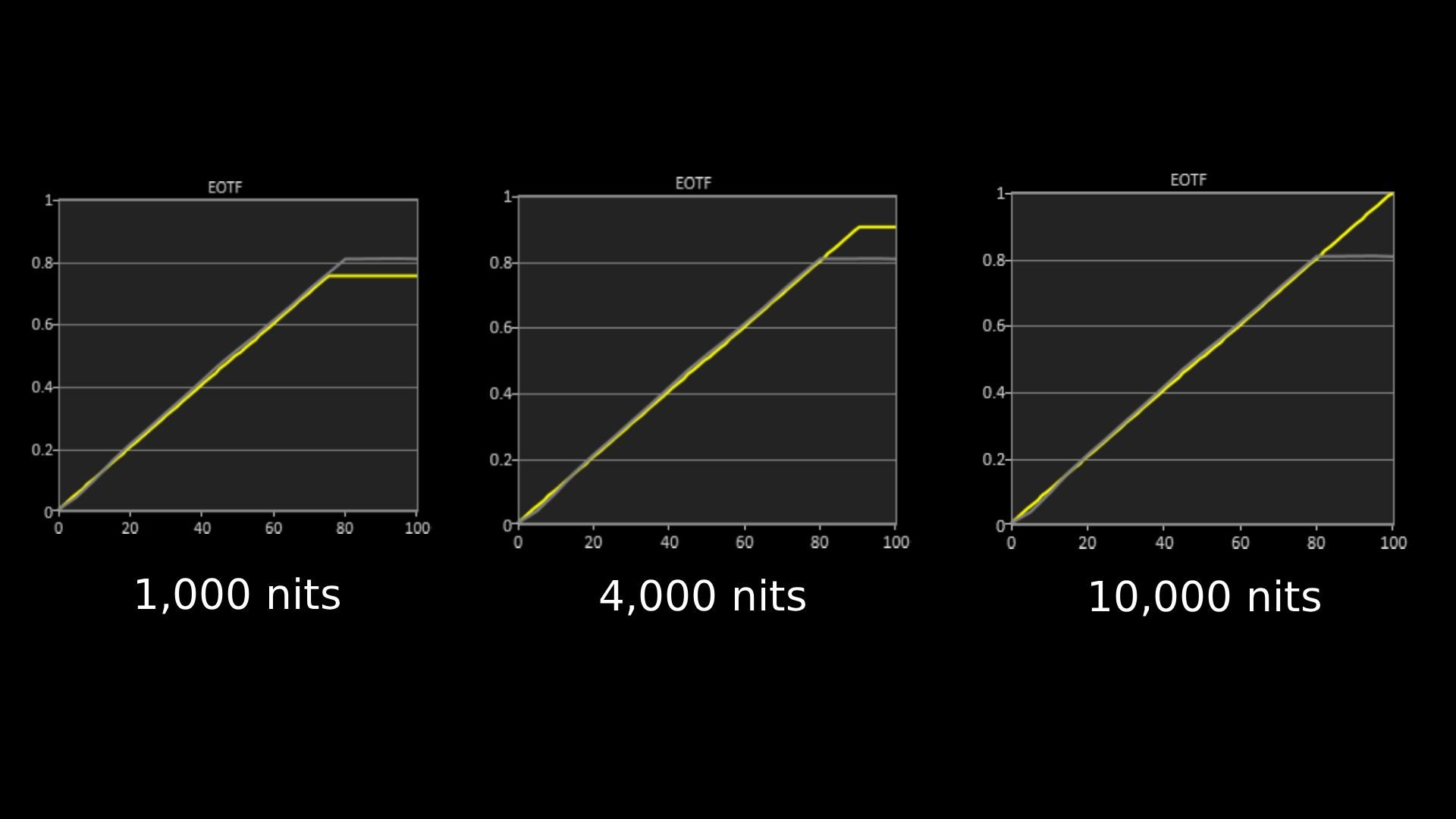
Samsung S90H review: Features
- Glare Free screen
- WOLED panel on 55-inch UK model
- NQ4 AI Gen 3 processor
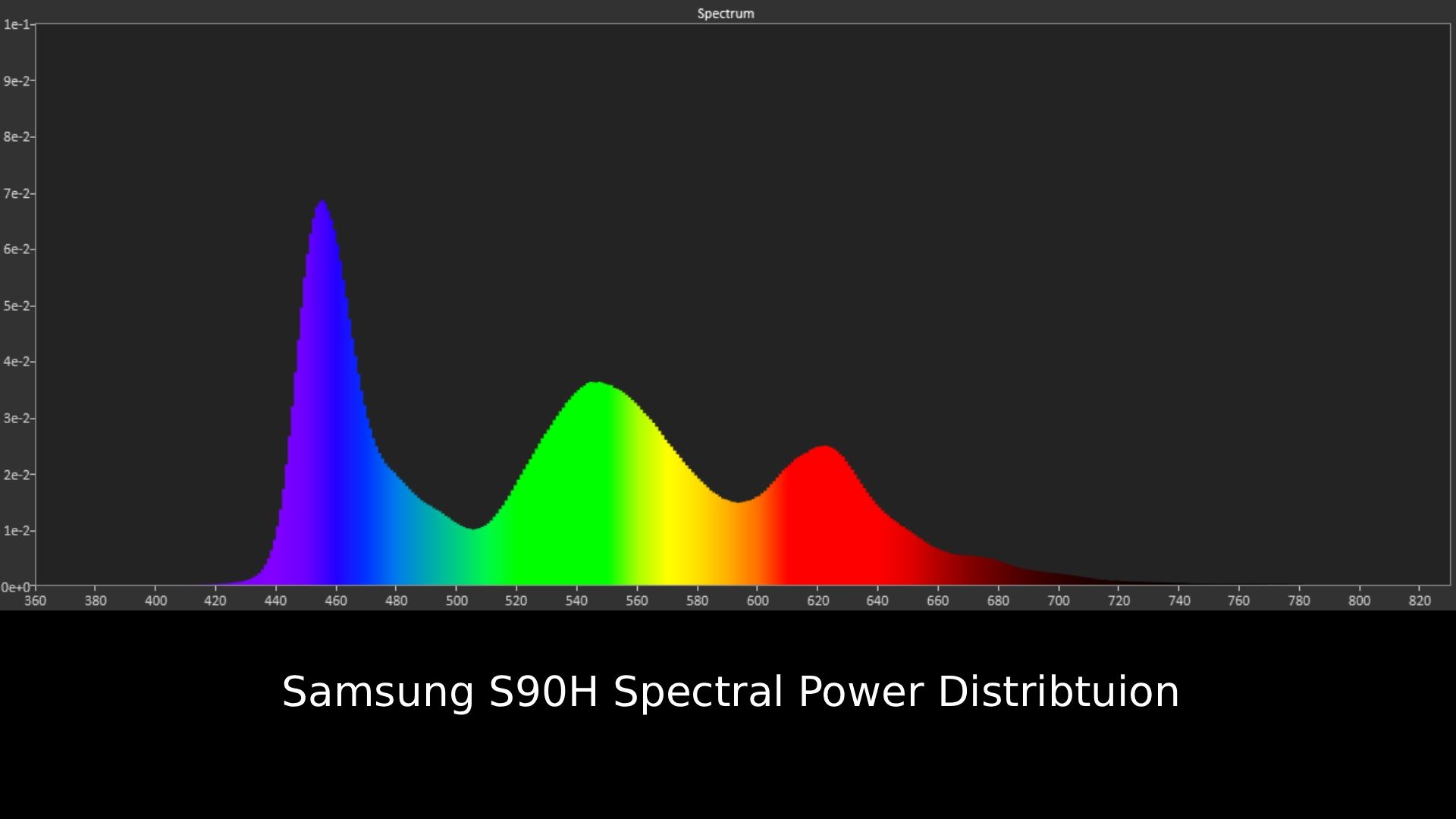
Much like last year’s Samsung S90F, the panel on the S90H can vary based on size and region, though most models now seem to use a standard WOLED panel rather than a QD-OLED panel. Based on my measurements, I can confirm the 55-inch model I tested in the UK uses a WOLED panel.
The S90H has Samsung’s OLED Glare Free screen, which reduces mirror-like reflections in bright rooms. It uses Samsung’s NQ4 AI Gen 3 processor, the same one used in the flagship S95H/S99H, which has AI picture features such as Real Depth Enhancer Pro and AI 4K Upscaling Pro.
It supports HDR10+ enhanced HDR format, but like all Samsung TVs, there’s no support for Dolby Vision. For sound, the S90H supports Dolby Atmos but doesn't support DTS formats.
For audio, it uses a 2.1-channel, 40W speaker system and features Object Tracking Sound Lite (OTS Lite), a step-down version of the OTS+ used in the flagship S95H/S99H. There are two sound modes, Standard and Amplify, and a number of AI sound features, such as Adaptive Sound Pro and AI Sound Controller Pro.
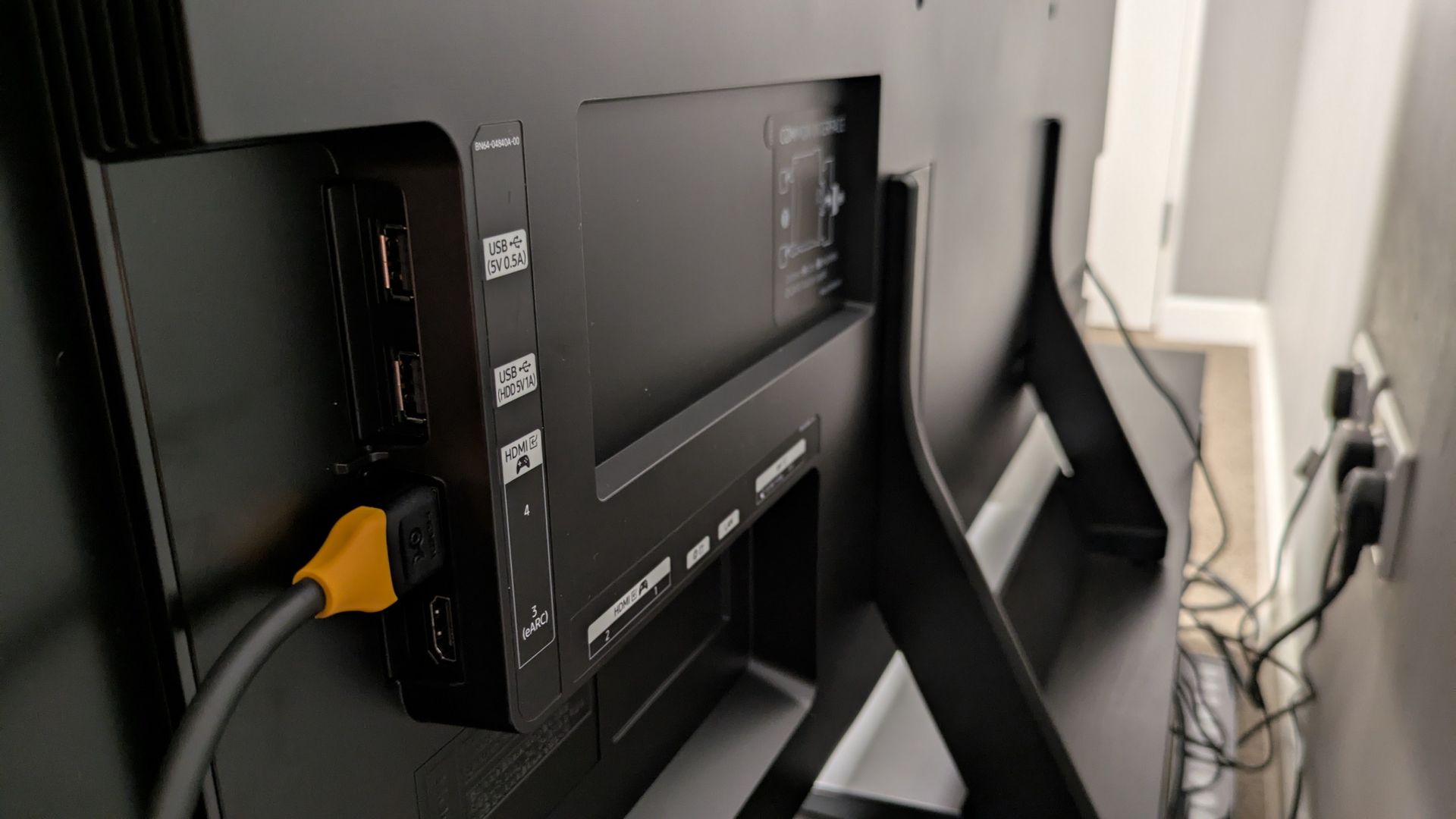
The S90H supports 4K 165Hz, full VRR including AMD FreeSync and Nvidia G-Sync (the latter being introduced into Samsung’s TVs in 2025), ALLM, and HDR10+ gaming. These are featured in all four HDMI 2.1 ports.
Samsung’s own Tizen OS is the smart TV platform here. It features the Vision AI companion, which can be used to recommend content and help with settings. In terms of app support, the S90H supports all major streaming apps, including BBC iPlayer and ITVX for those in the UK.
- Features score: 5 / 5
Samsung S90H review: Picture quality
- Vibrant, punchy colors
- Effective glare screen
- Occasional black crush
Starting with brightness measurements, the S90H registered an impressive 1,689 nits peak HDR brightness (measured on a 10% window) in Filmmaker Mode, a great result for a mid-range WOLED TV that beats the LG C6’s 1,427 nits in the same tests. It also registered 305 nits fullscreen HDR brightness, again besting the C6’s 249 nits in the same tests.
When I compared the C6 and the S90H side by side, however, the C6 had higher perceived brightness, which I believe was the work of the C6’s processor. Still, in isolated viewing, the S90H’s picture looked bright, even in the often dim Filmmaker Mode. Movie Mode, which looks brighter in person, registered similar results in the same tests. Movie Mode does have Active Tone Mapping on by default (it’s set to Static in Filmmaker Mode), which would explain the added brightness in practice.
The S90H has Samsung’s OLED Glare Free screen, which is effective at reducing mirror-like reflections, meaning darker scenes are still visible in bright rooms. With Movie Mode on, I was even able to watch a challenging scene from The Batman with no reflections.
When watching daytime TV via Samsung TV Plus, the S90H’s upscaling proved effective. It sharpened textures for news broadcasts and streaming sports. Watching an HD movie, Treasure Planet on Disney Plus, the S90H again did a good job upscaling. Activating the Auto HDR Remastering feature boosted brightness, colors and contrast effectively. This feature also worked well for sports streamed through Prime Video, adding more depth to the picture.
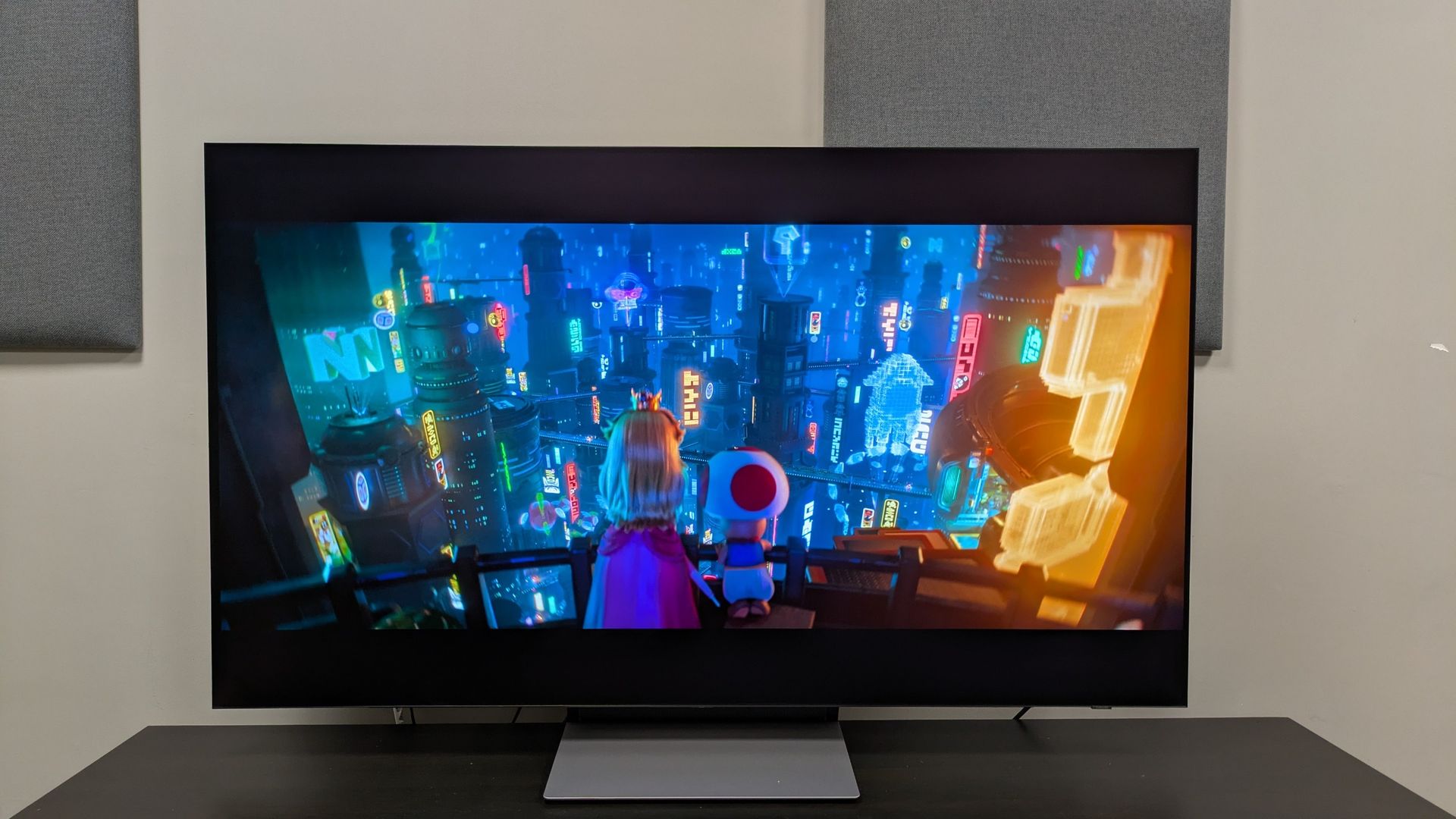
Switching to reference 4K Blu-ray scenes, the S90H demonstrated excellent picture quality. It produced vibrant, punchy colors that looked great in scenes from Speed Racer, accurately rendering the vivid oranges, pinks, and yellows of the Racer family's candy-colored kitchen. In The Super Mario Galaxy Movie, Mario and Luigi’s red and green overalls were striking, and the Lumas had plenty of punch, which made the movie look fantastic.
The S90H has strong contrast, balancing light and dark tones well in movies like The Batman (Image credit: Warner Bros / Future )Measuring HDR color gamut, the S90H hit 99.3% of the UHDA-P3 color space and 76.5% of the BT.2020 color space. These are great results in line with mid-range OLED rivals like the LG C6 and even flagship models like the Samsung S95H/S99H and LG G6 in the UHDA-P3 space, which is important for HDR content.
The S90H also demonstrated strong contrast, with a great balance between light and dark tones. Scenes from The Batman, whether it was the crime scene in Mayor Mitchell’s house or the Batcave, all looked fantastic, with bright lamps contrasting well with dark surroundings. The S90H’s blacks were inky and deep, and perfectly showcased in the shots of space from Project Hail Mary.
While the S90H does mostly deliver great shadow detail, with textures such as the roof and back wall of a dimly lit subway in The Batman still legible, this is where I noticed the S90H was prone to some black crush in its default Filmmaker Mode. Dark tones in movies like The Batman and Project Hail Mary looked too dark, resulting in occasional detail loss. Bumping up the Shadow Detail setting from 0 to the maximum 5 mitigated a lot of this, but there was still a hint of black crush in places.