Different hinges, different priorities, same giant dent in your savings.
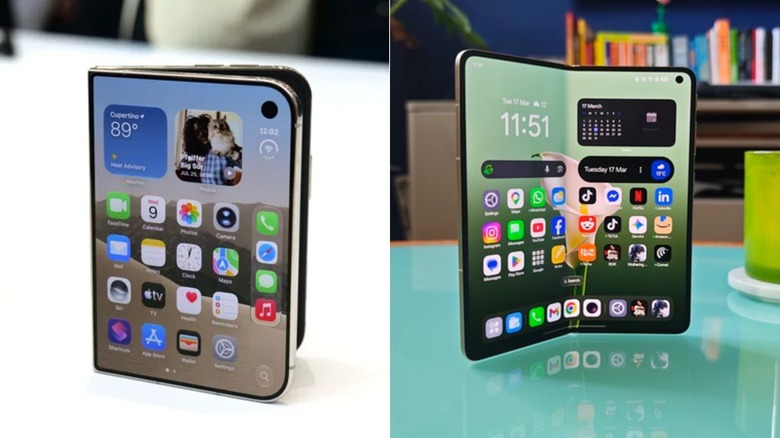
The foldable phone market just got a lot more interesting now that Apple has officially (finally) entered the fold with the iPhone Duo. Oppo's Find N6 has been turning heads since its spring 2026 launch, and both phones represent serious engineering efforts to solve the same problem: packing a tablet-sized screen into something that fits in your pocket.
But these two foldables take different approaches. The iPhone Duo leans into Apple's signature design language and ecosystem integration, while the Find N6 pushes the boundaries on thinness and camera resolution. This comparison will look at design, display, durability, cameras, performance, battery, software, and pricing to figure out which foldable deserves a spot in your pocket.
We should point out that, at this point in time, the iPhone Duo has yet to ship, so it hasn't been tested in full beyond a few hands-on experiences. To level the playing field, we'll be sticking to the specs on the paper for this comparison piece.
Shape and display
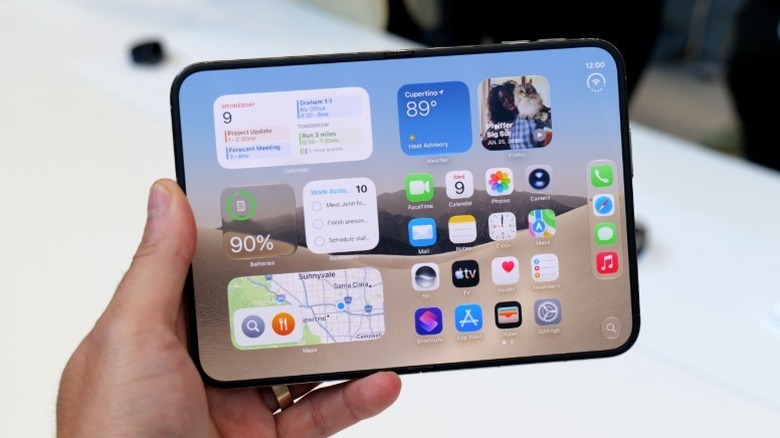
Both devices use the familiar book-style folding design, but their proportions diverge quite a bit. The iPhone Duo features a 5.4-inch outer display and a 7.6-inch inner display. The inside panel uses OLED technology with 120Hz ProMotion, HDR10 and Dolby Vision support, plus peak brightness of up to 3,000 nits. The outer panel, while smaller, features the same OLED display.
The Find N6 goes slightly bigger, offering a 6.62-inch cover screen and an 8.12-inch inner display with a near-square 1.1:1 aspect ratio. Both screens support 120Hz refresh rates, but Oppo pushes brightness further, with the cover display reaching up to 3,600 nits peak and the inner display topping out at 2,500 nits.
The practical difference comes down to proportions. The iPhone Duo keeps a consistent 1.4:1 aspect ratio across both displays, which Apple positions as ideal for immersive video and side-by-side multitasking. The Find N6's near-square inner screen, on the other hand, appeals to users who want a more book-like or tablet-like experience when unfolded. Both devices support multiple viewing modes, including tent and tabletop configurations, letting you prop your phone up for hands-free video calls or content streaming.
Thickness, weight and design
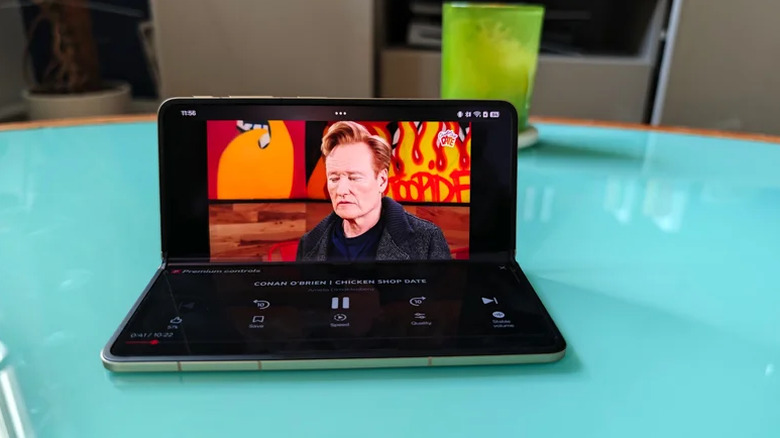
This is where the Find N6 pulls head, at least on paper. Oppo's foldable measures a remarkably slim 0.35 inches when folded and weighs just 7.94 ounces, making it one of the thinnest book-style foldables money can buy right now. The iPhone Duo, by comparison, is noticeably chunkier. It measures 0.44 inches folded and 0.21 inches unfolded, weighing 8.96 ounces.
When it comes to durability, the iPhone Duo is quite a bit tougher. The Duo carries an IP68 dust and water resistance rating, meaning it's rated for immersion up to 19.7 feet for 30 minutes. The Find N6 offers IP56, IP58 and IP59 certification, which covers powerful water jets and submersion up to 4.9 feet for 30 minutes. That's solid protection, but not quite matching Apple.
For anyone who frequently uses a phone one-handed, the 1 ounce weight difference might matter after a full day of use, but it's not exactly the end of the world. The difference in thickness, however, might be something that matters more as you slip the phone into a purse or a pocket, or when you're trying to carry multiple things in your hand at once. If water resistance matters to you, however, the new iPhone is the better choice.
Crease and hinge technology
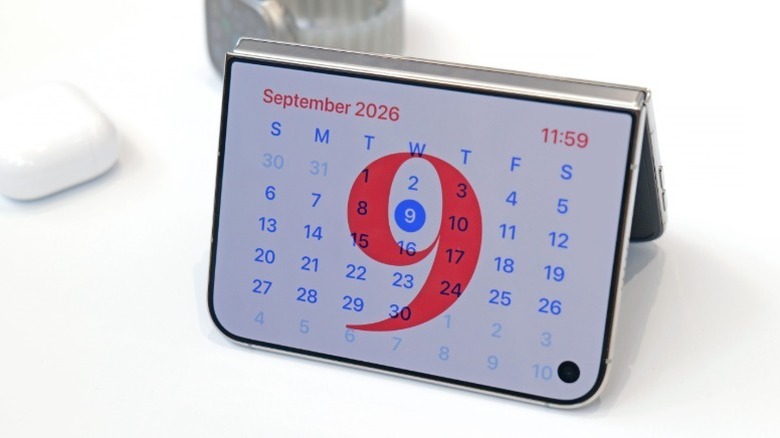
Oppo has made eliminating the foldable crease its target when making its phone. Using the company's Titanium Flexion Hinge, Oppo reduced hinge height variance down to just 0.002 inches. The company calls it its "zero-feel crease," but there's a catch because Oppo mentions this refers to the fact the crease isn't easily visible under normal use; not that it's physically absent. When we got our hands-on with the Oppo Find N6, we noticed that while the crease does feel shallower than on older devices, there is still a crease. As we put it then, "You might not feel it as much, but you can see it."
Apple's approach to the crease problem was to build a hinge from more than 100 components to precisely control opening and closing. In our iPhone Duo hands-on, we noted the crease is "very faint, to the point where it's often easier to feel it with your finger than observe it with your eyes." And yet, like the Oppo phone, it's still there.
Cameras
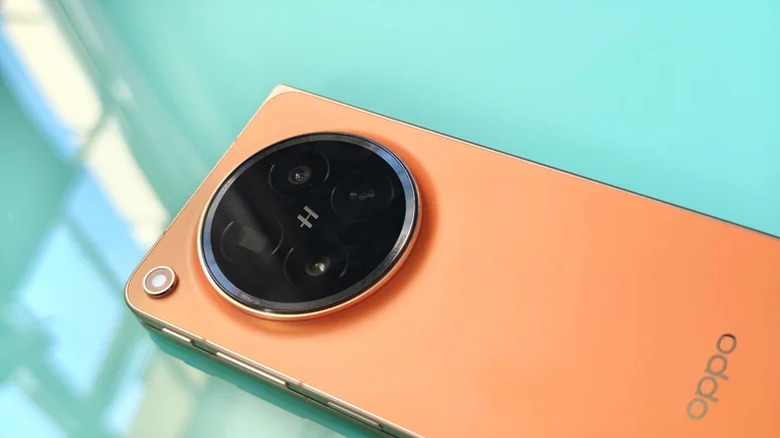
The camera systems on these two foldables reflect very different priorities. The iPhone Duo features a dual rear camera setup with a 48MP Fusion Main camera and a 48MP Fusion Ultra Wide, so there's no telephoto lens included. Apple's camera software adds some cool features that are specific to this foldable phone, like Duo Preview, which shows subjects a live preview on the outer display.
The Find N6 takes a more traditional flagship approach with a triple rear camera system. There's a 200MP Hasselblad ultra-clear main sensor, a 50MP ultrawide and a 50MP periscope telephoto offering 3x optical zoom with tele-macro focus down to 3.94 inches. All three rear cameras support 4K video at up to 60fps in Dolby Visual, with the main sensor capable of 120fps.
The sheer megapixel count on Oppo's main sensor gives it an edge for detail-heavy pics, ideal for landscapes or large prints. Of course, megapixels alone don't guarantee superior image quality. Not to worry, in our hands-on with the Oppo Find N6 we found the camera array to be incredible. After testing the iPhone Duo a bit, we found the dual-camera setup takes "crisp shots in a range of lighting conditions," but we were disappointed at the lack of a dedicated telephoto lens.
Battery and charging
The Oppo Find N6 packs a 6,000mAh battery supporting 80W wired SuperVOOC charging and 50W wireless AirVOOC charging, the company's proprietary fast-charging technology. The company claims roughly 26 hours of video playback and 25.8 hours of social media browsing on the larger screen.
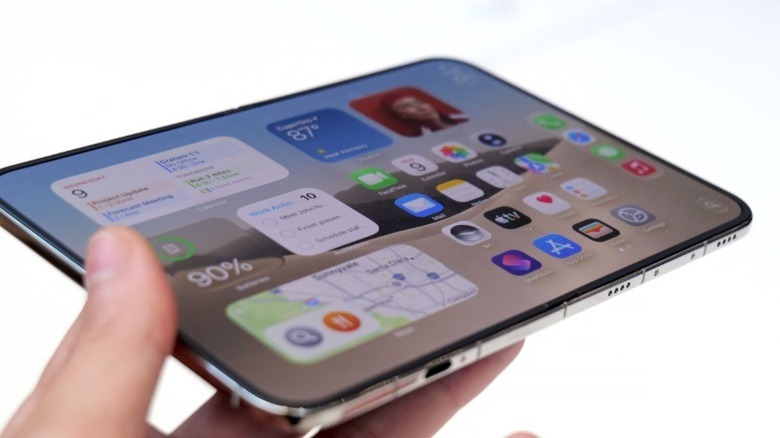
Apple hasn't disclosed the iPhone Duo's total battery capacity yet, but the company does claim you get up to 31 hours of video playback using the inner display and up to 44 hours using the outer display. Fast wired charging gets the Duo to 50 percent in around 20 minutes. When it comes to how long you can use the phone, the iPhone theoretically performs better, but Oppo's fast-charging proprietary technology is massively appealing.
Price and availability
iPhone Duo sales began October 23rd in more than 70 countries. Pricing for the iPhone Duo starts at $1,999 for the 256GB model and climbs to $3,199 for the 2TB configuration, available in Star White and Night Sky.
The Oppo Find N6, meanwhile, has been available since spring 2026. The problem is the phone hasn't been launched in the United States yet. That doesn't mean you can't buy it, just that you'll have to find some workarounds. The phone's launch price in China for the 12GB of RAM and 256GB of storage combo is ¥9,999, which is roughly $1,490. There are several shops that offer the global version of the Find N6 for $1,729.99 in Blossom Orange or Stellar Titanium.
On paper, neither foldable is clearly better than the other. Each one simply excels in different areas. The iPhone is impressively durable, has great battery life and seamless integration into the Apple ecosystem, which may come in handy if you already own other Apple devices. That polish, however, comes at a cost. The Oppo Find N6 is a bit slimmer, has a versatile camera system and recharges fast. It's also cheaper, if a bit harder to buy.