AGM X7 Pro: 30-second review
The X7 Pro is the thermal imaging model in AGM's X series. It sits above the standard X7, which has no thermal camera. But the price difference because of that one feature is significant.
The headline feature is a 512 x 384 thermal sensor running at 25fps, although SGM doesn’t say what the sensor is, or if that resolution is native. It reads temperatures from minus 20 to 550 degrees Celsius. If the resolution is native, that’s amazing, but it’s more likely that it uses something lower spec and uses multiple passes to increase the resolution. Whatever it does, the apparent resolution is well above what many budget thermal modules use.
Around that, it's a competent but conventional rugged phone. The MediaTek Dimensity 7300 is a sensible mid-range chip. The 6.72-inch screen runs at 120Hz. The 10,000mAh battery should last days, and it charges at 33W wired or 15W wireless.
If all this seems remarkably similar, this is effectively the same phone as the AGM G3 Pro, but with less RAM and storage. And it costs $100 less because of those limitations.
This is a tool first and a phone second. For electricians, plumbers, inspectors and builders, that is exactly what they might need. But for everyone else, it is an expensive way to buy a good rugged phone, though not as costly as the G3 Pro. Since this is mostly a rehashed design, it probably won’t make it into our best rugged phone collection.
(Image credit: Mark Pickavance)AGM X7 Pro: price and availability
- How much does it cost? $529/£399/€599
- When is it out? Available now
- Where can you get it? You can get it in most regions directly from AGM or from many online retailers.
AGM lists the X7 Pro at €599 on its European site. US pricing is $599 on Amazon, and AliExpress lists it at around $563. But if you are in the US, you can get this phone directly from the makers for only $529. And, as a special offer, you also get some AGM Buds headphones included.
The value case rests on the thermal camera. Strip that feature out and you are paying $529 for 6GB of RAM, 256GB of storage and a mid-range SoC. The standard X7 does most of that for $399.
A rugged phone with a decent-resolution thermal camera is still rare, and that scarcity supports the price. But buyers should be clear about what they are paying for.
American customers should be aware that this phone comes either as a global model or one glued to US T-Mobile, so you need to be a customer of that service provider to use it inside the USA.
For UK customers, what is mildly annoying about AGM is that when you go to their global website, you are immediately redirected to the EU site, where all the prices are quoted in Euros. Thankfully, you can buy the X7 Pro via Amazon.co.uk, and at the time of writing, with a discount voucher, the phone costs £399.20.
As I’ve already alluded, the X7 Pro is effectively another version of the G3 Pro, and AGM still sells that phone for $699, though it has 12GB of RAM and 512GB of storage. This model hasn’t been discounted recently, suggesting demand is still strong at this price.
If you want a cheaper rugged phone with a thermal sensor, you can find the Blackview XPLORE 1 Pro for less than $490 on Amazon.
Phones with thermal imaging aren’t cheap, and in many designs, that's the main feature you're paying for.
(Image credit: Mark Pickavance)- Value score: 3.5/5
AGM X7 Pro: Specs
Item
Spec
CPU:
MediaTek Dimensity 7300
GPU:
Arm Mali-G615 MC2
NPU:
MediaTek APU 655
RAM:
6GB (plus 6GB virtual)
Storage:
256GB, microSD supported
Screen:
6.78 inch FHD+ IPS Screen
Resolution:
1080 x 2400 FHD+, 120Hz
SIM:
2x Nano SIM + TF (two from three can be used)
Weight:
365 grams
Dimensions:
177.5 x 82.8 x 16 mm
Rugged Spec:
IP68 IP69K dust/water resistant (up to 1.5m for 30 min), MIL-STD-810H Certification
Rear cameras:
64MP Sony Main Camera, 512 x 384 Thermal Camera, 2MP Macro Camera
Front camera:
50MP Omnivision
Lamp:
Camping LED
Networking:
WiFi 6, Bluetooth 5.2
Audio:
116dB 5w loudspeaker
OS:
Android 16
Battery:
10000 mAh (Max 33W wired, 15W wireless)
Colours:
Black
AGM X7 Pro: design
- Large, but not impractical
- Identical to G3 Pro layout
- Wireless charging
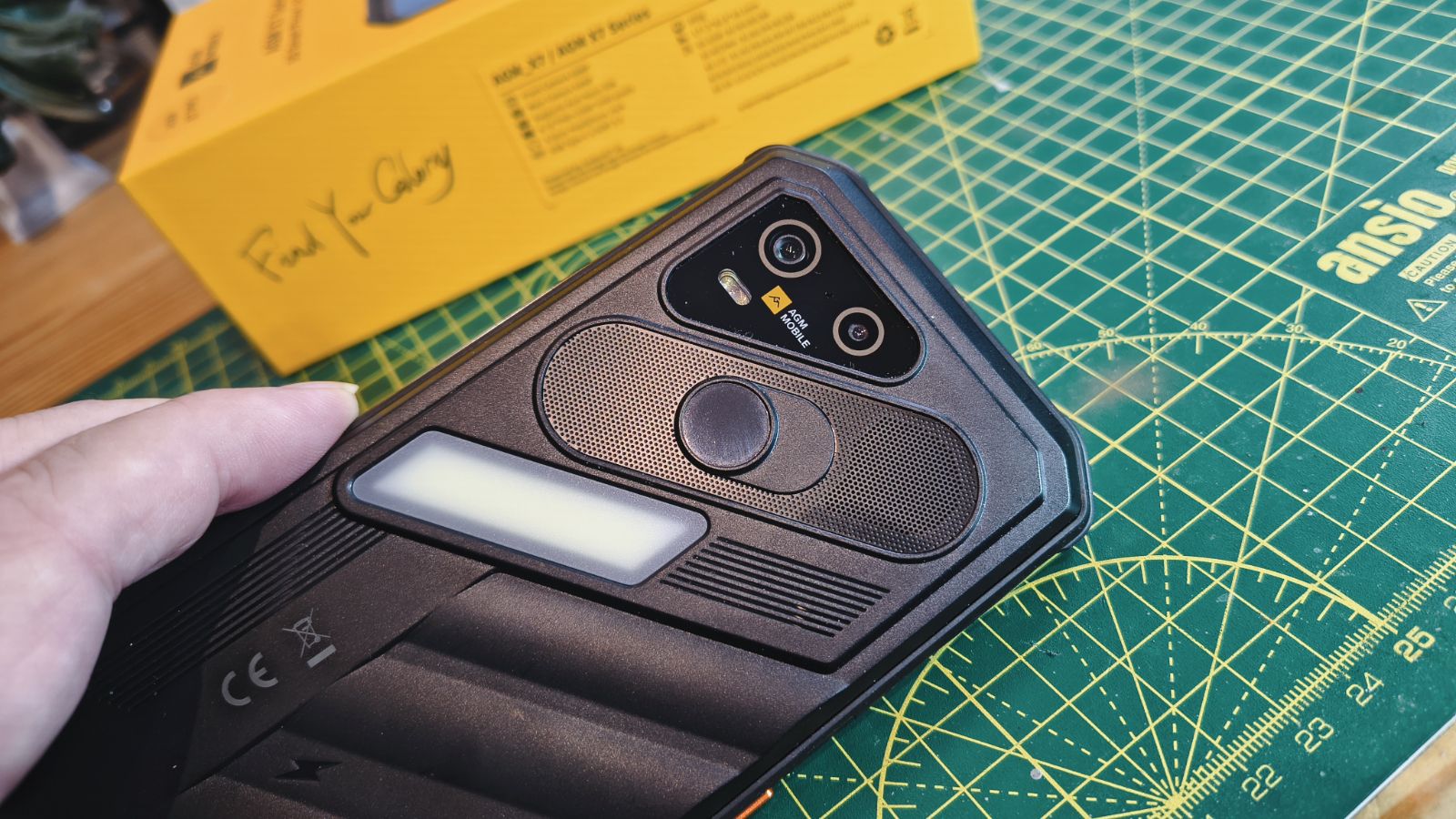
The X7 Pro looks like a rugged phone and doesn't apologise for it. A reinforced frame surrounds the display, the back is textured, and the camera cluster sits in a circular module, with the thermal sensor placed below the main lenses.
This is all unchanged from the G3 Pro, with the exception of a few styling differences on the back, which you can see in my comparison photo.
A giveaway to this phone's origins is that all the camera positions, including the thermal sensor, match those on the G3 Pro.
(Image credit: Mark Pickavance)At 16mm thick and 365g, it is not slim by normal phone standards. It is lighter than many rugged rivals with this much battery, though. AGM calls the design slim, which is generous, at best. Compared with the 11.9mm WP68 Air, it is a brick, some might say.
The side button can launch an app, open the camera, or switch on the torch, among other functions. That is a good use of a physical control, and I'd like to see more makers do it rather than welding it to some push-to-talk function.
There is also a camping light and a 5W speaker. Both are practical on a job site, though the light is relatively modest compared to some rugged phones, and it's about 40% the size of the one on the G3 Pro.
What also carried over from the G3 Pro is wireless charging. Many rugged makers still skip it, which I have never understood. AGM includes it here at 15W, and the flat-ish rear panel supports it properly.
Overall, the phone that spawned this one wasn’t a poor layout, and this one doesn’t make sweeping changes to the concept.
(Image credit: Mark Pickavance)Design score: 4/5
AGM X7 Pro: hardware
- Common Dimensity 7300 SoC
- Workable screen
- Less RAM and storage
The Dimensity 7300 is a good fit for this phone. It is built on a 4nm process, and it uses A78 and A55 cores with an ARM Mali G615 GPU.
That matters because I have complained about the Dimensity 7025 repeatedly. That chip is a 6nm design from 2022, and its PowerVR GPU struggles with OpenGL and Vulkan. The 7300 has none of those problems, as it is a full generation ahead.
This phone has the same display as its G3 Pro predecessor, an IPS panel with a decent resolution of 2400 x 1080. That’s enough for 1080p video playback, and the 120Hz refresh results in a slick interface experience. The biggest issue with this display is outside, where the glossy surface tends to reflect the sky, so a textured screen protector might be a solid purchase for it.
The weak spot is memory. 6GB of RAM is modest by today's standards, and AGM adds 6GB of virtual RAM to make the number look better. That is storage pretending to be memory. Ignore it.
Storage is a healthy 256GB, and it supports microSD cards if you need more.
The battery is the real highlight. 10,000mAh is a big step up from the 8,000mAh in the WP68 Air. AGM claims several days of use, even with heavy thermal camera work.
Charging is quick enough at 33W. Wireless charging at 15W is slower, but handy at a desk.
I’d contest that this phone has enough battery for at least three working days, and maybe some more if you curate it well. But it wouldn’t last a whole week away from civilisation, if that’s where you want to take it.
(Image credit: Mark Pickavance)- Hardware score: 4/5
AGM X7 Pro: cameras
- Rear camera: 64MP Sony IMX682 primary camera, Camera, 2MP BYD BF2257 Macro Camera, Thermal Sensor
- Front camera: 50MP Samsung S5KJN1
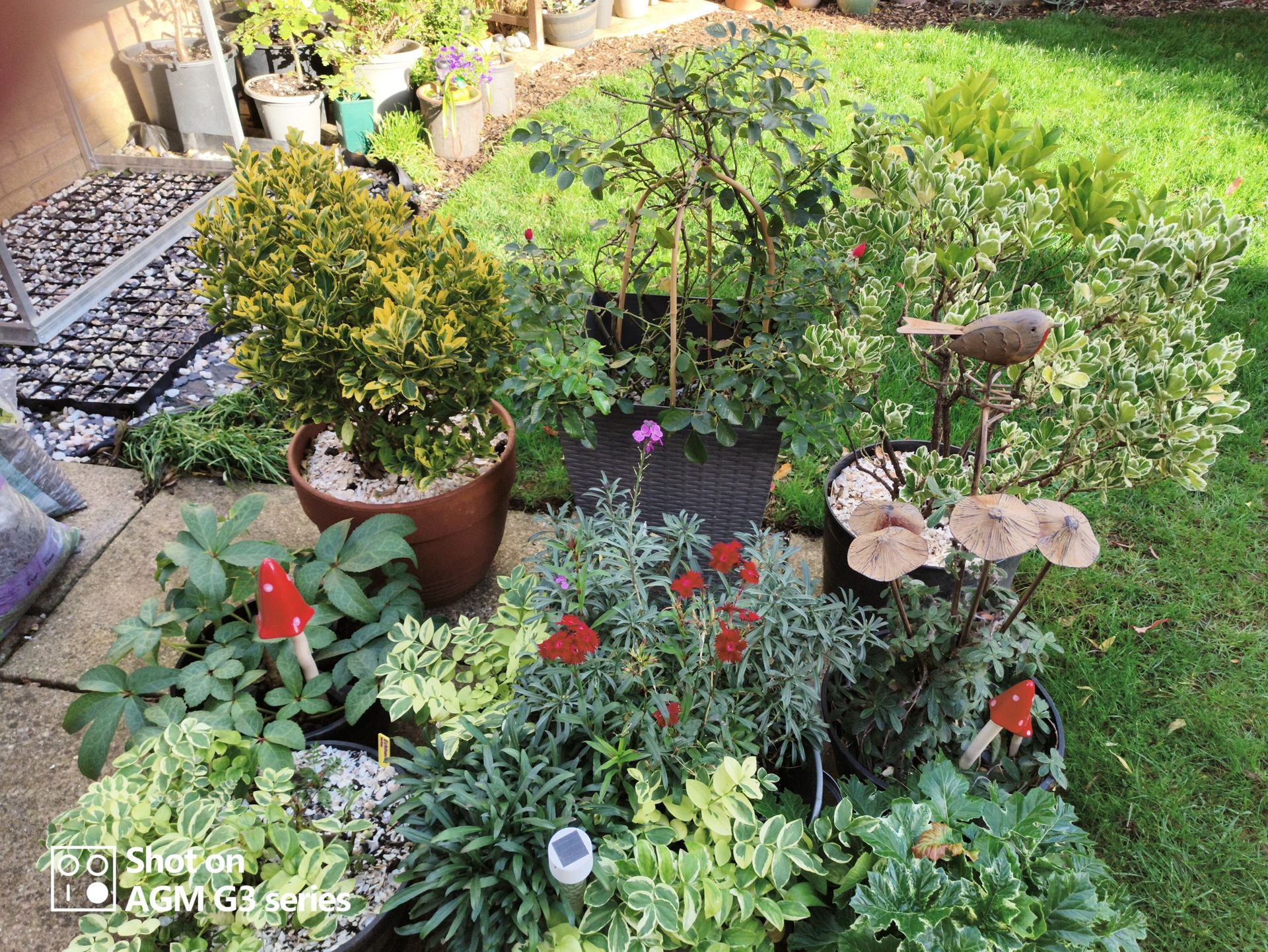
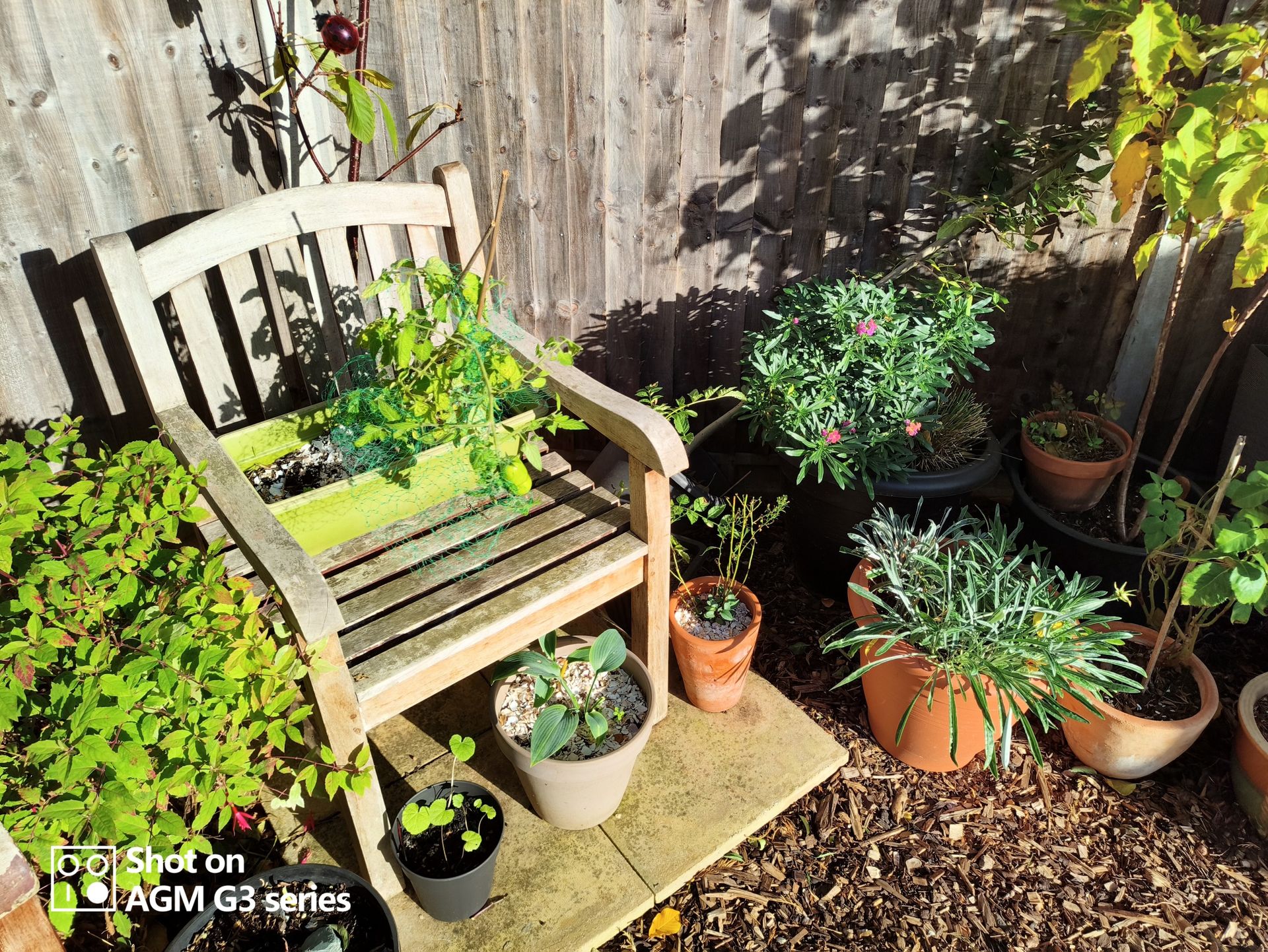
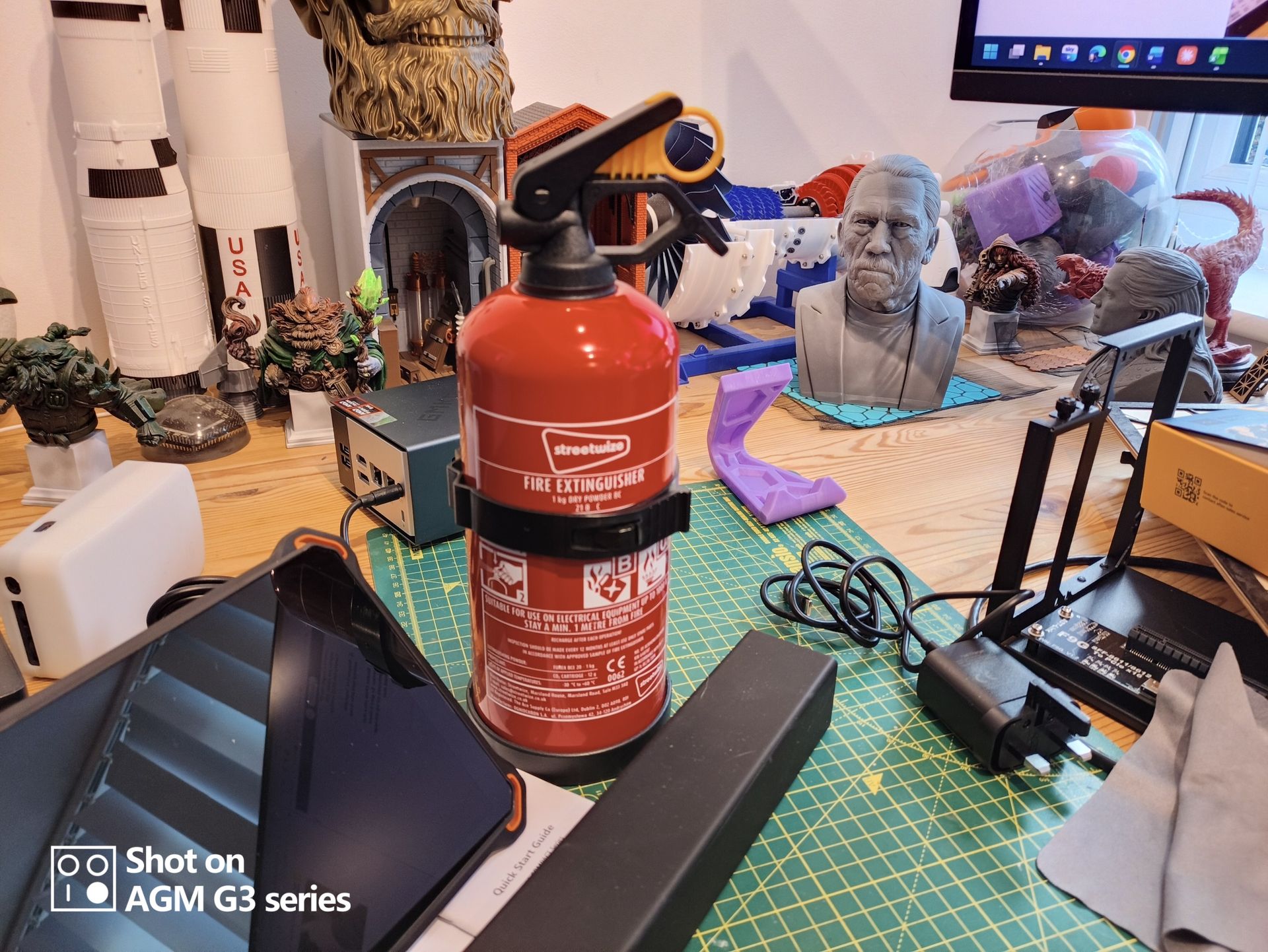
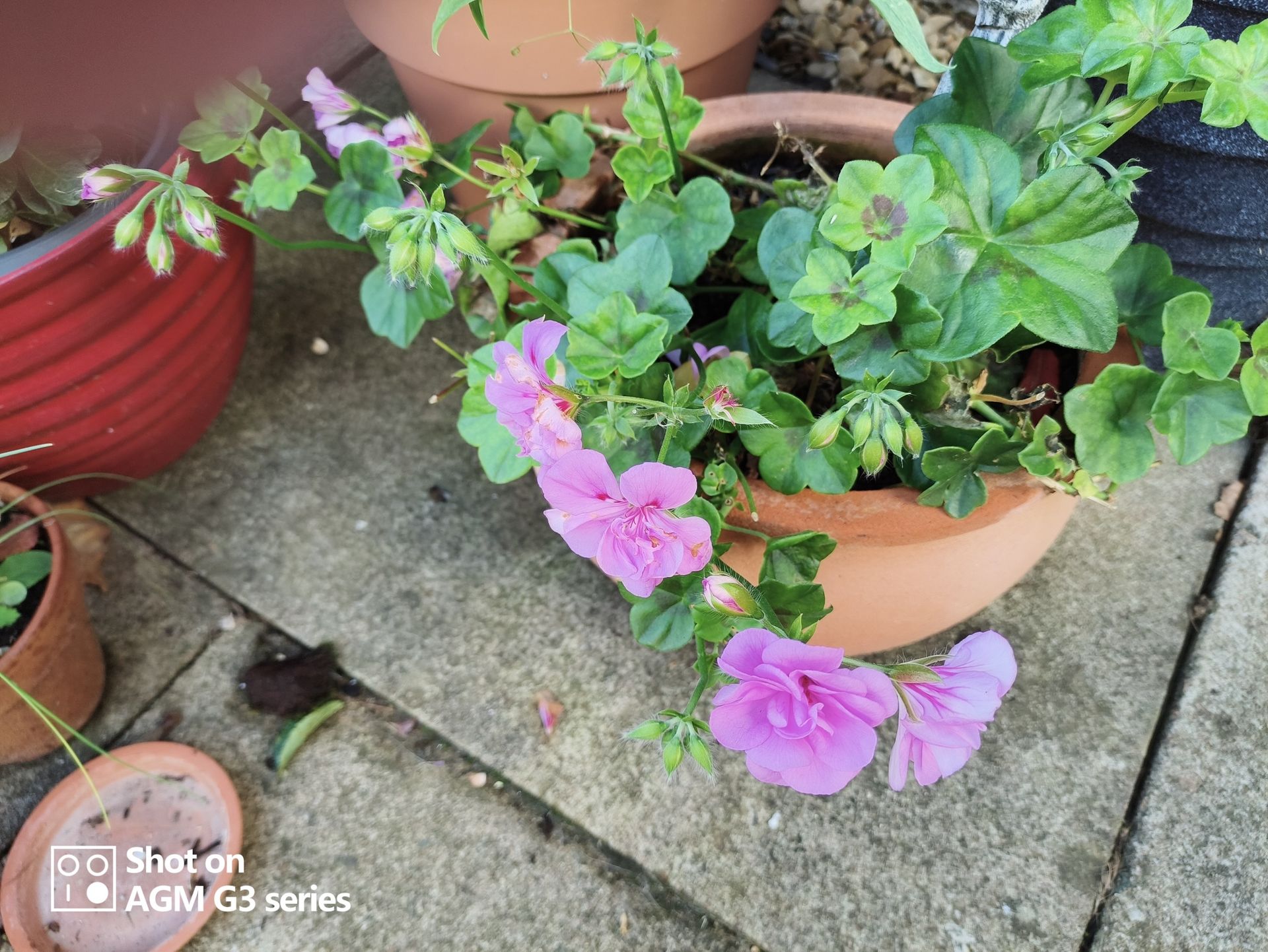
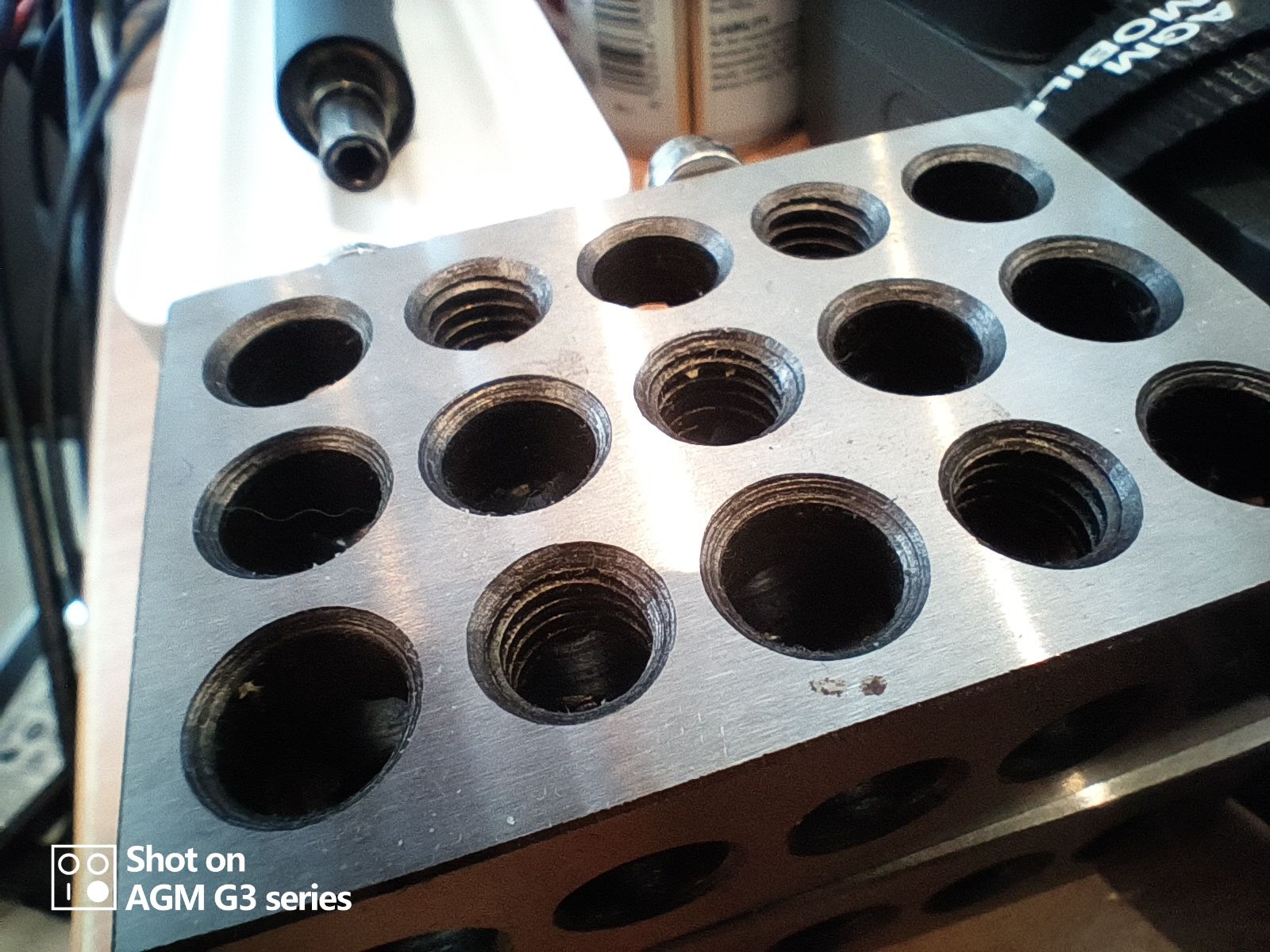
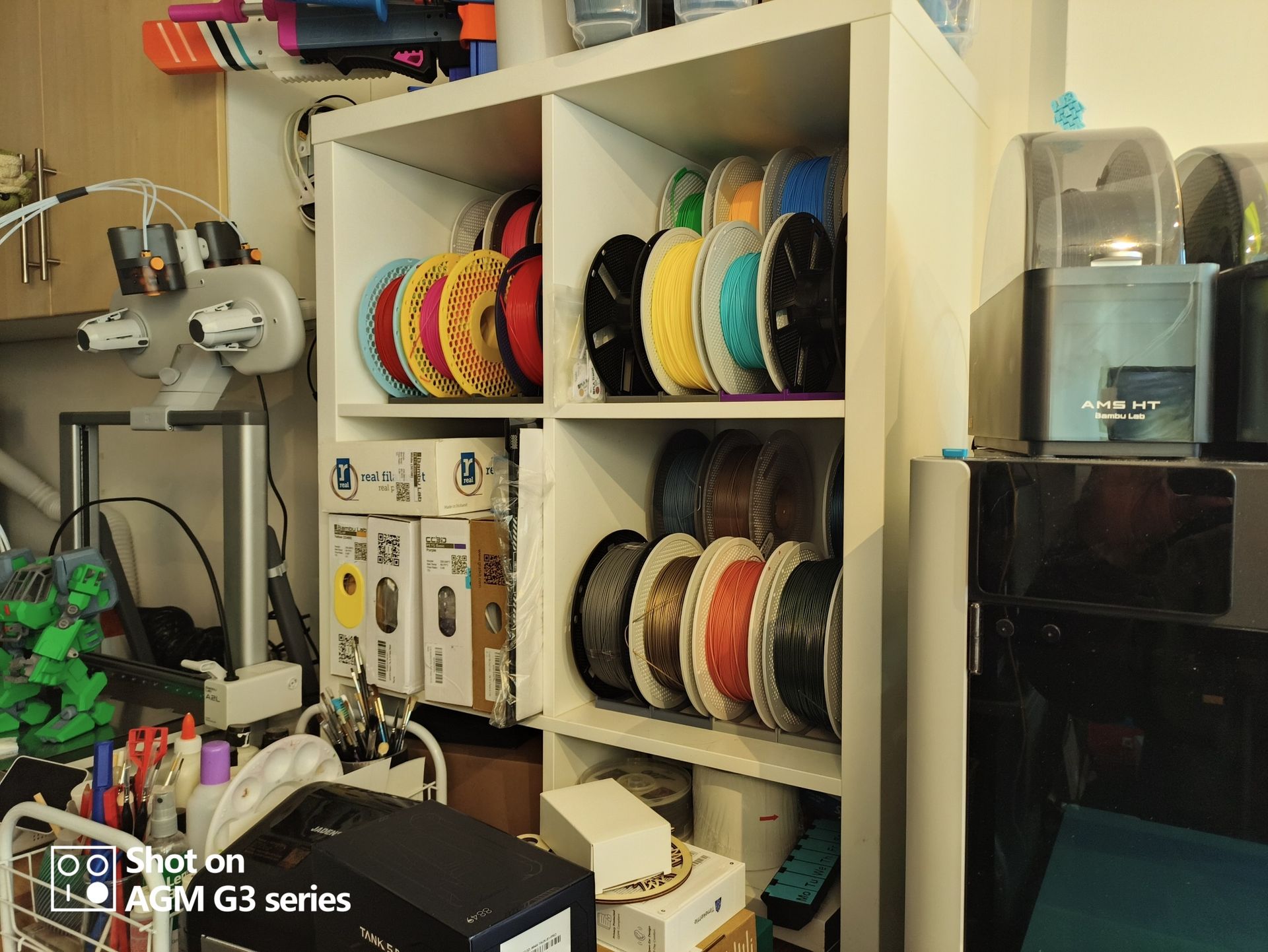
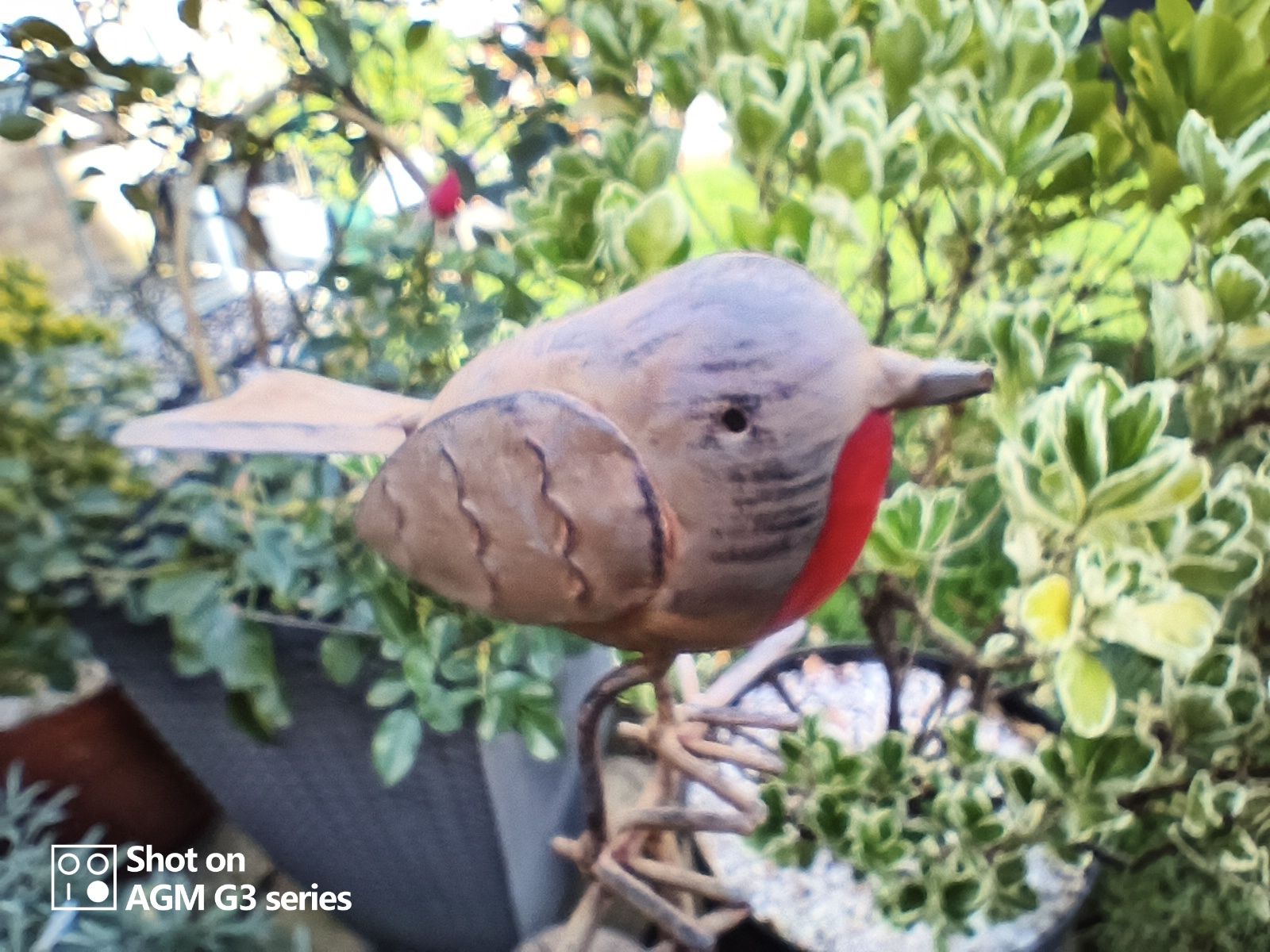
I talked previously about the normal photography capability of these sensors in my G3 Pro review, so I won’t repeat all that here. Safe to say the 64MP rear Sony IMX682 can take some decent pictures, even if it only offers digital zooming. The macro camera is junk, in case you wondered.
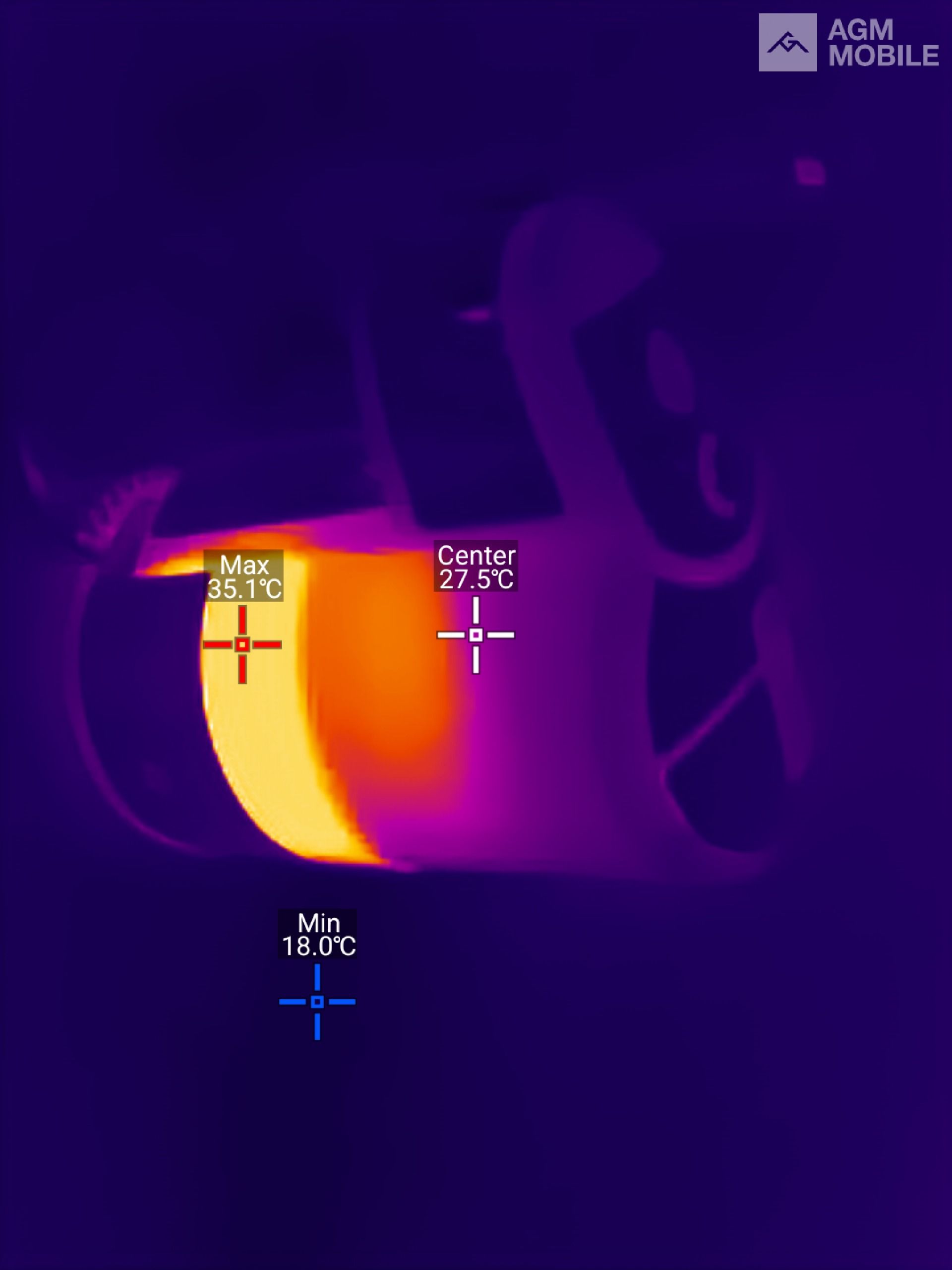
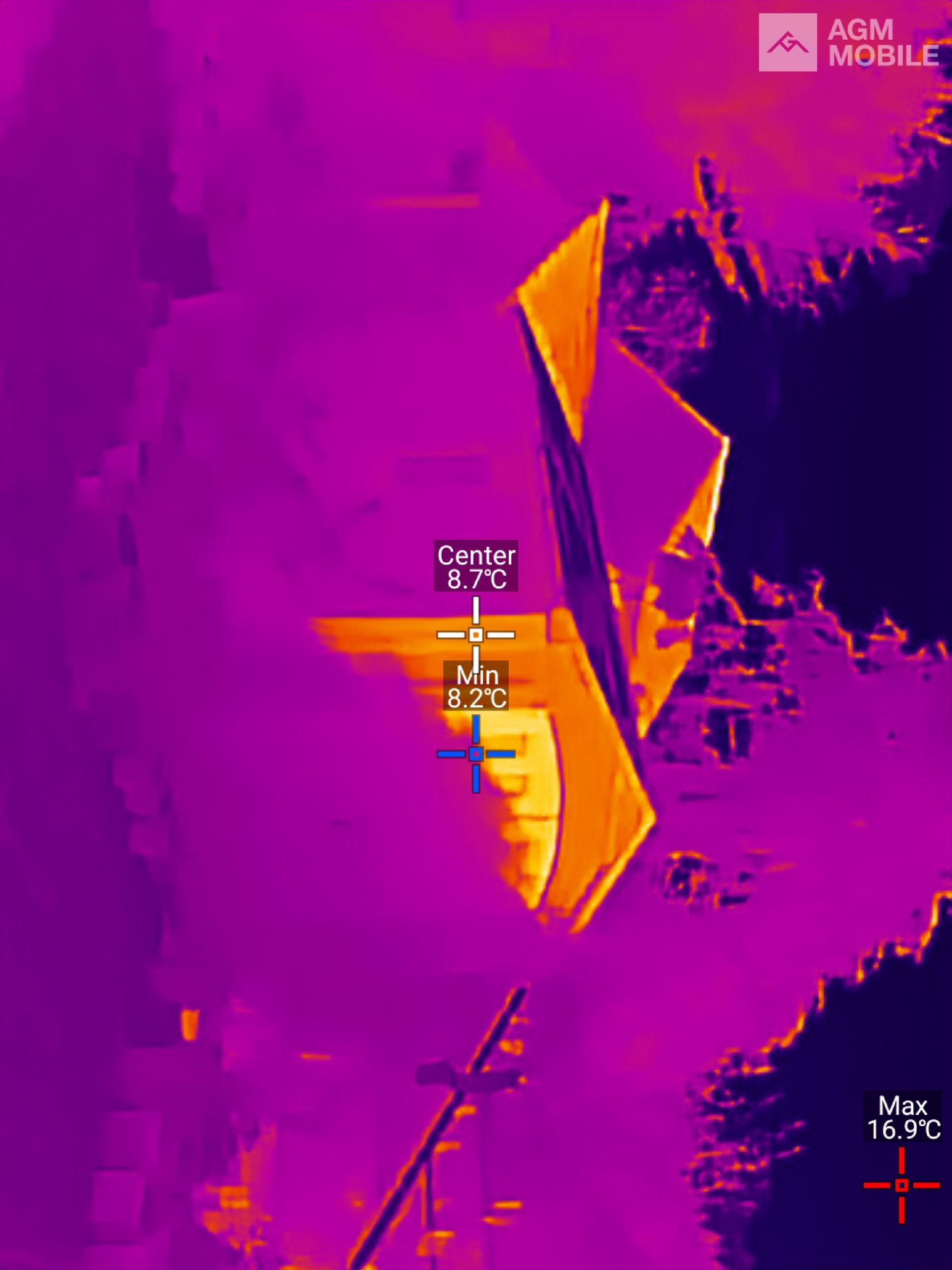
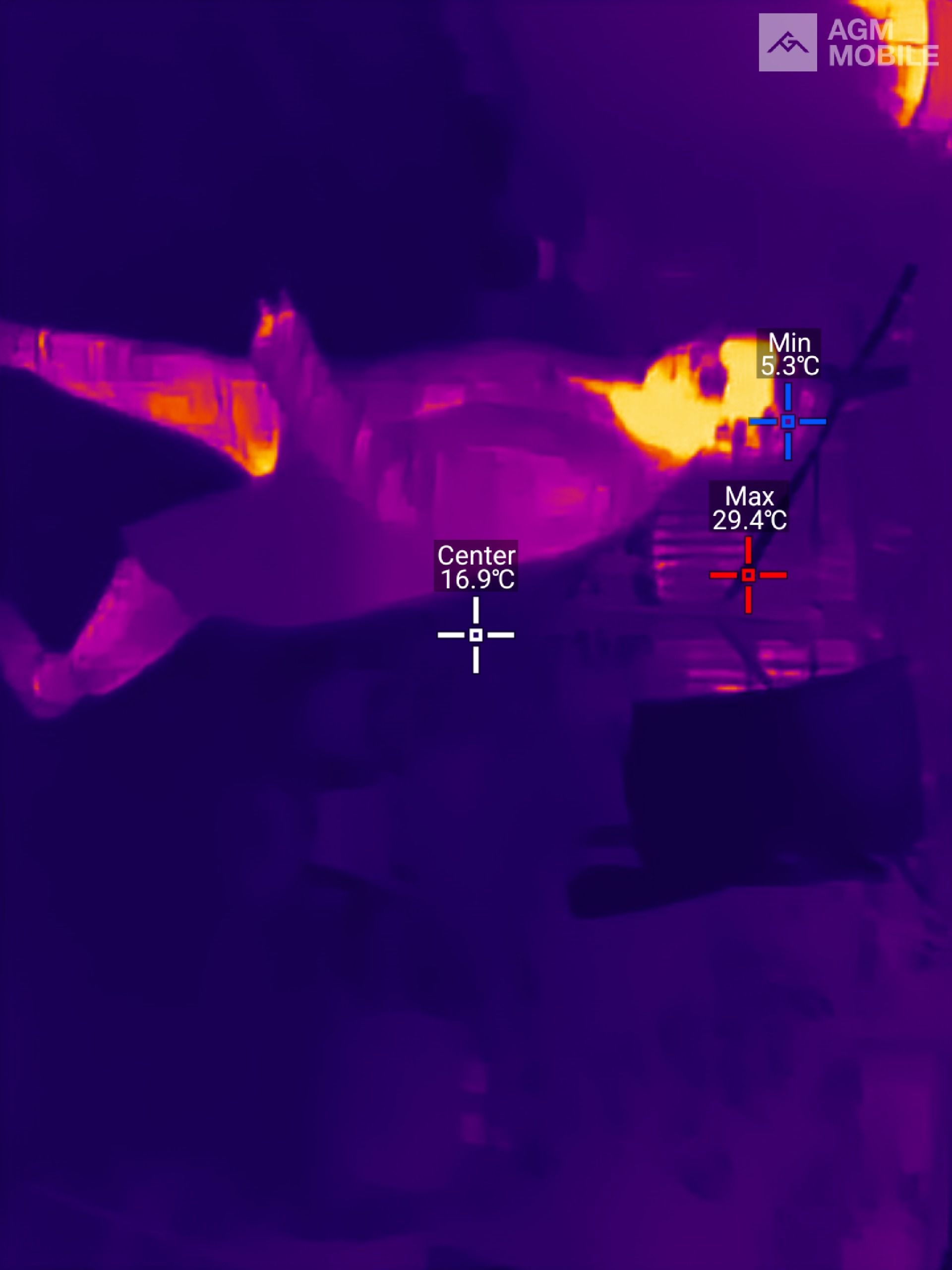
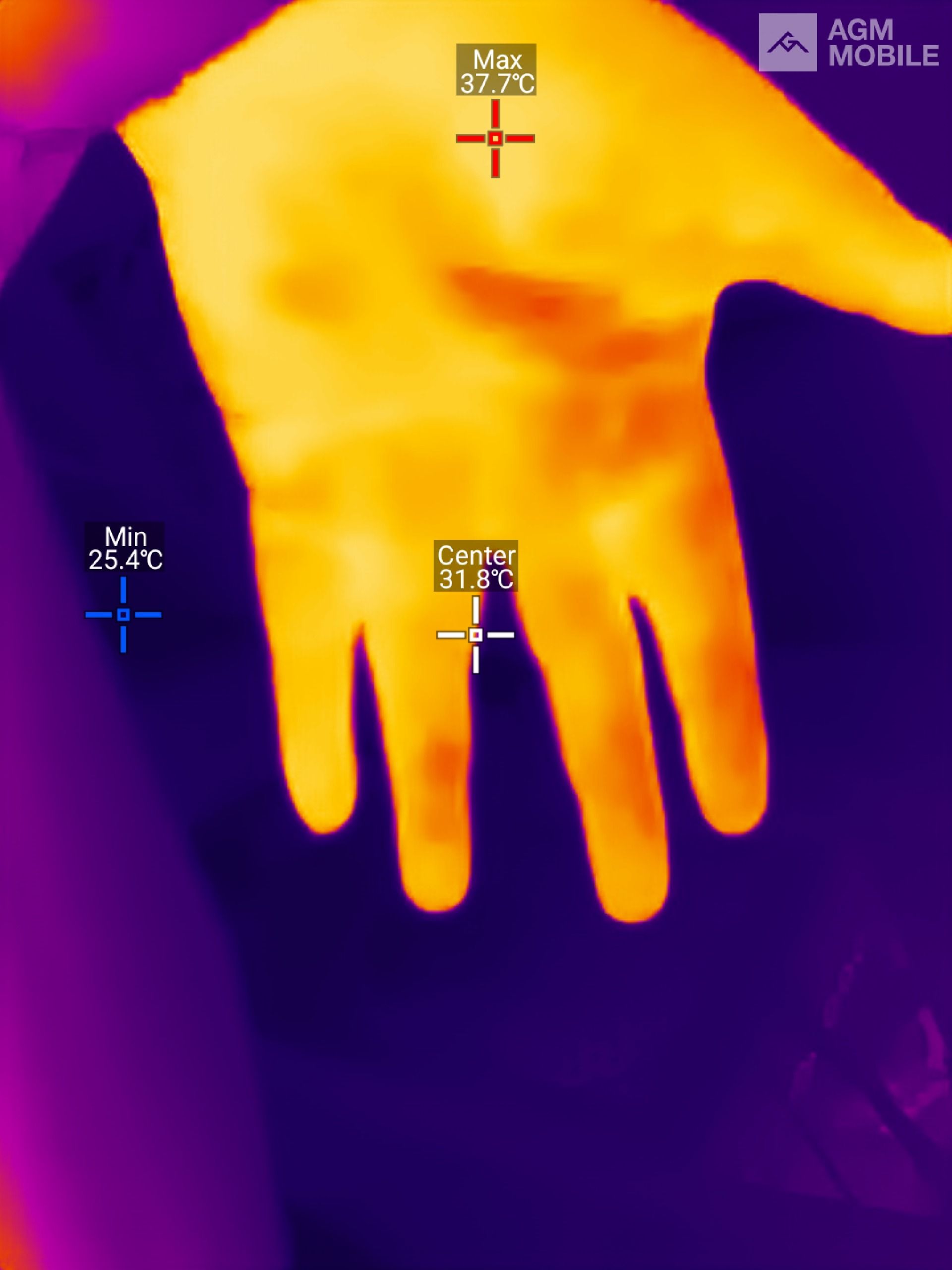
The thermal camera is the reason to own this phone. With a resolution of 512 x 384, with a 25fps frame rate, this all sounds excellent. The temperature range runs from minus 20 to 550 degrees Celsius, so that covers most requirements unless you like to forge steel.
It doesn’t work with the standard Android camera app; instead, it uses a dedicated Thermal AGM app that looks eerily similar to the ones Thermal Master uses on their thermal add-on cameras.
In my G3 Pro review, I theorised that there is only one chip that can do this in common use, and it’s the one used in the InfiRay P2 Pro, which has a resolution of 256 x 192 pixels, and has a thermal range of -20°C to 550°C. Since I wrote that review, nobody has come to me and told me I’m wrong, and given how keen people are to say that to reviewers, I stand by that assessment.
AGM claims a 512 x 384 super resolution, which hints that it’s an interpolation or multi-sample from the real resolution, but most thermal products tend to do that so that images don’t look like 8-bit games.
One thing I noticed using it is that while the image updates relatively quickly at 25 fps, the overlays where temperatures are displayed update less often.
Another issue that I noticed is that the better phones with this feature make sure that the thermal sensor and the primary camera are close together, and that the normal light view is calibrated to be zoomed appropriately for those images to be combined.
This sensor has that feature, but unless the object being captured is at least 10 or 20ft away, the positional sync isn’t good. You can move one of the images manually, in an attempt to overlay them, but if the subject is close, that doesn’t work well.
And, that’s the most important takeaway about the thermal camera, which is that it's good for boiler installations and larger scenarios, but it's not ideal for small things like electronics.
I think this would have been better had the Sony primary sensor and the thermal one been closer, but I’m sure the engineers who designed this had other issues to contend with.
(Image credit: Mark Pickavance)Compared to professional dedicated thermal cameras, one in a phone is always going to be a compromise in some respects; it's just important you realise that before spending on one.
Overall, this phone's photo and video capabilities are fine, but AGM typically takes the standard Chinese phone-maker's view that Widevine L1 encryption isn’t necessary, reducing streamed show quality to 480p with Widevine L3. What makes that an extra surprise on this device is that the AGM web page for this device declares that the “X7 Pro is certified for Google Widevine L1 so that you get full HD streaming on your favourite platforms without quality restrictions.”
My review phone didn’t have L1, only L3, so it appears marketing didn’t get that memo.
AGM X7 Pro Camera samples
 Mark Pickavance
 Mark Pickavance
 Mark Pickavance
 Mark Pickavance
 Mark Pickavance
 Mark Pickavance
 Mark Pickavance
 Mark Pickavance
 Mark Pickavance
 Mark Pickavance
 Mark Pickavance
 Mark Pickavance
 Mark Pickavance
 Mark Pickavance
 Mark Pickavance
- Camera score: 4/5
AGM X7 Pro: performance
- Powerful enough
- GPU is game-friendly
- Power-efficient SoC
Phone
AGM X7 Pro
AGM G3 Pro
SoC
MediaTek Dimensity 7300
MediaTek Dimensity 7300
GPU
Mali-G615 MC2
Mali-G615 MC2
NPU
MediaTek NPU 655
MediaTek NPU 656
Memory
6GB/256GB
12GB/512GB
Weight
365g
375g
Battery
10000
10000
Geekbench
Single
1016
1026
Multi
2919
3003
OpenCL
2573
2560
Vulkan
2524
2509
PCMark
3.0 Score
15104
16286
Battery
30h 38m (20%)
34h 4m (3%)
Charge 30
%
24
25
Passmark
Score
13438
13665
CPU
6860
6927
3DMark
Slingshot OGL
6555
6612
Slingshot Ex. OGL
5116
5123
Slingshot Ex. Vulkan
4820
4822
Wildlife
3175
3123
Nomad Lite
N/A
347
Since the previous AGM phone with a thermal camera I tested was the G3 Pro, it seemed the perfect device to compare with the X7 Pro. And, based on these numbers, the X7 Pro is the G3 Pro in all but name.
Actually, that’s not entirely true, because the G3 Pro had 12GB of RAM and 512GB of storage as standard, and the X7 Pro only has 6GB and 256GB, respectively. That reduced memory profile results in the Nomad Lite test not executing, but has relatively little other impact.