Apple changed a lot in the last 15 years.
When Tim Cook became Apple's CEO in 2011, he began leading what was already one of the world's most successful technology companies. The iPhone was driving Apple's growth, the iPad was still relatively new and the Mac was at the center of its computing business. Cook inherited an enormous ecosystem, then he spent 15 years finding new ways it could be put to use.
By the end of Cook's tenure, Apple had introduced entirely new product categories, moved the Mac to its own processors, turned the iPhone into a wallet and satellite communicator and built a services business worth more than $100 billion a year. Meanwhile, some of Apple's biggest changes weren't new products, but rather familiar ones that slowly evolved into something else.
There are now more than 2.5 billion active Apple devices, while the company brought in $416.2 billion in net sales in fiscal 2025. Apple's announcement on Cook's transition lays out the scale of the company he leaves behind. But the more interesting story is how under his leadership, Apple products took on entirely new forms and jobs.
1. The Apple Watch became much more than an iPhone accessory
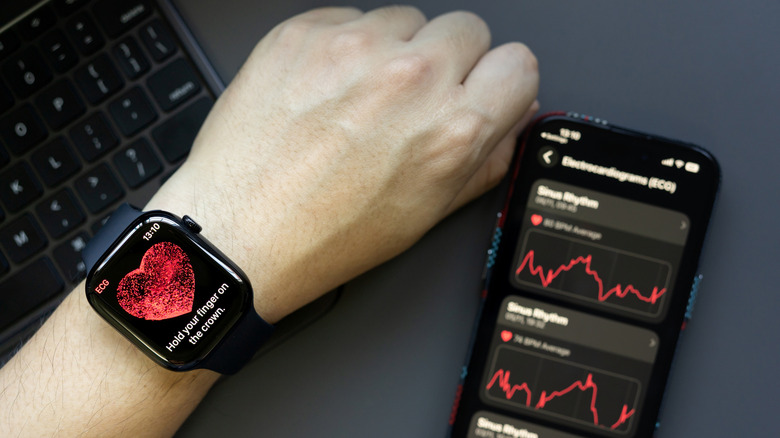
When the Apple Watch launched in 2015, it was primarily an iPhone companion for notifications, communication, apps and activity tracking. Apple began expanding its health and fitness capabilities with Apple Watch Series 2, which added built-in GPS, swim tracking and more workout features.
The bigger shift came with Apple Watch Series 4 in 2018. With this, Apple added an ECG app and fall detection, giving the Watch capabilities that went beyond basics like tracking steps. The ECG could record a heart rhythm directly from the wrist, while fall detection could automatically contact emergency services if the wearer appeared to have taken a hard fall and remained immobile.
The watchOS 11 update in 2024 added sleep apnea notifications, the Vitals app and Training Load, giving you more ways to track and interpret health and fitness data. In 2025, the Apple Watch Series 11 introduced sleep scoring and hypertension notifications. While the watch started as an accessory for your iPhone, it now monitors a whole suite of metrics that the iPhone can't.
2. AirPods turned wireless earbuds into an Apple ecosystem
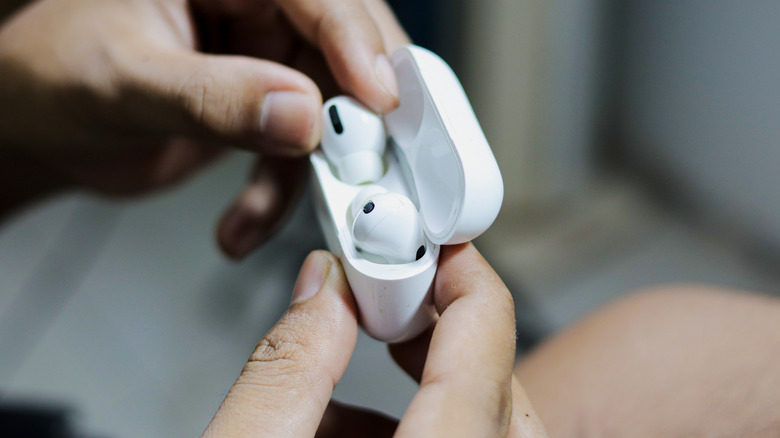
AirPods could have been just a pair of wireless earbuds for your iPhone, but Apple kept giving them more reasons to exist within the larger Apple ecosystem. Automatic pairing, seamless switching between devices, active noise cancellation and spatial audio made them an attractive option for all your music and other audio.
Apple has given AirPods an important role beyond entertainment, though. Starting with AirPods Pro 2, Apple added a scientifically validated Hearing Test, Hearing Aid functionality for people with mild to moderate hearing loss and Hearing Protection. These hearing health tools make support more accessible to lots of people. Meanwhile, the AirPods Pro 3 added heart rate sensing to track your workout effort with the buds you're likely already wearing while exercising.
Under Cook, Apple took a familiar product and expanded what it could do, without asking people to adopt an entirely new device.
3. Apple silicon gave the Mac a new foundation
For years, Apple built its own chips for the iPhone, iPad and Apple Watch while relying on Intel processors for the Mac. That changed in 2020, when Apple announced a two-year transition to its own silicon. The move gave Mac computers a common architecture with Apple's other products, providing developers with a more unified platform for building software across the ecosystem.
The first Apple silicon Macs arrived later that year. Apple put the M1 chip in the MacBook Air, 13-inch MacBook Pro and Mac mini, combining the CPU, GPU, Neural Engine and other components into a single system-on-a-chip. This helped Apple push the Mac toward the same performance and power efficiency that had come to define its mobile devices.
The difference between Apple's processors and Intel's isn't just speed. After Apple took over this core piece of Mac hardware, it had holistic control of the hardware design, chips inside and macOS itself. This helped the Mac overcome its midlife crisis.
4. The iPhone camera became a serious photography tool
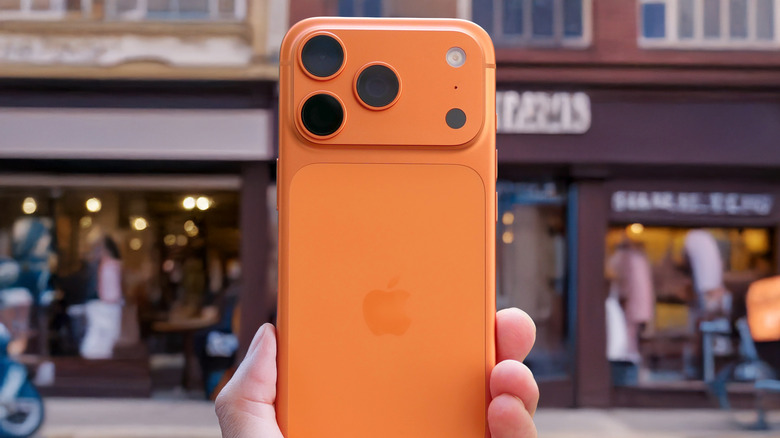
What started as a convenient way to snap a picture became a sophisticated camera system with multiple lenses, computational photography, Night mode and some serious video capabilities.
The iPhone 11 was a big turning point. It featured an Ultra Wide camera, Night mode and Deep Fusion, which uses machine learning to process photos pixel by pixel for more detail and less noise. The iPhone 12 Pro then added Apple ProRAW, combining Apple's computational photography with the flexibility of a RAW file for those who wanted more control over their images.
Apple's more recent iPhones have continued this progress. The iPhone 15 Pro brought a 48MP main camera, multiple focal-length options, 48MP ProRAW and professional video features including ProRes recording to external storage. Our iPhone 15 review highlighted the camera as a major part of the upgrade. Later, our iPhone 17 review covered more camera improvements, including a new Center Stage front camera and upgraded rear cameras. For many people, their iPhone camera is the way they take pictures, and what all other smartphone cameras are judged against.
5. Apple Pay turned the iPhone into a wallet
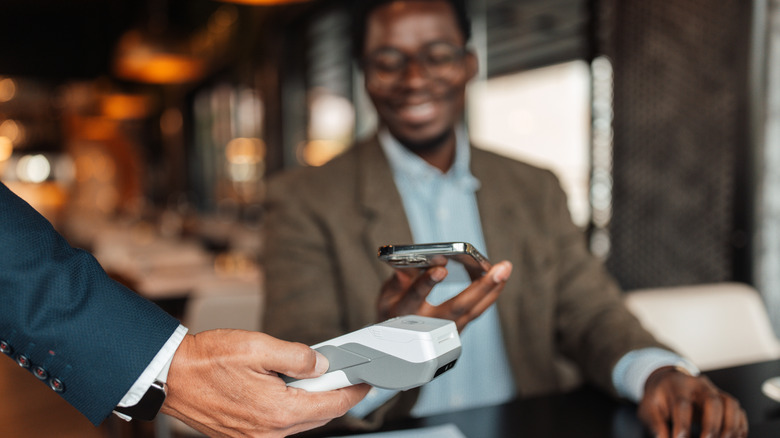
Apple Pay is easy to take for granted because it feels so normal now. But in 2014, putting a payment system directly into the iPhone people already carried everywhere gave the device a new role: replacing the cards in their wallet. Apple Pay eventually expanded beyond in-store purchases to apps, websites and other Apple devices like the Apple Watch.
10 years after its launch, the company stated that Apple Pay was used by hundreds of millions of people across 78 regions, at millions of websites and apps and tens of millions of stores. It was also supported by more than 11,000 banks and "network partners" at that milestone. Apple Pay later expanded to third-party iOS and desktop browsers, providing more ways to check out online without typing your card details into every site.
That idea of leaving your physical wallet behind has grown beyond payments, too. Wallet can hold other items like event tickets, transit cards, keys and even eligible IDs. In 2025, Apple started expanding its Digital ID for use with participating US states, plus support for Japan's My Number Card. Expanded Apple Wallet ticket features have also added venue maps, parking directions and other event information.
6. The iPhone became more connected with 5G, MagSafe and satellites
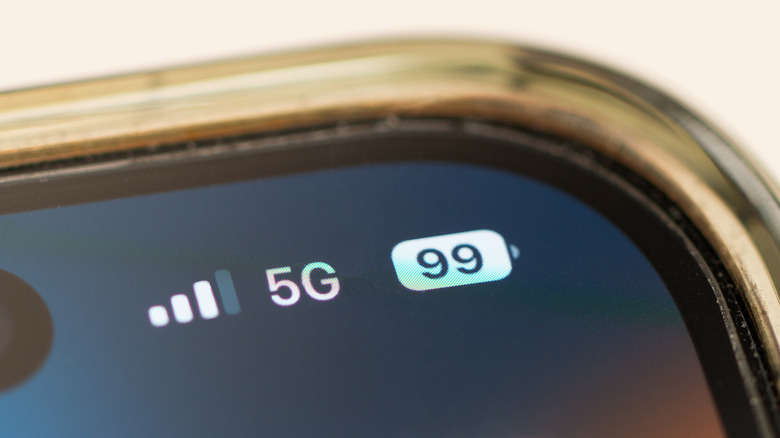
Some of the iPhone's biggest changes under Cook had more to do with connectivity than the phone itself, as Apple kept expanding the ways your iPhone can connect to the world around it. The iPhone 12 brought 5G to Apple's phones in 2020, while MagSafe introduced a ring of magnets that made wireless charging easier and created an all-new suite of snap-on accessories.
The iPhone 14 added something even more ambitious: direct satellite connections to message emergency services when cellular and Wi-Fi coverage isn't available. Apple also added the ability to share a location through Find My via satellite. In 2024, satellite connectivity was expanded to support Messages via satellite for messaging friends when you have no other options.
7. Apple services grew into a $100 billion business
Not everything that changed under Tim Cook came in a box. Apple's services business grew from a relatively small part of the company into a $109.2 billion business, making it a core part of Apple's revenue alongside the iPhone.
The category is broader than just subscriptions. It includes the App Store, advertising, cloud services, Apple Music, Apple TV, Apple Pay and more. In 2025, the App Store alone averaged more than 850 million weekly users, while Apple said developers had earned more than $550 billion through the platform since 2008. Apple's services revenue also hit a quarterly record in early 2026, topping $30 billion.
Hardware still accounts for most of Apple's revenue, but the company's various services provide a huge business built around what people do after they buy an Apple device.
8. Apple went from selling content to making it with Apple TV
Apple had been selling digital content long before the Apple TV streaming service (formerly called Apple TV+) arrived in 2019. But with it, the company was no longer just offering access to content made by others. Apple TV+ launched with an original catalog of shows, movies and documentaries, including The Morning Show, See and For All Mankind.
Apple quickly built a reputation around those originals. CODA became the first streaming film to win the Academy Award for Best Picture in 2022, while shows like Ted Lasso and Severance became some of the service's biggest hits.
Apple TV+ earned a record 81 Emmy nominations across 14 Apple Original titles in 2025, led by Severance with 27 nominations and The Studio with 23. Both shows also took home awards that year. By September 2025, Apple said its originals had accumulated 620 wins and 2,816 award nominations.
9. Vision Pro was Apple's biggest bet on a new kind of computer
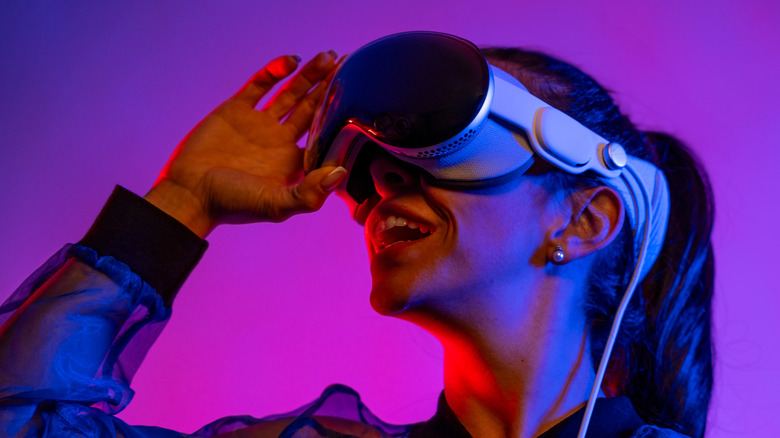
Vision Pro is different from almost everything else Apple released under Cook. Instead of putting another screen in front of you, Apple built a computer that adds your digital life into the space around you. When Apple unveiled Vision Pro in 2023, it called the device its first "spatial computer," with visionOS and an interface controlled by your eyes, hands and voice.
What may be more interesting than the $3,499 headset is where Apple thinks computing could go next. Apps can float around a room instead of being confined to a traditional display, which provides immersive environments with three-dimensional content. More than 600 apps and games built specifically for Vision Pro were available when it launched.
As our M5 Vision Pro review found, the device is unlikely to become the next big Apple platform unless future revisions make it more accessible. But that's why it's worth a mention here: Vision Pro is Apple trying to create a new platform instead of solely relying on what's worked in the past.
10. AirTags turned Apple's Find My network into a crowd-sourced locator
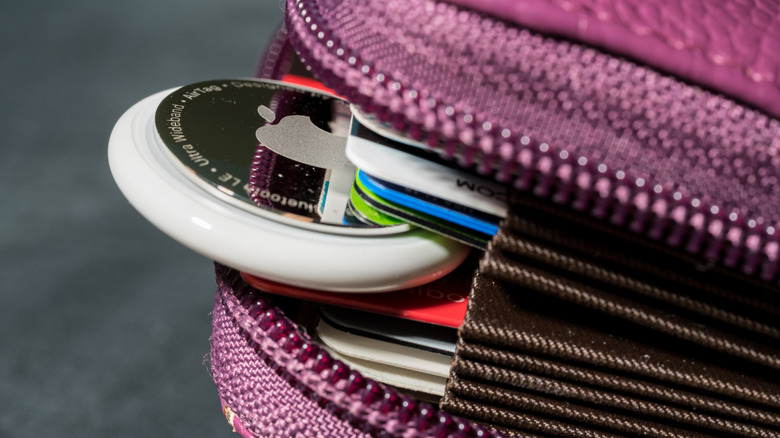
The premise of an AirTag is simple: attach one to something you don't want to lose and your iPhone will help you find it. Its bigger innovation is how the tracker taps into Apple's existing Find My network, which uses nearby Apple devices to detect an AirTag and anonymously report its approximate location to its owner. An AirTag doesn't need its own cellular connection or GPS to be useful.
Apple describes AirTag as "the bestselling item finder", and continues expanding what it can do. The second-generation AirTag, released in 2026, added a longer Bluetooth range and more precise finding. Apple's Share Item Location feature also lets you securely share an item's location with participating airlines to help recover lost luggage.
The second-generation AirTag's primary usefulness comes from Apple's enormous network of devices, giving it access to a vast web to help locate a lost item.