Russian flags are to be forbidden at European sports events, in new soft-power sanctions, also accompanied by harder measures to stop European firms from helping rebuild Russian oil refineries.
“We are introducing bans on Russian teams and athletes competing under the Russian flag. We propose to ban the display of official Russian symbols [at sports events],” said European Commission president Ursula von der Leyen in a video-note on Monday (23 November), unveiling her proposals for the 22nd round of Russia sanctions.
“We will [also] introduce restrictions on Russians holding posts in governing bodies of European-based sports federations,” she added.
Read more
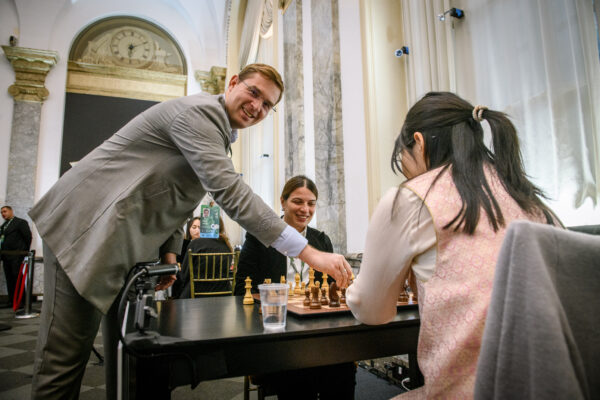
Chess body FIDE elects Kazakh billionaire, amid Russia’s return to world sports
The sports sanctions come in retort to a decision by the International Olympic Committee in Lausanne, Switzerland, which said, in July, that it was acceptable for Russia to return to world sports, despite the Ukraine war.
The International Fencing Federation, the Executive Committee of World Gymnastics, the International Judo Federation, and the International Weightlifting Federation were among those who subsequently welcomed back Russians.
Von der Leyen’s proposed ban on Russian insignia echoes national bans on Soviet symbols in Hungary, Latvia, Lithuania, and Poland, as well as Nazi swastika bans in Austria, France, Germany, Hungary, Latvia, Lithuania, Poland, Romania, Slovakia, and Slovenia.
Her proposals against Russians heading sports federations would dethrone Russia’s richest man, steel billionaire Vladimir Lisin, as president of the International Shooting Sport Federation in Munich, Germany, and Umar Kremlev, the boss of the International Boxing Association in Lausanne, since Switzerland automatically aligns with EU sanctions.
Kremlev became famous this year for bankrolling US president Donald Trump’s son’s lavish Bahamas wedding.
The EU also blacklisted Russia’s former world chess federation boss, Arkady Dvorkovich, in June, for making pro-war remarks, prompting him to lose his post.
But if Putin’s sports-washing seemed trivial compared to his daily killings of civilians in Ukraine, the EU Commission has also tabled a ban on European firms fixing the damage that Ukraine is doing with long-range drone attacks against Putin’s oil infrastructure – a vital source of money for his war.
This article continues, but the full version is available only to EUobserver.com subscribers. Visit account.euobserver.com/membership