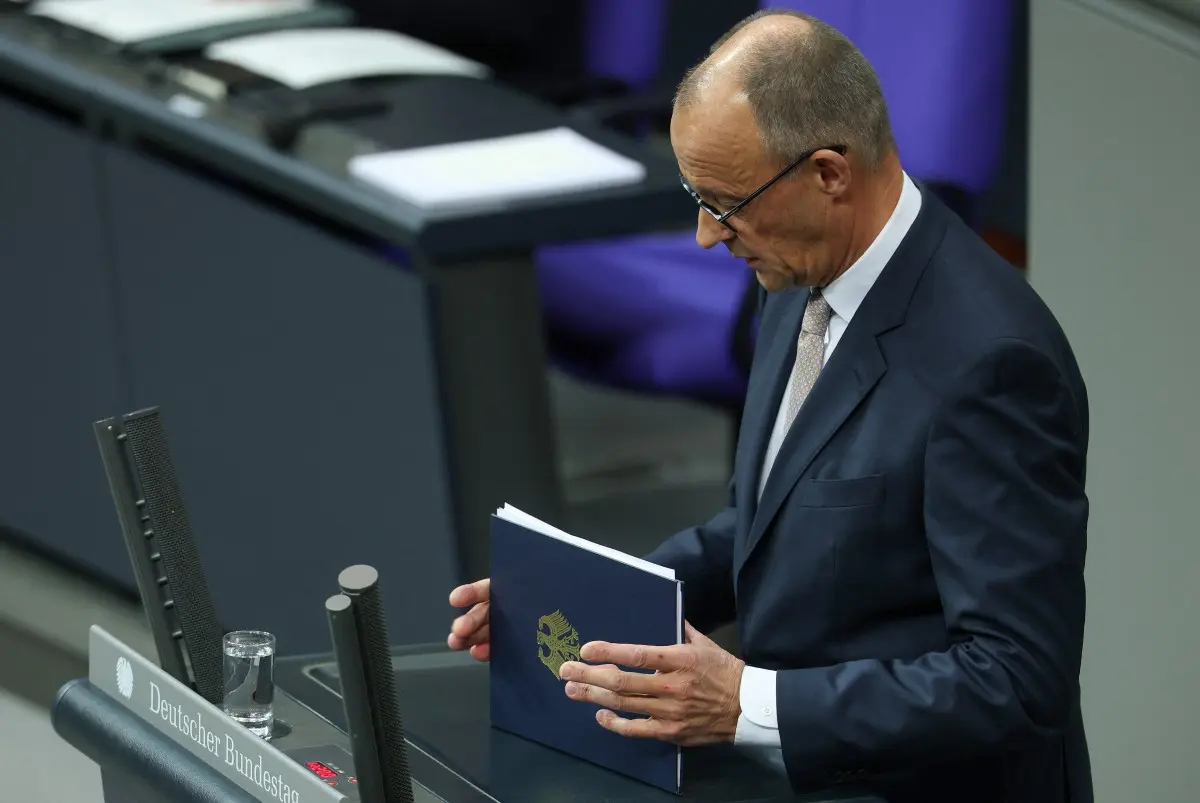
 German Chancellor Friedrich Merz takes his notes after addressing members of parliament during the debate on the 2027 budget at the Bundestag in Berlin on November 25, 2026. (Photo by Odd ANDERSEN / AFP)
A new state law in North Rhine-Westphalia bans face coverings in schools, Friedrich Merz defends large federal budget in Bundestag debate, police arrest three teenage boys from far-right terror group and more news on Thursday, November 26th.
Thursday's top story: North Rhine-Westphalia bans face coverings in schools
The state parliament in North Rhine-Westphalia passed a set of stricter rules for schools late Wednesday evening with the votes of the CDU and Green parliamentary groups.
In the future, schools will have more enforcement options against violence and threats from students.
A blanket ban on veils worn over the face in schools was also adopted.
The new rules come as part of the "Law to Strengthen Educational Equity and Democracy Education".
According to a report by Spiegel, the draft law states, "Communication is more than the mere perceptibility of spoken words." Students are therefore required to wear "appropriate clothing and not to wear face coverings that would hinder identification and communication".
Don't miss our journalists' daily news roundup from Germany
Exceptions are written in for wearing respirator masks, for example in chemistry class or due to illness.
At the end of 2024, the Düsseldorf Administrative Court had previously ruled that a vocational college was allowed to prohibit a 17-year-old student from attending classes with a face veil.
The new law also gives schools and school principals more authority to take action when there are serious disruptions and threats – including expelling students for up to four weeks.
READ ALSO: What Germany’s new 'PISA-shock' means for schools and parents
Chancellor Merz tells Germany 'We no longer have the money for everything'
Addressing the Bundestag as part of the general debate on Wednesday, Chancellor Friedrich Merz defended the largest budget in the history of Germany as "justifiable".
He also appeared to set the stage for future cuts in state spending: "We no longer have the money for everything," he said. "All of us here will have to give up some beloved ideas."
On the tough struggle within the coalition over the current budget in recent weeks, Merz said, "The process...certainly did not deserve a beauty prize."
The chancellor had only barely pushed through the electricity tax cut for households after the final round of the Budget Committee – an unprecedented move met with much criticism by the opposition during the four-hour debate.
READ ALSO: Merz defends budget cuts and warns against waning support for Ukraine
AfD parliamentary group leader Tino Chrupalla called the budget "pure debt" and accused Merz of political failure.
Meanwhile Left Party parliamentary leader Heidi Reichinnek described the budget plan as "pale and cold," spoke of a "social cutback" forced by increased costs in "militarization and boundless rearmament."
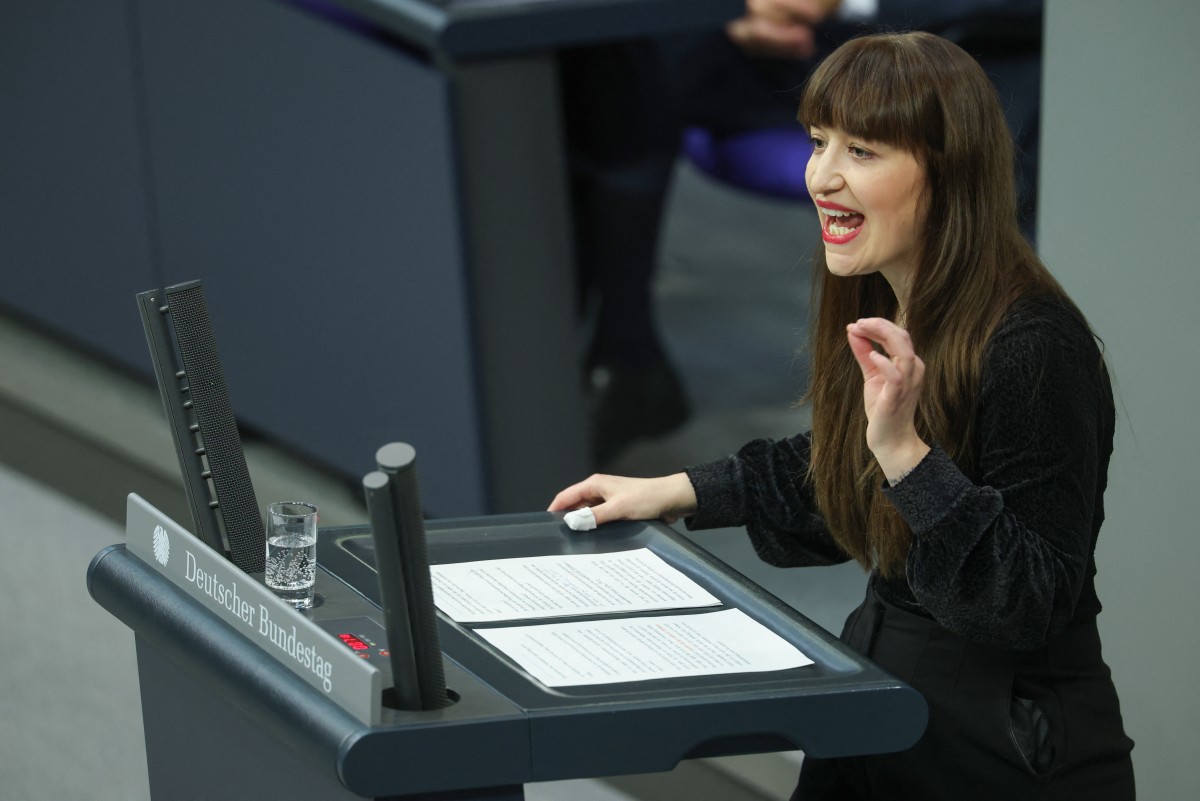
On Friday, the budget for 2027 is to be approved by the Bundestag. Merz will not vote. He will then be at the EU summit in Brussels.
German police arrest teenage far-right extremists
German police arrested three teenage boys Wednesday on suspicion of belonging to a far-right extremist group called "Terror 18" that planned to set fire to a refugee shelter, prosecutors said.
Three other suspected members, also teenage boys, were arrested in October and have remained in jail since.
The suspects -- partially identified as Lasse G., Kalle K. and Shawn Z. -- were arrested in various towns in northern Germany on suspicion of belonging to the "domestic terrorist organisation", German federal prosecutors said in a statement.
Media reports said two of the suspects are 14 years old, while the third is 15.
Prosecutors said all of them are affiliated with "Terror 18", described as a "far-right terrorist organisation that emerged from an online group undergoing rapid radicalisation".
According to prosecutors, the young radical group has been driven by a desire "to fight the state they loathe and to sow insecurity among the population".
They allegedly plotted "acts of arson and violence, potentially extending to targeted killings of foreigners and political opponents", prosecutors said.
Police said they successfully prevented a planned arson attack in October on a refugee shelter in the town of Winsen, just south of Hamburg.
Berlin and Brandenburg among Germany’s top targets for car thieves
Berlin has the highest rate of car theft in Germany, according to figures from the German Insurance Association (GDV) published this week.
In 2025, 3,082 comprehensively insured cars were stolen in the capital. That’s roughly one in 333 vehicles, statistically ten times the national average and well ahead of second-placed Hamburg.
The figures come from insurers, and theft cover only applies to voluntary part or fully comprehensive policies, so they differ from police crime statistics. Berlin police said the GDV's broad findings matched their own and blamed the anonymity of a big city, plus motorway links and proximity to the Polish border, which offer a direct route to eastern European markets.
Brandenburg ranks third, with 887 cars stolen and a rate double the national average. The average loss per theft was €20,992 in Brandenburg and €20,278 in Berlin, against a national figure of €20,775.
Volkswagen models are popular targets, along with Chrysler, Land Rover and Toyota. The third-generation Range Rover Sport is the most frequently stolen, at 199 thefts per 10,000 insured cars.
There is some good news, however. Thefts actually fell by 20 percent in Berlin and 22 percent in Brandenburg in 2025.
BSW leaders back cooperation with far-right AFD ahead of Dresden party convention
Parliamentary group leaders from the BSW in eastern Germany have unanimously backed working with the AfD, setting up a row before the party's federal convention in Dresden on Friday.
According to t-online, citing a position paper, they endorse the so-called "Magdeburg Approach", under which the BSW uses "majorities wherever they can be found – without blinders".
The paper notes that voters made the AfD the strongest group in Saxony-Anhalt, and that together with the BSW it holds a majority.
"It should go without saying that this majority is utilised wherever there is common ground," it says, adding that the party also seeks common ground with everyone else. It argues that excluding the AfD has only strengthened it among voters fed up with being lectured.
It was signed by leaders in Saxony-Anhalt, Saxony and Brandenburg, plus the two remaining BSW state legislators in Thuringia. The BSW failed to win seats in Mecklenburg-Western Pomerania and Berlin this year.
The approach is divisive. Founders and federal executive members Ralph Suikat and Jessica Tatti have called it a "misguided path" and demanded a "course correction". A decision on the party's direction is expected at the convention.
READ ALSO: Germany's AfD and populist BSW pass motion to end aid for Ukraine
Alleged Russian spy goes on trial in Berlin
A Berlin woman accused of spying for Russia will go on trial on espionage charges on Thursday, 10 months after her high-profile arrest sparked a diplomatic clash between Germany and Moscow.
The German-Ukrainian businesswoman partially identified as Ilona W., 57, is accused of using contacts with current and former German defence ministry officials to gather information about military aid for Ukraine, drone test sites and the arms industry.
She is also accused of facilitating access to high-level political events in Berlin for her alleged handler, an officer from Russia's GRU intelligence agency working as a supposed diplomat at the Russian embassy in Berlin.
The alleged involvement of the Russian embassy drew outrage from German officials at the time of the woman's arrest in late January, including Foreign Minister Johann Wadephul, who called it a "hostile act" and "completely unacceptable".
Russia's ambassador was summoned over the incident, and the handler -- identified by news weekly Der Spiegel as the embassy's deputy military attache -- was expelled from Germany.
Become a member or log in to continue reading
More
Comments
Join the conversation in our comments section below. Share your own views and experience and if you have a question or suggestion for our journalists then email us at news@thelocal.de.