Experts from EU member states will meet on Wednesday (11 November) to discuss last week’s spate of bomb hoaxes which affected dozens of flights across Europe and causing millions in losses.
The meeting, chaired by the European Commission and also including security experts from non-EU Norway, Switzerland, and Iceland, will serve to review the situation and discuss the need for extra measures.
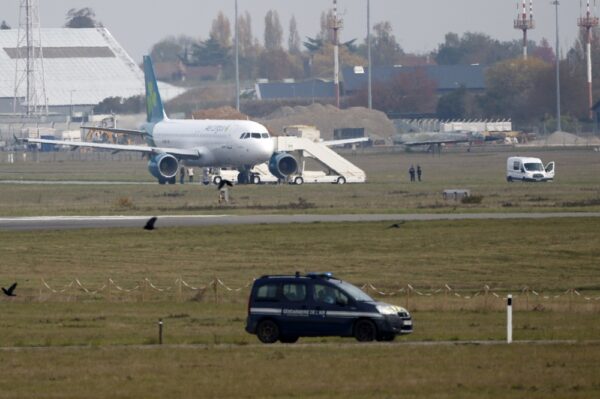
At least 35 planes between various airports across Europe faced bomb threats last week, according to Eurocontrol, an organisation for safe air navigation. A Finnair flight between Helsinki and Rome was escorted by Italian fighter jets while another plane, from Dublin to Rome, was diverted to a French air base.
The scare affected a total of 20 airports in 16 countries, Austria, Belgium, Bulgaria, the Czech Republic, Denmark, Finland, France, Greece, Ireland, Italy, Poland, Portugal, Romania, Serbia, Spain, and the UK.
The bomb hoaxes affected in total less than 0.5 percent of European flights on any of the three days when alarms were sent, Eurocontrol told EUobserver, and so they “have not had an impact on the delay in the air traffic network.”
“We remain at full operational readiness,” said EU transport commissioner Apostolos Tzitzikostas last week. “Our priority is clear: the safety of passengers and the smooth functioning of European aviation”.
Read more
Fake bomb warnings are hitting European aviation – but the bigger threat came from Jared Kushner
Though none of the threats turned out to be real, each alarm consumed resources, time, energy, money, and personnel involved, costing €55,000 on average according to Eurocontrol data, but sometimes reaching even €220,000 per flight affected, according to aviation expert Philippe Baum of Coventry University. This means millions of euros lost across the continent.
This article continues, but the full version is available only to EUobserver.com subscribers. Visit account.euobserver.com/membership