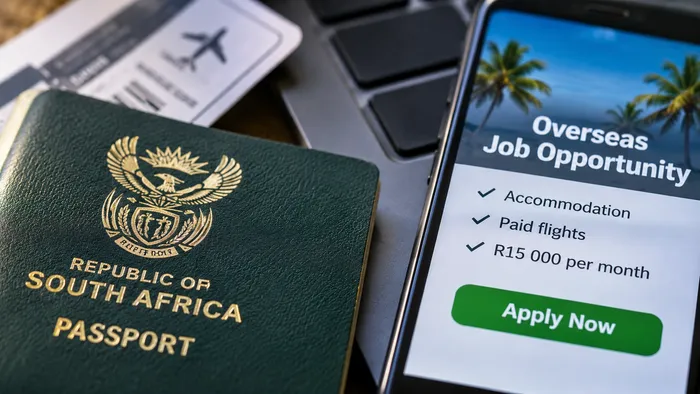
Fake overseas job offers are being used to lure South Africans into scam call centres in Southeast Asia, with alleged recruiters operating locally.
South Africans are being recruited for jobs abroad by alleged local agents working with international trafficking syndicates, with victims ending up trapped in scam call centres in Southeast Asia.
The warning follows the return of a 24-year-old South African woman who was trafficked through several countries after accepting what she believed was a legitimate job offer in Thailand.
The Gauteng Department of Social Development said the woman, identified by the pseudonym Sihle, left South Africa on March 31, 2025, after a family friend arranged employment for her in Thailand.
She was allegedly sold and taken to Myanmar before being transferred to Cambodia and Malaysia, where she was forced to work in scam call centres.
She eventually sought assistance from the International Organisation for Migration and the South African Embassy in Malaysia, which helped arrange her return.
National Freedom Network coordinator Catherine Restiau said criminal networks were using recruiters based in Southern Africa to identify prospective victims and arrange their travel.
"What matters for South Africa is that recruitment is outsourced to local recruiters. Survivors have told NGOs that the recruiters are physically based in South Africa and Namibia."
According to Restiau, the syndicates advertise jobs in call centres, marketing, information technology and hospitality through Facebook, Instagram and TikTok.
The offers promise salaries of around R15 000 a month, accommodation and paid flights.
Restiau said some offers came through friends or relatives already living abroad, making them appear more credible to prospective jobseekers.
She explained that victims were generally flown to Thailand before being transported to Myanmar or Cambodia, where their passports were confiscated and they were forced to participate in online fraud.
"The so-called employment agency usually exists only as a social media page and a WhatsApp number, making it difficult for jobseekers to verify the agency, employer and actual working conditions independently," she added.
Restiau warned that the networks would continue recruiting South Africans unless authorities investigated those operating locally.
"If those recruiters are left alone, rescues abroad simply free up spaces for the next group."
She called for stricter regulation of overseas recruitment agencies, investigations into financial transactions linked to traffickers and stronger action against fraudulent job advertisements.
Restiau said unemployment contributed to the problem but cautioned against overlooking how convincing the recruitment methods had become.
"They are not naive; they are applying for what look like real jobs."
According to Statistics South Africa's second-quarter 2026 labour force survey, youth unemployment stood at 47.4%, with approximately five million young people unemployed.
Hawks arrest suspects in Cape Town trafficking investigation
In February, the Hawks arrested two suspects, aged 44 and 51, in Kraaifontein, Cape Town, following an investigation involving four South Africans recruited for supposed call-centre jobs in Thailand. The case was covered in a report on the arrest of two suspects over a Thailand job scam.
The victims were allegedly taken to Cambodia, where their passports were confiscated and they were forced to make fraudulent calls demanding money from people under the pretence that criminal cases had been opened against them.
The Department of International Relations and Cooperation (DIRCO) could not provide figures on the number of South Africans rescued from scam centres in Southeast Asia during 2026 or those still awaiting assistance.
DIRCO's Director of Media Liaison, Nelson Kgwete, said the department handled cases as they were reported.
"We do not keep statistics on these types of cases. We resolve each case as and when we are made aware of it," Kgwete said.
The department urged South Africans to verify overseas employment offers through South African embassies before travelling.
Restiau called for greater attention to recruitment networks operating within South Africa, saying returning victims could help investigators identify those responsible.
"Survivors are the only route to the recruiters."