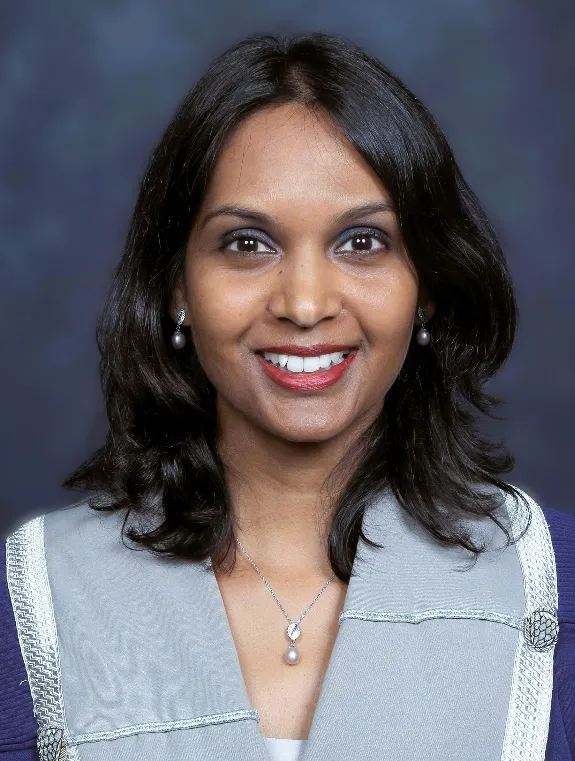
Former Durban paediatric neurologist Dr Serini Murugasen has been awarded a D2 2027 Young Clinician Scholarship to attend an international symposium on complex childhood epilepsies and bring research insights back to South Africa.
Murugasen, 43, a specialist paediatrician and paediatric neurologist based in Cape Town, said the scholarship would provide an opportunity to learn from leading international experts, build research networks and bring valuable skills back to South Africa.
The scholarship is aimed at early-career clinicians working in epilepsy care.
The symposium will bring together experts from around the world who are working towards disease-modifying therapies for children with severe and complex epilepsies and genetic neurodevelopmental disorders.
Murugasen said the costs associated with attending an international conferences often excluded healthcare professionals working in resource-constrained settings.
“The global experts in the field are gathered around the table but we often cannot afford a seat,” she said.
The scholarship will cover her flights, accommodation, meals and all costs associated with attending the meeting, removing financial barriers that would otherwise have prevented her participation.
“I am very grateful to have a seat at the table, as frankly it would not have been possible to attend without it,” she said.
Murugasen, formerly of Isipingo Hills, moved to Cape Town at the age of 17 to pursue her medical studies at the University of Cape Town (UCT), where she graduated magna cum laude.
She was also awarded the prestigious Rhodes Scholarship to pursue postgraduate studies in Public Health and Epidemiology at the University of Oxford, an experience she credits with laying the foundation for her research career.
She subsequently pursued postgraduate studies at the University of Oxford, completing a Masters in Global Health Science and an MSc in Clinical Medicine.
She later specialised in paediatrics and completed a further two years of sub-specialisation in paediatric neurology, receiving the Robert McDonald Medal from the Colleges of Medicine of South Africa.
She has since built a career spanning clinical service, teaching, research and advocacy, holding several positions within the provincial and national health sectors.
Her roles include sessional paediatric neurologist at Red Cross War Memorial Children's Hospital, senior lecturer at UCT and National Secretary of the South African chapter of the International League Against Epilepsy.
She is currently pursuing a PhD in Paediatric Neuroscience at UCT, focusing on the impact of genetic diagnosis on the care of children with complex epilepsy syndromes in resource-constrained settings.
Her research is funded by a scholarship from the Childhood Epilepsy Centre at Katholieke Universiteit Leuven in Belgium.
Murugasen said her research was driven by the need to improve access to diagnosis and treatment for children in Africa, particularly those with complex neurological conditions.
“African countries are often attractive research prospects but the research is done by outside parties who do not always have the best interests of our populations at heart.
“We need to build African research capacity so that we can conduct our own clinical trials and drug development that have our children's needs as the central driver,” she said.
She said her interest in genetics began during her childhood, when she became fascinated by its potential to transform the diagnosis and treatment of disease.
Although she initially considered pursuing genetics alone, she was encouraged to explore clinical medicine, which ultimately opened the door to a career combining patient care, research and teaching.
“Through my PhD and the advancement of neurogenetics, I have found my way back to my original interest and married it with my new field of expertise,” she said.
Murugasen said she believed specialists had a responsibility to deliver effective clinical services, mentor younger doctors and conduct research that benefited the communities they served.
She said her career had allowed her to contribute to the training of junior doctors, the reorientation of services and a better understanding of childhood neurological conditions, particularly in Africa.
“I am also a fierce advocate for my patients and their families and believe our population deserves the same access to diagnosis and treatment as every other child in the world,” she said.
Despite the challenges associated with medicine, she said caring for children remained the most rewarding aspect of her profession.
“Even when we cannot cure, we can care, and to travel a difficult journey with a child and their family is so important.
“Children are also the most resilient, the most joyful and honestly the best of us. Being able to work with children every day is what makes my job my calling,” she said.
She acknowledged the physical, mental and emotional demands placed on healthcare professionals, particularly junior doctors working in the public health system.
Murugasen recalled working exhausting shifts, facing threats in the workplace and carrying responsibilities that were often designed for entire teams.
However, she said the experiences had strengthened her belief in mentorship, kindness and supporting colleagues.
“I believe in mentoring, in encouraging, in showing kindness, in supporting and in sharing knowledge, strength and resources with my juniors as I have progressed through my career.
“I can remember how each individual act from a senior that fell into one of those categories carried me through many difficult days and nights,” she said.
She added that the difficulties faced by healthcare professionals should never overshadow the experiences of the families they cared for.
“More than anything, I remember what it meant to those families that I cared for. That no matter how hard it was for me, it was often worse for them.
“That the system is broken, but we don't have to be, if we realise we're all just trying to get through a bad situation together,” she said.
Murugasen has increasingly taken on an advocacy role, having published on childhood neurological conditions and delivered international webinars this year for the International Child Neurology Association on cerebral palsy and epilepsy.
She said advocacy was an important responsibility for healthcare professionals, whether it involved supporting an individual patient or campaigning for better care at a national level.
The scholarship, she said, was part of a broader journey and not an achievement she wanted to overstate.
“I have been very fortunate with the opportunities that have come my way and hope to do them all justice,” she said.
She credited her mother, Judge Mohini Moodley, for being a major influence in her life, describing her as a woman who embodied strength, grace, courage, intelligence and integrity.
Murugasen also thanked her husband and children for their unwavering support, saying her demanding career had required sacrifices from her family.
She said they had adapted to her professional commitments, often joining meetings, helping with teaching and even appearing in webinars.
Despite her busy schedule, she said maintaining family traditions remained important, including making pancake breakfasts one weekend day every week so they could spend time together.
“My family is my reason for being,” she said.
Offering advice to aspiring doctors, Murugasen said medicine required a genuine passion for helping people and a willingness to invest emotionally and mentally in the profession.
“Being a doctor is not a fancy title, but an enormous responsibility that will demand your best mentally and emotionally.
“To do yourself and the patients you care for justice, invest in the time to decide what you really want from this career,” she said.
She encouraged young medical professionals to seek mentors and explore the many opportunities available within medicine, including research, teaching, non-clinical specialities and advocacy.
“Once you find your passion, everything falls into place and you will give the best of yourself. And ultimately, our patients deserve nothing less than the best from us,” she said.