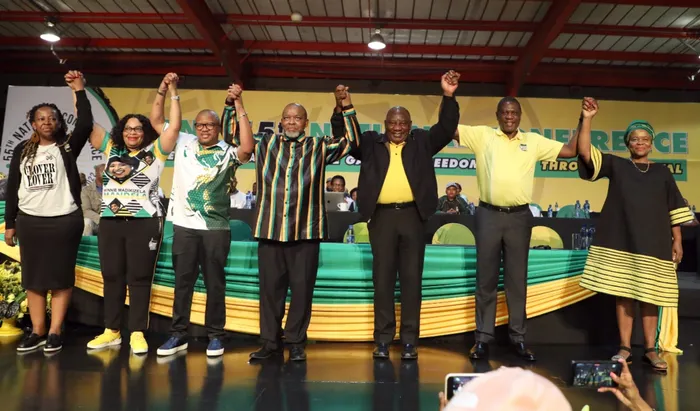
The ANC’s top seven leaders raise their joined hands in a victory salute after being elected at the party’s 55th national elective conference at Nasrec, Johannesburg, in 2022. The writer ponders whether the ANC’s electoral fortunes in 2024 and 2026 might have differed had former treasurer-general Dr Zweli Mkhize’s bid for the presidency succeeded, building on electoral gains in KwaZulu-Natal.
When ANC delegates chose their president at Nasrec in December 2022, Cyril Ramaphosa received 2476 votes and Dr Zweli Mkhize received 1897. The strongest argument for what the ANC might have gained from a Mkhize presidency lies in the set of figures below.
With Mkhize as provincial chairperson, the ANC in KwaZulu-Natal made its biggest provincial election gain. With him serving as both chairperson and premier, it followed that breakthrough with its biggest increase in municipal ballots. That record makes a serious case that the national ANC could have benefited from his experience of building support in a province where the party had long trailed the IFP.
The KZN breakthrough that lifted the national tally
In 2009, Mkhize led the provincial organisation as it secured the ANC’s first outright majority in the KZN legislature. The party’s provincial vote climbed from 1 287 823 to 2 192 516, and its share rose from 46.98% to 62.95%. Mkhize then became premier. On the National Assembly ballot cast in KZN, the ANC gained 943 481 votes, rising from 1 312 767 in 2004 to 2 256 248 in 2009. Across the rest of the national tally, it lost 173 648 votes.
KZN therefore accounted for the entire nationwide net gain of 769 833 votes and supplied 19.37% of all ANC votes nationally. The national vote share still fell from 69.69% to 65.90% as the total number of valid ballots grew faster than the ANC’s vote. If the ANC had retained its 2004 share in KZN, with the actual 2009 ballot volume and the results elsewhere held fixed, its national share would have been about 62.61%.
On that benchmark, KZN’s higher ANC vote share added roughly 3.3 percentage points to the national result.

Dr Zweli Mkhize’s campaign team pressed ahead with his bid for the ANC presidency at the party’s 55th national elective conference at Nasrec. The writer reflects on how the ANC’s fortunes might have differed had Mkhize emerged victorious.
Image: TIMOTHY BERNARD/ ANA Studio Archives
The 2011 result is the strongest evidence for Mkhize
By the 2011 local elections, Mkhize held both provincial leadership posts. The ANC rose from 1 839 406 municipal ballots in 2006 under Ndebele to 3 184 260 in 2011 under Mkhize. The gain of 1 344 854 ballots was the largest in KZN’s comparable municipal series. Its share rose from 47.56% to 56.79%, giving it a majority of the province-wide municipal vote. The IFP split and the arrival of the National Freedom Party also changed the contest.
Even with that context, the increase in both ballots and share shows that the ANC carried its 2009 breakthrough into a different kind of election.
From winning votes to forming governments
After the 2011 local elections, Mkhize and National Freedom Party leader Zanele kaMagwaza-Msibi signed a co-governance pact covering 19 hung councils. Contemporary reporting counted 39 of KwaZulu-Natal’s 61 municipalities as outright ANC wins. The agreement gave the ANC a role in governing councils where it lacked a majority of its own. The IFP retained outright control of Msinga and Ulundi.
Zululand District Municipality shows what the agreement achieved. The IFP led the district ballot with 39.3% of the vote, but the ANC and NFP formed the governing coalition, with kaMagwaza-Msibi serving as mayor. The ANC gained a governing role in an IFP stronghold by accepting that its partner would hold the mayoralty. That ability to negotiate and share power is part of what Mkhize could have brought to the national ANC.
Public approval and administrative performance
Mkhize’s public standing as premier adds another dimension. In a 2012 opinion piece later cited by the Mail & Guardian, then ANC provincial secretary Sihle Zikalala described Mkhize as the most popular premier, citing survey approval of 73% against 61% for Western Cape Premier Helen Zille. The Mail & Guardian attributed the figures to Afrobarometer. The original survey and its methodology remain unverified.
The Public Service Commission’s 2012 report assessed the nine Offices of the Premier for 2010/11 against the public administration principles in Section 195 of the Constitution. The Western Cape office ranked first at 82%, followed by Gauteng at 77% and the Northern Cape at 64%. KwaZulu-Natal and Limpopo tied for seventh at 54%. The survey figures speak to reported public approval of Mkhize.
The commission’s score speaks to how his office performed against administrative standards. Whether Mkhize could have replicated that record nationally remains a matter of speculation. But his KZN experience offered something the ANC increasingly lacked: a demonstrated ability to expand its electoral support, negotiate political partnerships and consolidate power in a province where its dominance had never been assured. That experience deserved serious consideration at Nasrec.
KZN drove the ANC’s national vote gain in 2009
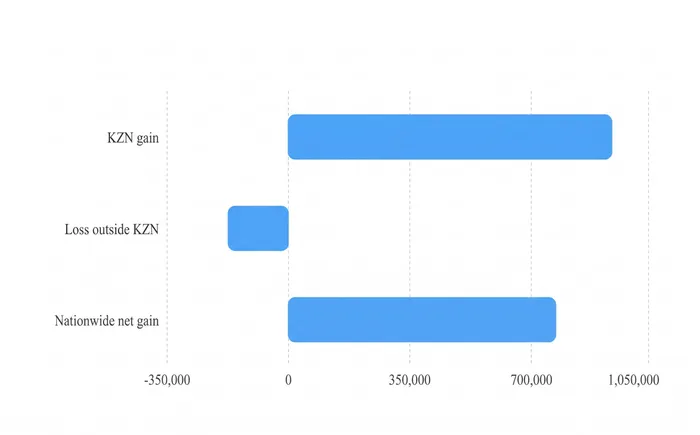
Change in ANC National Assembly votes from 2004 to 2009. Zweli Mkhize chaired the ANC in KZN in 2009.
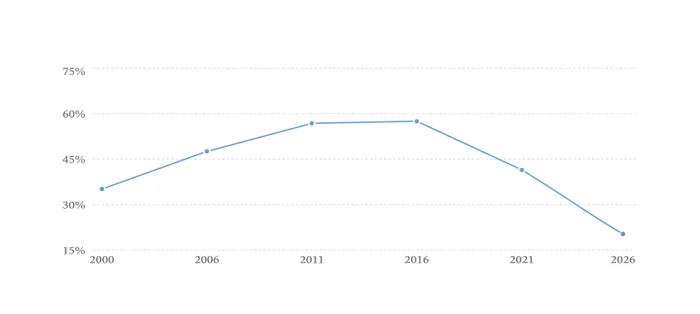
A line chart showing the full municipal trajectory. The rise and decline of ANC municipal support in KZN. Share of combined ward and municipal proportional-representation ballots. The 2026 figure is approximate. Mkhize’s 2011 result took the ANC above 50% for the first time in the comparable municipal series. Support edged higher in 2016, then fell sharply in 2021 and again in 2026.
Ngwane is former head of ministry at the Department of Sports, Arts and Culture. He writes in his personal capacity. His views do not necessarily reflect those of the National Media Group and its affiliated brands and platforms.