CNA speaks to exporters and industry experts at Shanghai’s flagship import expo about what China still wants from the world, as foreign suppliers face a tougher sell.
A giant banana replica on display at the Goodfarmer exhibition booth during the China International Import Expo (CIIE) on Nov 6, 2026. (Photo: CNA/Tan Wen Lin)
A giant banana replica on display at the Goodfarmer exhibition booth during the China International Import Expo (CIIE) on Nov 6, 2026. (Photo: CNA/Tan Wen Lin)



SHANGHAI: Honey-sweet pineapples from the Philippines, juicy blueberries from Peru and a new variety of apple that was bred in the Netherlands.
At Goodfarmer Fruit Group's sprawling stand at the China International Import Expo (CIIE), the produce drew plenty of interest - and offered a glimpse of something China still needs from the rest of the world.
Much of China's climate is unsuitable for growing tropical fruit such as bananas and pineapples on a large scale, said Wu Ying, deputy general manager of the company's international brands division.
“Hainan is growing them, but I think there's still demand for imports,” Wu told CNA.
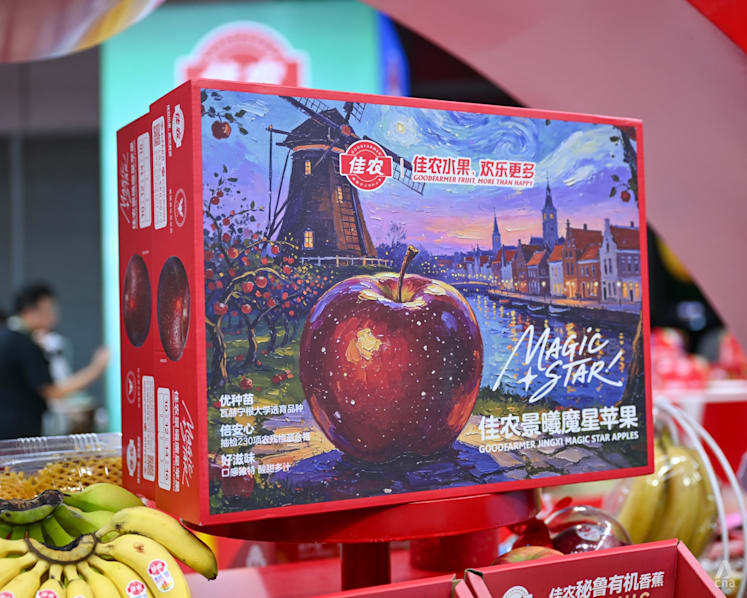 Goodfarmer Jingxi Magic Star apples on display at the China International Import Expo (CIIE) on Nov 6, 2026. (Photo: CNA/Tan Wen Lin)
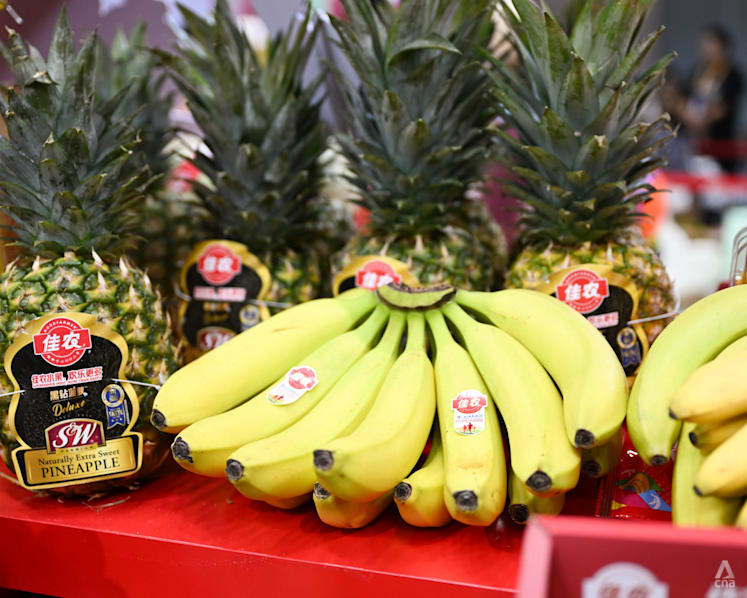 Goodfarmer bananas on display at the China International Import Expo (CIIE) on Nov 6, 2026. (Photo: CNA/Tan Wen Lin)
Goodfarmer has attended all nine editions of the annual Shanghai trade fair, betting on China’s appetite for imported fruit.
CNA Games
 Guess Word
Crack the word, one row at a time
 Buzzword
Create words using the given letters
 Mini Sudoku
Tiny puzzle, mighty brain teaser
 Mini Crossword
Small grid, big challenge
 Word Search
Spot as many words as you can
Show More
Show Less
This year's edition, which ran from Nov 5 to 10, drew a record 4,142 overseas companies from 148 countries and regions, according to organisers. More than 2,000 of these businesses exhibited at the CIIE for the first time.
That appetite has held up even as Chinese consumers tighten their belts elsewhere, Wu said.
“People aren’t really buying luxury goods now, but with some premium fruit, they feel that the bar isn’t that high - and are still very willing to try it,” Wu added.
Goodfarmer’s fruit business has grown by more than 20 per cent this year, Wu said - with its products sold in about 55,000 stores across China.
Its latest addition, bananas from Peru, took just five months to gain entry into the country and are expected to reach stores around Chinese New Year, according to Wu.
Organic Peruvian blueberries, which the company began importing last year, followed five years of talks between the two countries, she added.
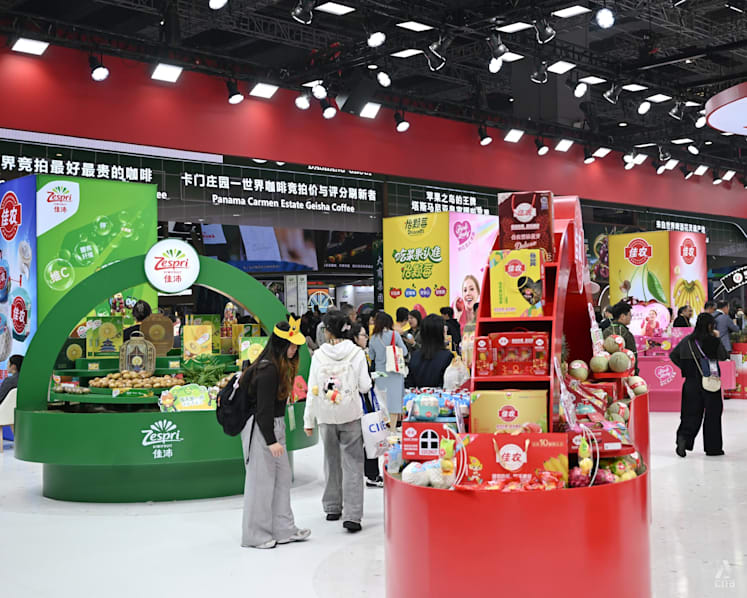 Goodfarmer exhibition booth during the China International Import Expo (CIIE) on Nov 6, 2026. (Photo: CNA/Tan Wen Lin)
Also at the trade fair was New Zealand-based natural health and wellness company Comvita - which has carved out a niche for its premium manuka honey among quality-minded consumers in major Chinese cities.
“They are buying New Zealand manuka honey with a clear origin, scientifically studied, distinctive natural properties and independently verified quality,” its chief executive Karl Gradon told CNA.
That distinction matters in a country hardly short of product.
China produces more honey than any other country, according to United Nations data - accounting for around a quarter of the world’s total.
And Chinese honey brands are “strong competitors”, Gradon said.
“The premium has to be earned through the product and the confidence behind it,” Gradon said.
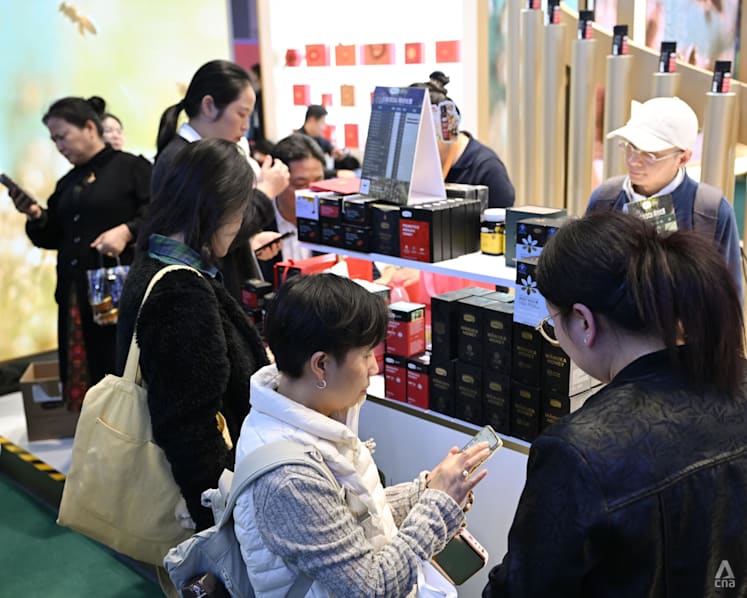 Attendees browse manuka honey products at the Comvita exhibition booth during the China International Import Expo (CIIE) on Nov 6, 2026. (Photo: CNA/Tan Wen Lin)
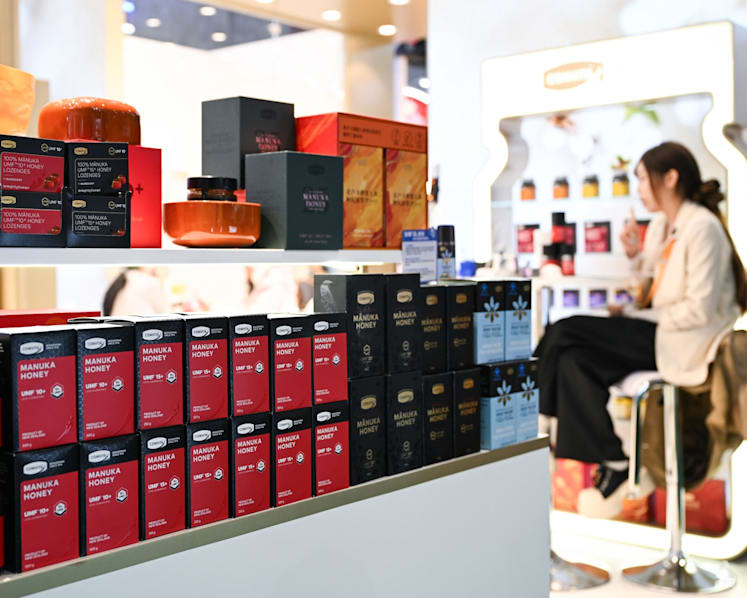 Comvita's manuka honey on display as a livestreaming session takes place in the background at the China International Import Expo (CIIE) on Nov 6, 2026. (Photo: CNA/Tan Wen Lin)
WHAT’S STILL ON CHINA’S SHOPPING LIST?
China is still buying from the world. But as its manufacturers move up the value chain, its wants and needs are changing - and so is what it takes to sell there.
“The reality is that the imports that China needs aren’t necessarily exports that other countries are producing,” said Cameron Johnson, senior partner at Shanghai consultancy Tidalwave Solutions.
But the market for foreign goods is not shrinking, he said.
"I wouldn't say it's smaller; I think it's just shifting," added Johnson.
At CIIE, imported food, medical devices and certain technology held the most appeal for Chinese buyers, Johnson said.
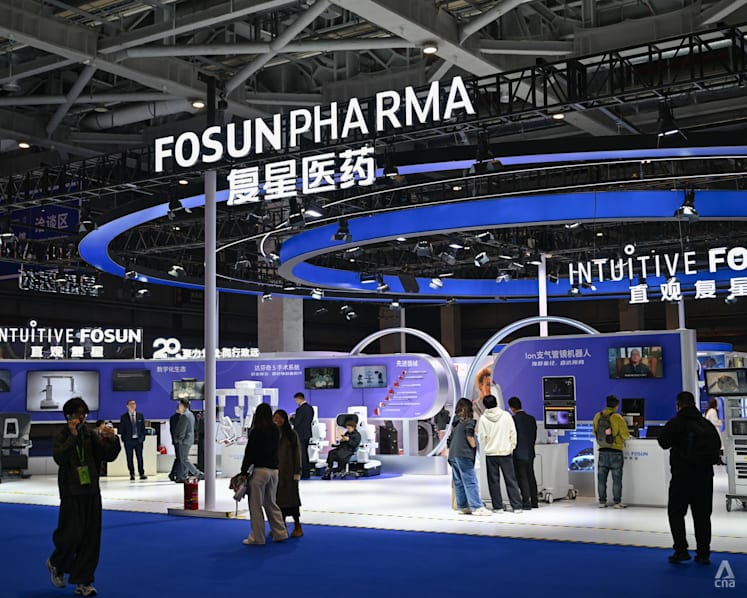 Fosun Pharma exhibition booth during the China International Import Expo (CIIE) on Nov 6, 2026. (Photo: CNA/Tan Wen Lin)
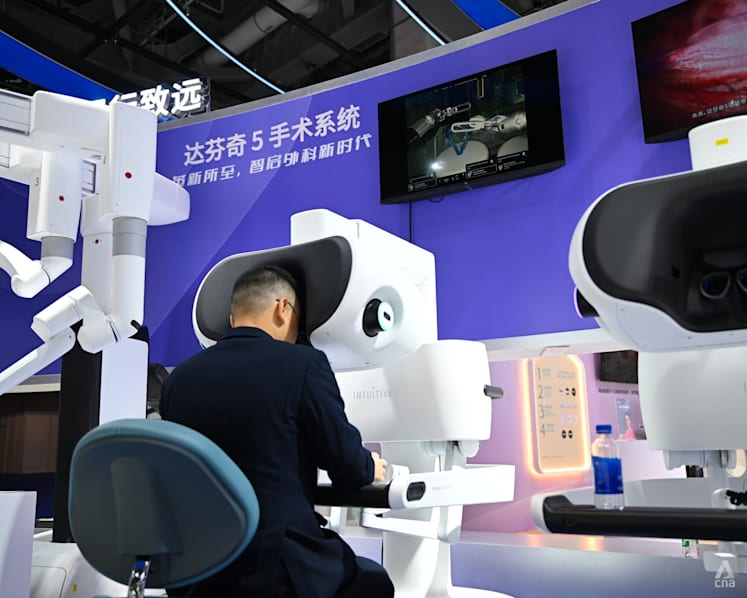 An attendee tries out Intuitive's da Vinci 5 robotic-assisted surgical system at the Fosun Pharma exhibition booth during the China International Import Expo (CIIE) on Nov 6, 2026. (Photo: CNA/Tan Wen Lin)
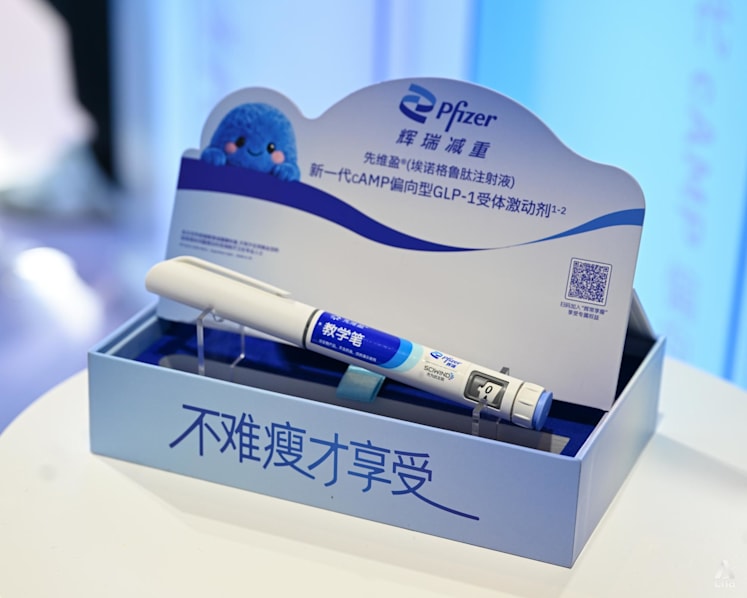 Pfizer's Xianweiying (ecnoglutide) weight-management injection pen on display at the China International Import Expo (CIIE) on Nov 6, 2026. (Photo: CNA/Tan Wen Lin)
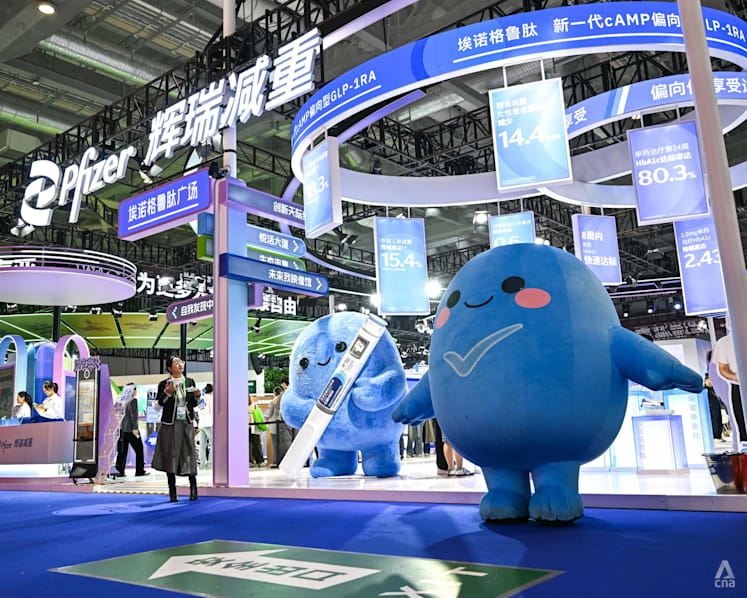 The Pfizer exhibition booth at the China International Import Expo (CIIE) on Nov 6, 2026. (Photo: CNA/Tan Wen Lin)
For its part, Beijing has pledged to buy more from abroad.
At the event’s opening ceremony on Nov 5, Chinese Vice Premier Ding Xuexiang said the country would import more quality goods and services - and had never “deliberately pursued a trade surplus”.
Customs data released on Nov 10 showed China’s imports rising 23.6 per cent in the first 10 months of 2026 - outpacing export growth of 17.6 per cent.
Yet its goods trade surplus still surpassed US$1 trillion - around 8 per cent more than the same period last year.
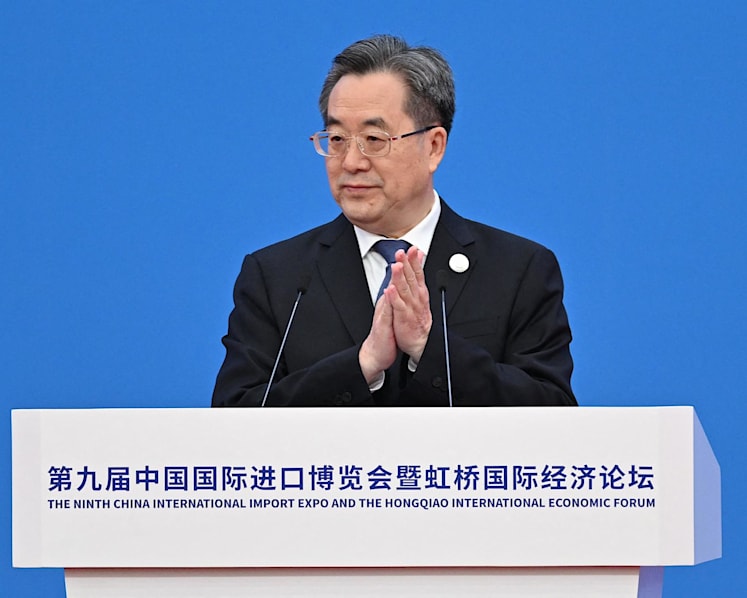 China’s Vice Premier Ding Xuexiang applauds during the opening ceremony of the 9th China International Import Expo (CIIE) in Shanghai on Nov 5, 2026. (Photo: AFP/Jade Gao)
MORE THAN RAW MATERIALS
For countries rich in natural resources, China’s vast market still offers ample opportunities.
Mato Grosso, Brazil's biggest soybean-growing state, was at the import expo - showcasing soybeans, beef, sesame and beans.
Local farmers can harvest up to three crops a year from the same land, said Frederico Azevedo e Silva, superintendent of Sistema OCB/MT, which represents the state's cooperatives.
He does not see China's efforts to raise its own agriculture output as a threat.
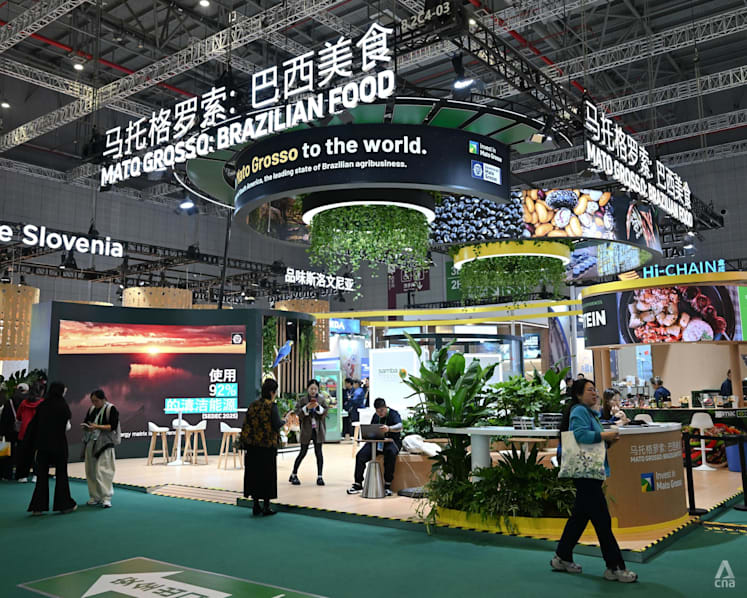 Mato Grosso: Brazilian food exhibition booth during the China International Import Expo (CIIE) on Nov 6, 2026. (Photo: CNA/Tan Wen Lin)
“There’s no competition between China and Brazil. In that sense, they’re complementary,” he said in response to a question raised by CNA during a press session.
But even for an agricultural powerhouse like Brazil, China’s demand is selective.
China buys relatively little Brazilian corn because it produces so much of its own, said Ariana Guedes de Oliveira, international affairs director at Invest in Mato Grosso, the state's investment agency.
“We only export corn to China when there’s some weather disruption that affects its domestic production,” she added.
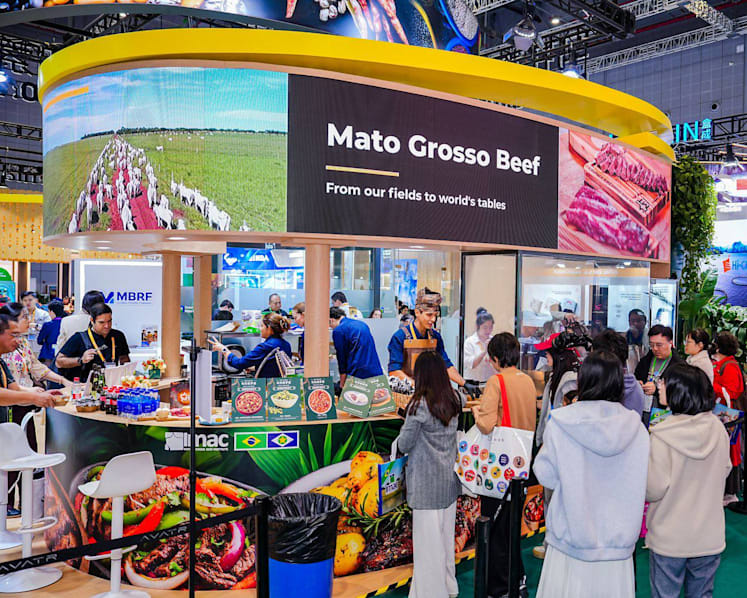 One part of the Mato Grosso stand at the China International Import Expo (CIIE) in Shanghai, The state is Brazil’s biggest soybean grower. (Photo: Mato Grosso)
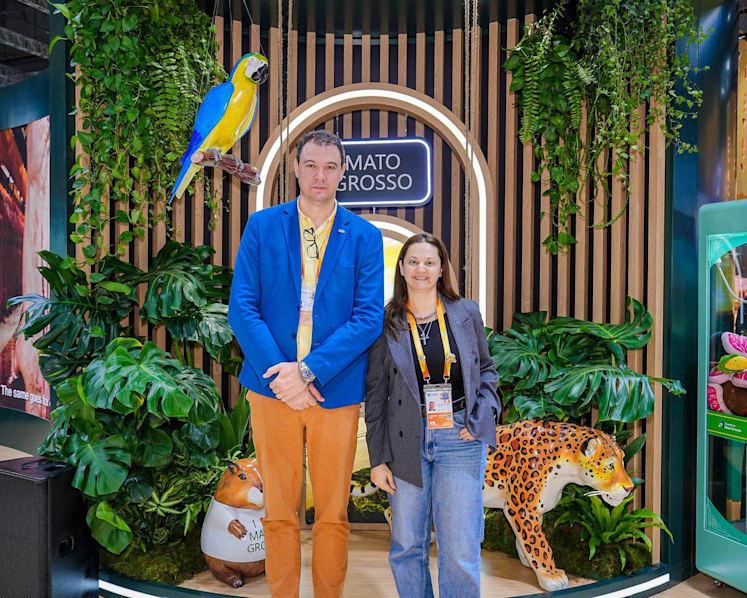 Frederico Azevedo e Silva, superintendent of Sistema OCB/MT, and Ariana Guedes de Oliveira, international affairs director at Invest in Mato Grosso, at the China International Import Expo (CIIE) in Shanghai. (Photo: Mato Grosso)
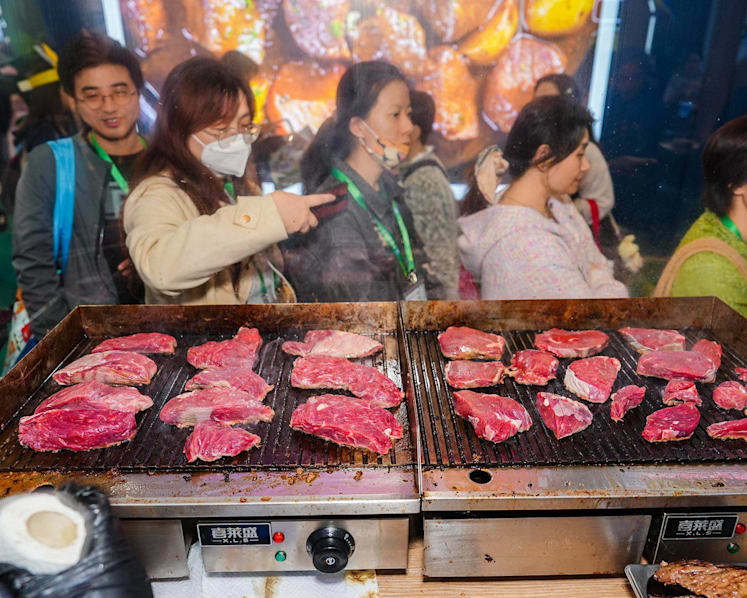 Visitors at the Mato Grosso stand at the China International Import Expo (CIIE) in Shanghai. (Photo: Mato Grosso)
The central African nation of Gabon made its CIIE debut this year - showcasing palm oil, coffee, tea and locally made beverages. Its president, Brice Oligui Nguema, also addressed the opening ceremony.
“Gabon is a young country, full of opportunities,” Marius Issa Nkori, director general of CDC Gabon, the country's state deposit fund, told CNA.
“The idea is to show what's being done in Gabon, what opportunities there are, and what others could also bring us.”
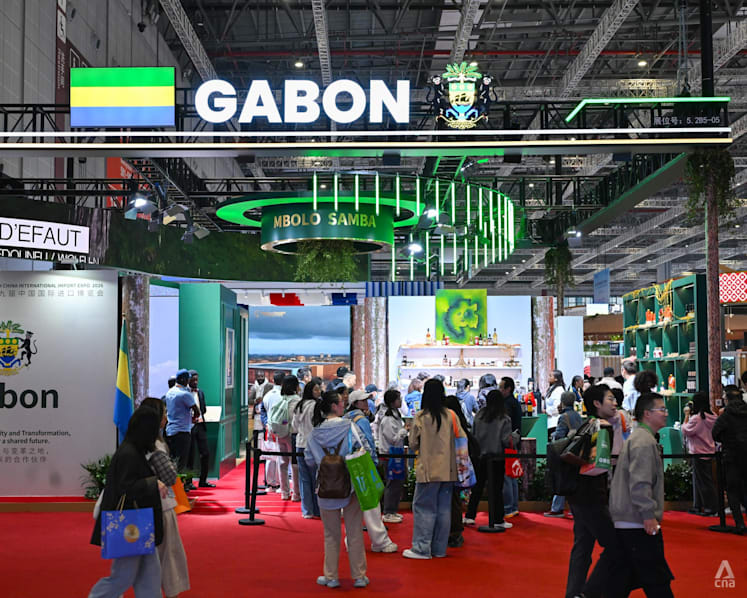 The Gabon exhibition booth at the China International Import Expo (CIIE) on Nov 7, 2026. (Photo: CNA/Tan Wen Lin)
China has also moved to widen access for African exports, offering zero-tariff treatment to imports from African countries with which it has diplomatic ties.
Timber "is in first place" among the Gabonese products that stand to gain, followed by mining, said Issa Nkori.
But access to the Chinese market is only part of the challenge.
Investment is also needed to develop industries that can add value to Gabon's natural resources, he said.
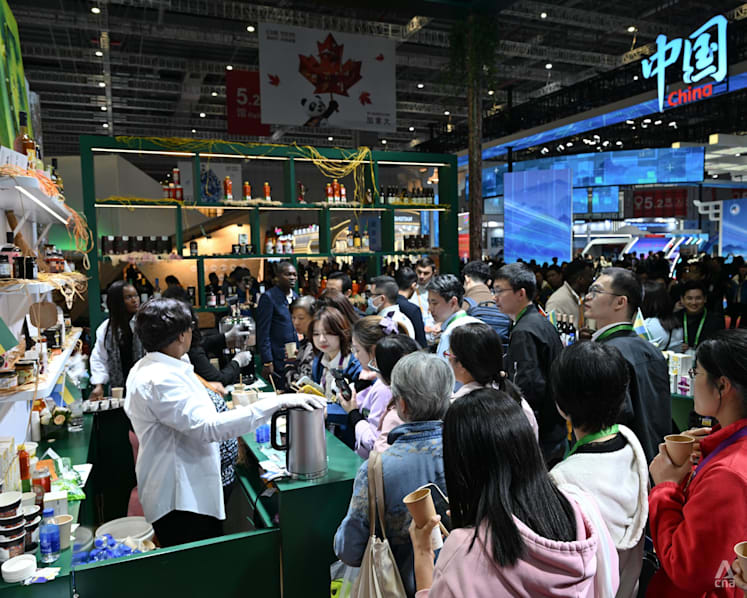 Gabon exhibition booth at the China International Import Expo (CIIE) on Nov 7, 2026. (Photo: CNA/Tan Wen Lin)
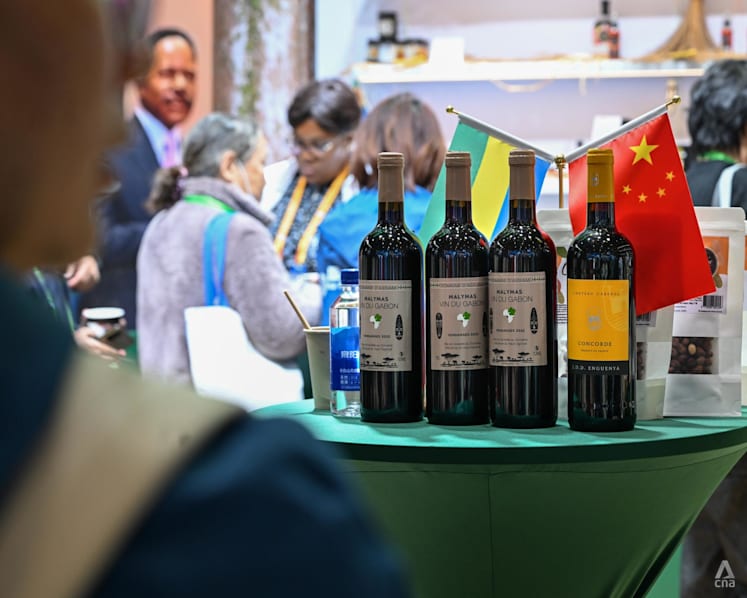 Gabon's produce exhibited at the booth during the China International Import Expo (CIIE) on Nov 7, 2026. (Photo: CNA/Tan Wen Lin)
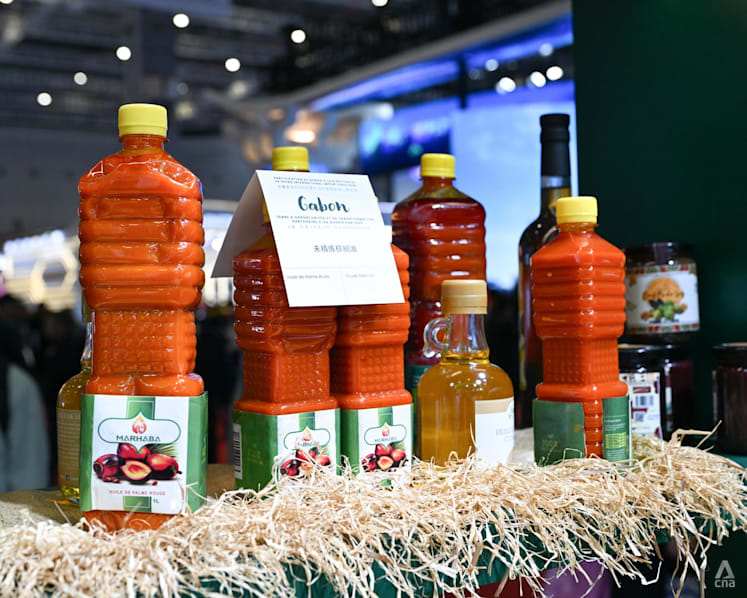 Gabon's produce exhibited at the booth during the China International Import Expo (CIIE) on Nov 7, 2026. (Photo: CNA/Tan Wen Lin)
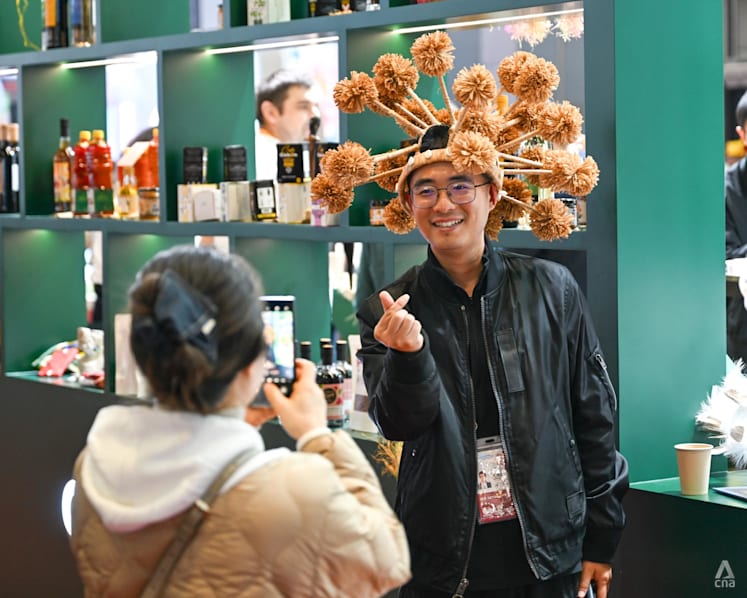 An attendee poses for a photograph wearing Gabon's traditional necklace Kakoundja during the China International Import Expo (CIIE) on Nov 7, 2026. (Photo: CNA/Tan Wen Lin)
WHAT STILL SELLS - AND WHY
For Singapore businesses, trust remains a selling point, said Mark Lee, chairman of the Singapore Business Federation (SBF).
This year, it brought 54 Singaporean companies to the Shanghai expo.
He pointed to long queues for Singapore food, like kaya toast.
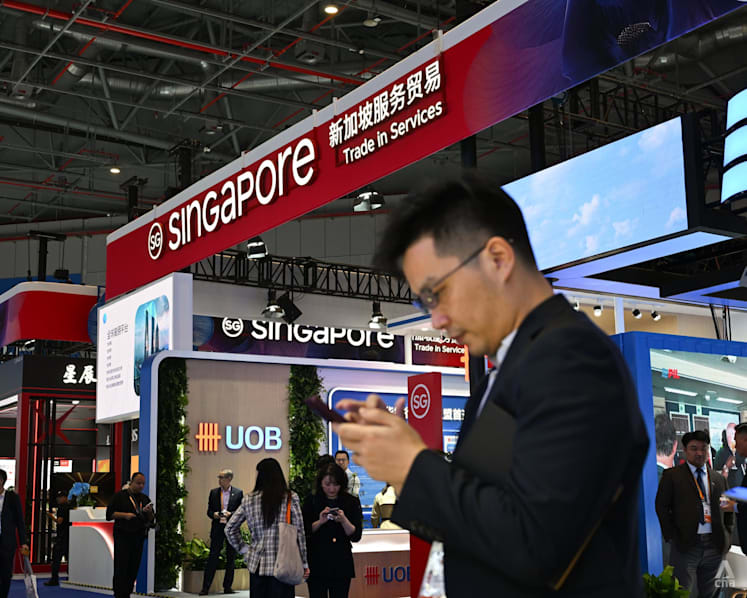 Singapore Business Federation booth at the China International Import Expo (CIIE) on Nov 6, 2026. (Photo: CNA/Tan Wen Lin)
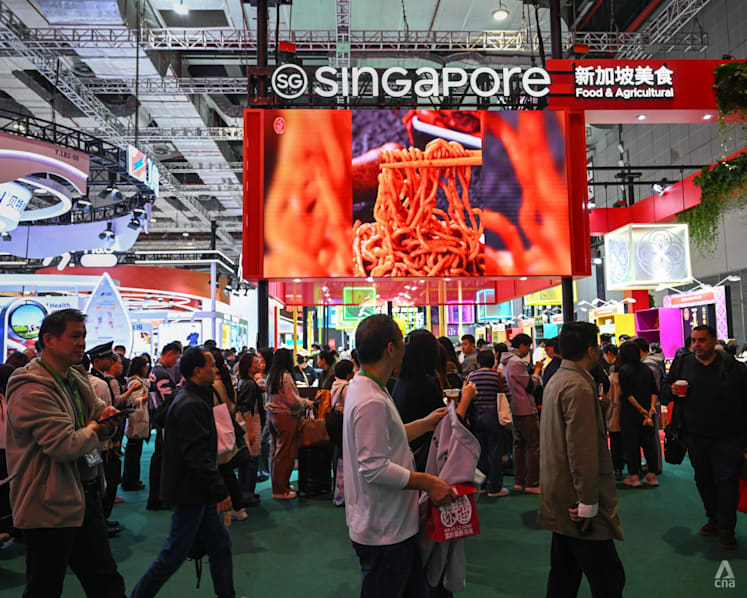 Singapore's food and agriculture booth at the China International Import Expo (CIIE) on Nov 7, 2026. (Photo: CNA/Tan Wen Lin)
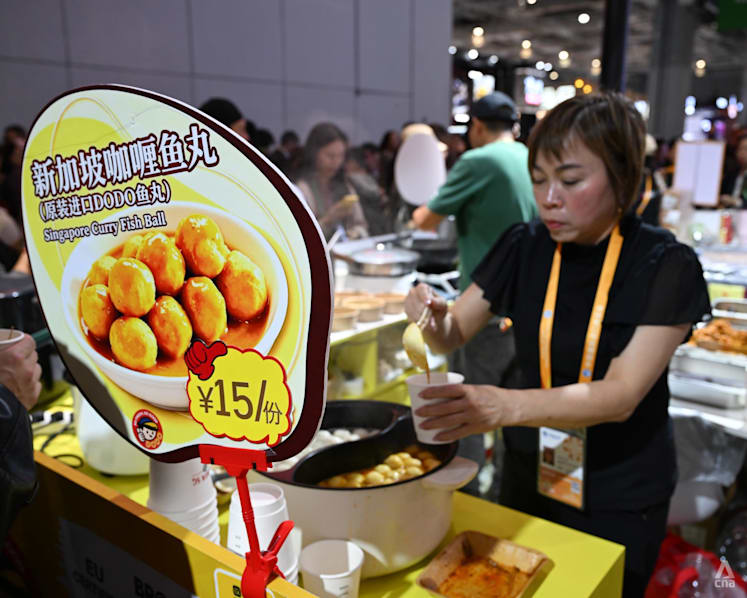 Singapore-style curry fishball sold at the Singapore booth during the China International Import Expo (CIIE) on Nov 7, 2026. (Photo: CNA/Tan Wen Lin)
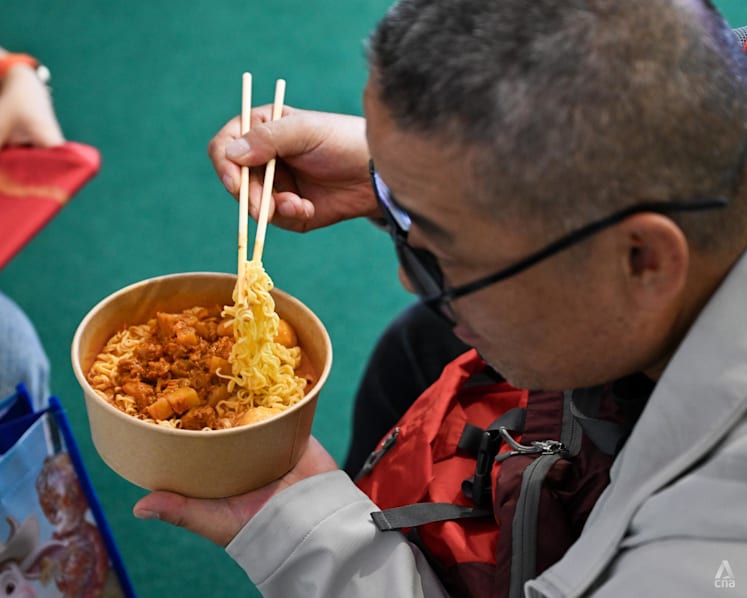 An attendee enjoys Singapore-style curry chicken noodles at the Singapore booth during the China International Import Expo (CIIE) on Nov 7, 2026. (Photo: CNA/Tan Wen Lin)
But Singapore companies still need to innovate, he said.
“There’s no long-term sustainable advantage unless you continue to have innovation and transformation within your own companies,” Lee told CNA.
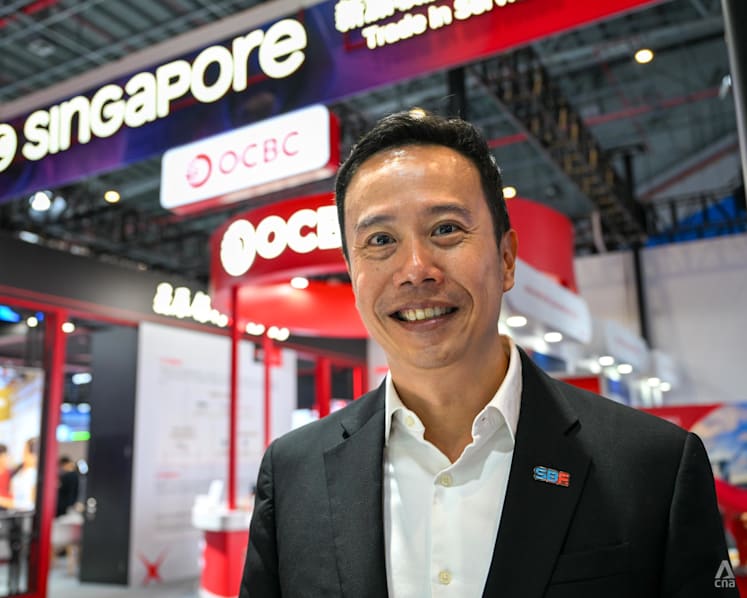 Singapore Business Federation (SBF) Chairman Mark Lee photographed at the China International Import Expo (CIIE) on Nov 6, 2026. (Photo: CNA/Tan Wen Lin)
For French beauty giant L'Oreal, what gets imported into China depends largely on where a product sits in the Chinese market.
The group has been in business in China for nearly 30 years and has exhibited at CIIE every year.
“Roughly, more than 60 per cent of our products are made locally in China and about 40 per cent are imported,” said Lan Zhenzhen, chief corporate affairs and engagement officer for the group in North Asia and China.
 L'Oreal booth at the China International Import Expo (CIIE) on Nov 7, 2026. (Photo: CNA/Tan Wen Lin)
Mass-market products, including L'Oreal Paris and Maybelline, are “basically all made in China”, she said - where production is “bigger and faster in scale”.
Luxury labels such as Lancome and YSL are another matter, she added. “Almost everything is imported from abroad.”
For Lan, what sets China apart is its consumers.
“In this market we see the most knowledgeable, the most discerning and the most demanding consumers,” she said.
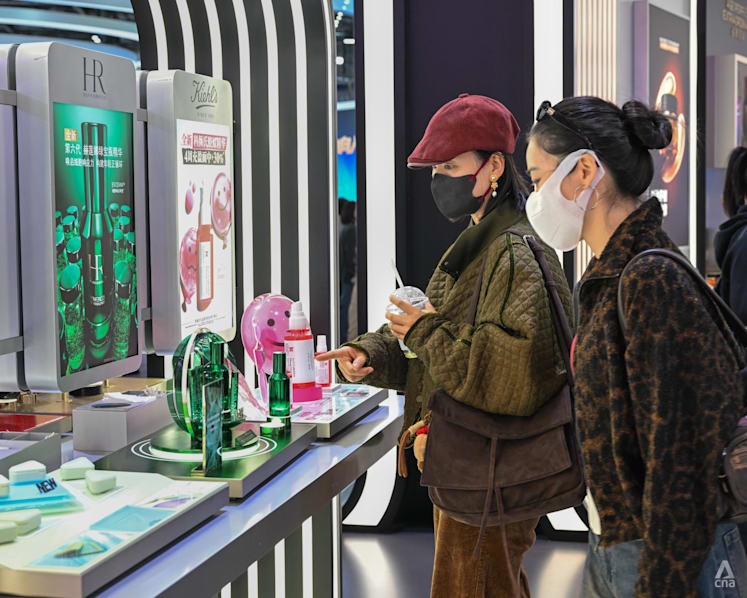 Attendees check out products at L'Oreal exhibition booth during the China International Import Expo (CIIE) on Nov 7, 2026. (Photo: CNA/Tan Wen Lin)
WHERE CHINA IS CLOSING THE GAP
China is also making more of what it once imported from other countries.
Cao Hailun, general manager of Shanghai Bailian Group Co, a listed retailer whose more than 40 member companies include department stores, shopping malls and outlets across the country, sees the shift on his shelves.
In skincare, international high-end brands are still holding their ground, and Bailian is buying more of them every year, he told CNA during a media session.