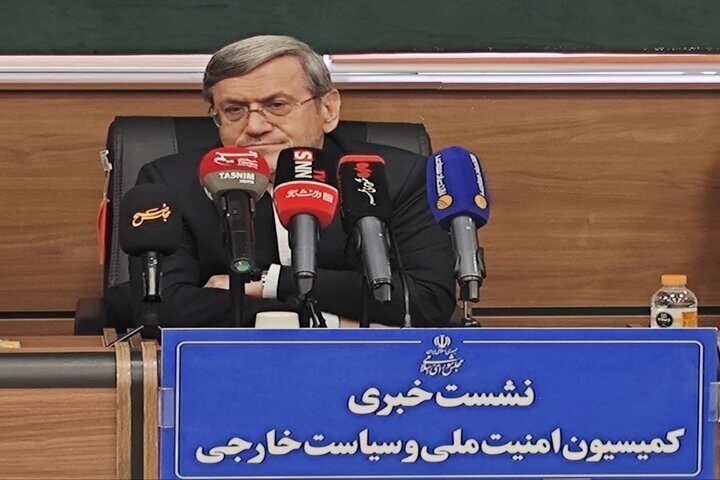
TEHRAN- Hassan Qashqavi, spokesman for the Iranian Parliament’s National Security and Foreign Policy Commission, said that Iran would not allow its adversaries to determine the duration or scope of a conflict.
Speaking at a press conference on November 15, Qashqavi addressed Iran’s military preparedness, the proposed legal framework for managing the Strait of Hormuz, the status of diplomatic understandings with Washington, and the legal consequences of attacks on Iranian nuclear facilities.
Qashqavi said the continued deployment of US military assets in the region — including aerial refueling aircraft, additional equipment and naval forces — indicated that Washington had retained the military option. Although such deployments did not necessarily signal an imminent attack, he said, they made it impossible to dismiss the prospect of renewed aggression.
"There is no guarantee that a war would end within a few days. The enemy may decide when to start it, but we will determine when it ends," he said.
Strait of Hormuz legislation moves closer to parliamentary debate
Turning to the proposed legislation on the management of the Strait of Hormuz, Qashqavi said the National Security and Foreign Policy Commission had completed its review of the bill.
He said the proposed framework was based on international maritime law, including the 1958 and 1982 conventions, and placed particular emphasis on an agreement between the two coastal states.
According to Qashqavi, several rounds of negotiations had taken place in Tehran and Muscat at ministerial, deputy-ministerial and expert levels. The discussions had resulted in an understanding on a maritime corridor acceptable to both sides.
He said the arrangement was initially envisaged as a temporary mechanism that could subsequently be made permanent.
Qashqavi accused Washington of obstructing regional initiatives and opposing arrangements developed through cooperation among countries in the region.
Sanctions carry consequences beyond Iran
Qashqavi also highlighted the wider regional consequences of sanctions, particularly their impact on established trade networks and cross-border supply chains.
According to Qashqavi, some neighboring countries source between 60 and 70 percent of certain imported goods from Iran, while approximately 40 percent of Iran’s imports originate in neighboring states.
He said restrictions on trade with Iran therefore affected a regional market of around 300 million people, including consumers in Afghanistan, Iraq, Pakistan and Türkiye.
On the diplomatic track, Qashqavi said negotiations with Washington had progressed beyond the discussion of general principles and reached the stage of implementing specific commitments.
He said Iran had put forward seven conditions and that discussions at the highest political level had covered key issues, including sanctions relief, the release of frozen Iranian assets and arrangements concerning the Strait of Hormuz.
The lawmaker stressed that Tehran was not opposed to diplomacy or further negotiations but would not accept restarting the process from square one.
Addressing speculation about Iran’s possible withdrawal from the Treaty on the Non-Proliferation of Nuclear Weapons (NPT), Qashqavi said no formal decision had been taken.
He explained that an official move would require the government to submit a bill or lawmakers to introduce legislation.
However, Qashqavi questioned whether the existing provisions of the NPT and Iran’s Comprehensive Safeguards Agreement could be applied under the same conditions following military attacks on Iranian nuclear facilities.
He argued that strikes against nuclear installations operating under international monitoring had created an unprecedented legal situation that required clarification under international law.
He also called for a reassessment of the balance between Iran’s international obligations and the political benefits it had derived from cooperation with the International Atomic Energy Agency (IAEA).
Iran to pursue legal claims over damages
Qashqavi said Iran should seek compensation for all losses resulting from military aggression against the country.
He argued that any legal assessment should address not only the responsibility of the states that carried out the attacks but also that of countries whose territory, military bases, radar systems or other facilities were used to support the aggressors.
Concluding his remarks, Qashqavi said the regional security environment had undergone significant changes, pointing to developments surrounding the Strait of Hormuz, Yemen and the broader balance of power in West Asia.