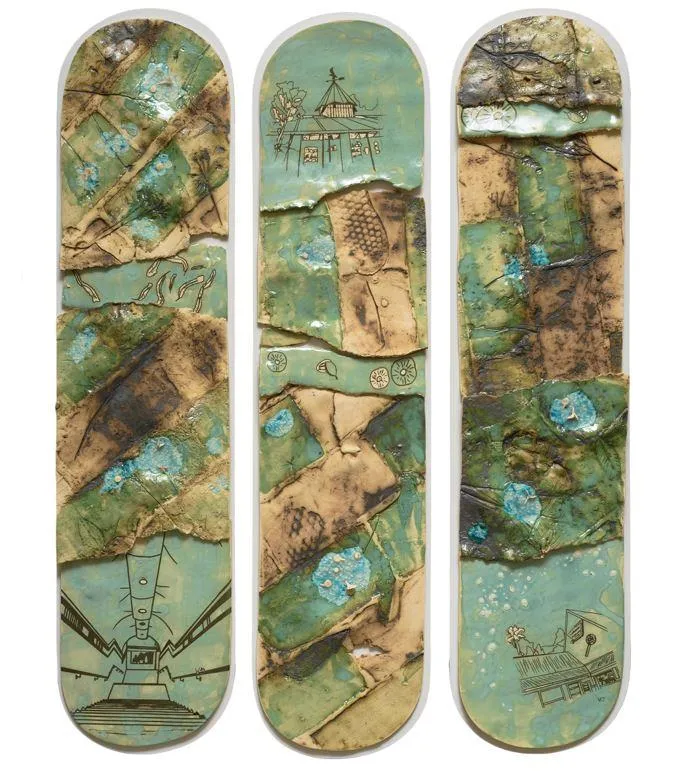
Viola Greylings body of work in the exhibition combines wall-based and three-dimensional ceramic pieces that explore migration, home, belonging, and the experience of living between places.
What does it mean to call a place home when your life is shaped by borders, movement and memories of somewhere else? Four emerging artists are exploring that question through clay, painting, photography-inspired imagery and mixed media in a new Cape Town exhibition that examines migration, identity and the search for belonging.
Titled Tiriparwendo, the 2026 Nando’s Creative Exchange (NCX) exhibition brings together Bekezela Mabena, Luxolo Theophilus Witvoet, Mpumelelo Samantha Maseko and Viola Greyling. Their work will be showcased at the Hub Gallery in Cape Town from November 12, 2026, to January 22, 2027.
From the experience of undocumented migration and the histories of black South Africans moving from rural areas into cities, to the emotional connections people maintain with places they have left behind, each artist approaches the theme from a different perspective.
Together, their work explores identity, memory, cultural belonging and the experience of finding a place in the world.
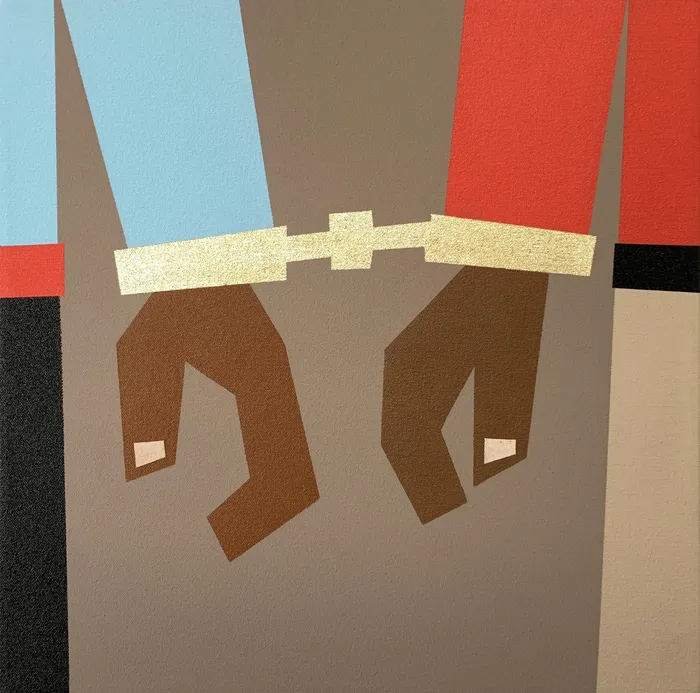
Luxolo Theophilus Witvoet art titled Botshelelwe Ngabhanti Linye, is a reimagination of an image from Ernest Cole's book House of Bondage, showing two men chained together during apartheid.
Viola Greyling uses clay to explore the meaning of home
Greyling, 30, from Pretoria, has created a body of work combining wall-based and three-dimensional ceramic pieces to explore migration, home, belonging and the experience of living between places.
Her work reflects on the layers of memory, longing and putting down roots in a new environment.
“I explore the layers of remembering, longing, and re-rooting oneself in a new environment, reflecting on the liminal space I find myself in while searching for a sense of belonging in the present moment,” she said.
The exhibition marks an important milestone for Greyling, who has previously participated in group exhibitions across South Africa. While those experiences have helped her develop as an artist, she describes Tiriparwendo as the biggest exhibition she has been part of so far.
Her journey into art followed a period of uncertainty. After returning from Australia, unsure where she wanted to call home, she found herself drawn towards a career that could give shape to her experiences.
Encouraged by her mother, Greyling enrolled in Fine and Applied Art, a decision that changed the course of her life. She later completed a master’s degree.
Her involvement in the Spier Arts Trust artist community over the past three years led to her nomination for the 2026 NCX programme.
“Being selected feels like a pivotal point in my career. I continue to learn, experiment, and find new ways of expressing the spaces between memory, place, and identity,” she said.
Having moved between countries and called different places home, Greyling said she often found herself somewhere between where she had been and where she was.
“Through creating, I explore this space, allowing past experiences to exist alongside the present. Clay gives me a way to hold onto these moments while continuing to grow and change.
“Growing up between South Africa and Australia has had a significant influence on my work and my understanding of home. My work reflects on how we carry pieces of places and people with us, even when they are physically far away. Through clay and natural forms, I explore these connections while learning to be present in where I am, without losing touch with where I have been,” she said.
Her exhibition works include three hanging stalactite forms, each with seeds emerging from it, positioned above melting stalagmite forms. The sculptures suggest both the possibility of new growth and the release of places left behind.
The seeds were collected from specific places where she has lived, transforming each sculpture into a record of a particular landscape and moment in time.
Greyling said she was excited to see the work leave her studio and become part of a wider conversation with audiences.
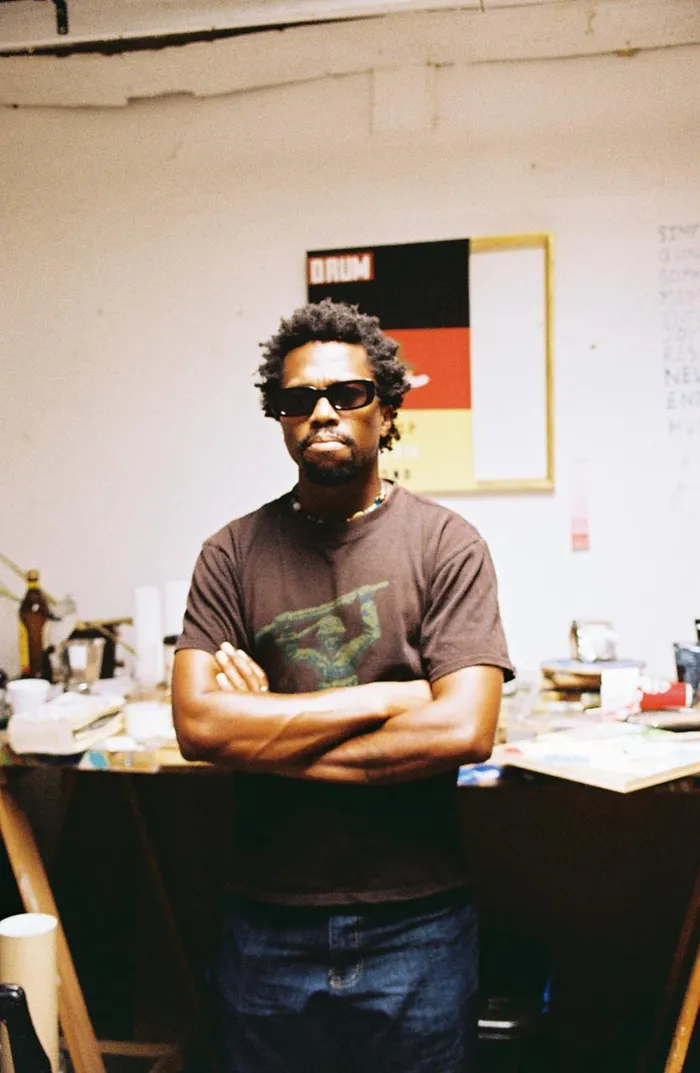
Self-taught artist Luxolo Theophilus Witvoet
Luxolo Witvoet revisits South Africa’s undocumented histories
For Witvoet, 32, from Kuils River in Cape Town, the road to becoming an artist began with anime drawings that he photocopied and sold to schoolmates for R1.
His interest in art developed further during his matric year in 2011, when he visited a retrospective of Russian-South African painter Vladimir Tretchikoff at the Iziko South African National Gallery.
“In primary school, I enjoyed drawing anime such as 'Dragon Ball Z' and making photocopies of my drawings and selling them to my classmates for R1. During matric in 2011 I saw the retrospective of Russian-South African painter Vladimir Trenchikoff at The Iziko South African National Gallery. It had a deep and everlasting impact on me,” he said.
During his gap year, Witvoet discovered classic and arthouse films on television. That interest led him to apply for the film programme at City Varsity in Cape Town.
His studies exposed him to different forms of art and encouraged him to explore creative practices beyond cinema.
He said much of his work reflects his upbringing across rural, township and suburban environments.
“I am revisiting stories that are undocumented and translating and retelling stories that were documented and bringing them to the surface in my unique way of art making and expression.
“I am deeply inspired by cinema, South African history, archival photography, people whom I find inspiring regardless of ethnicity and my curiosity about my Xhosa nation, its history and traditions,” he said.
A self-taught artist, Witvoet was invited by Spier Arts Trust to apply for the programme alongside other artists selected from its Creative Block cohort.
He said developing a body of work around migration challenged him to find a visual approach that captured the theme while remaining true to his own artistic language.
The process involved several concepts and revisions.
For the exhibition, he turned to early photographic archives documenting black South Africans moving from rural areas into urban environments and the emergence of township life and culture.
His work revisits those histories through his own artistic interpretation.
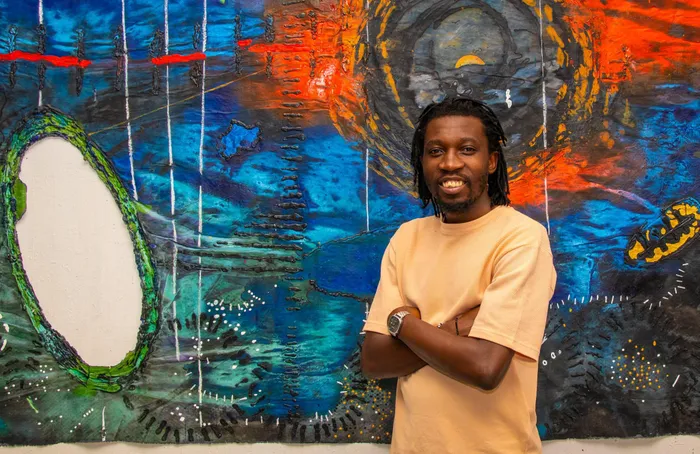
Bekezela Mabena explores the journeys migrants make
Mabena, 29, is based between Johannesburg and Zimbabwe. His creative journey began as a child watching his brother draw. By Grade 10, he was spending much of his time in the art classroom, often arriving first in the morning and leaving last in the afternoon.
His current work is inspired by everyday conversations with migrants and non-migrants, particularly people who cross rivers and borders in search of better opportunities.
He is interested in the experiences of undocumented migrants in Johannesburg and said his own experience of living without his papers in order had influenced his work.
“I am interested in their stories and the life in the city of Johannesburg for undocumented migrants. There was a time when I also lived without my papers in order,” he said.
Mabena was invited to apply for the NCX programme. He said the resulting body of work developed through a one-year internship, although the wording in the supplied quotation needs confirmation.
The title Tiriparwendo translates as “We are on a journey”. For Mabena, it reflects both the daily process of discovery and his own experiences travelling between Zimbabwe and South Africa.
The concept was inspired by his frequent 16-hour bus journeys to and from Zimbabwe to reconnect with family.
“In that confined space, time shifts. The bus becomes a microcosm of community, a place of shared stories, quiet contemplation, and tense border encounters,” he said.
Mabena's work for the exhibition also examines the idea of access: who is able to move freely, who is accepted and who gets the opportunity to belong.
He said he wanted audiences to consider what it means to be an immigrant, to find oneself in an unfamiliar landscape and to try to make sense of a new environment.
To translate these experiences onto canvas, he uses acrylic paint, Polyfilla and pins.
“Polyfilla creates a heavily textured, organic surface that grounds the work, symbolising the earth, place, and presence. Pins are inserted directly into the canvas to represent movement, time, direction, and spatial progression.
“Acrylics bring colour and atmosphere to the landscapes and memories gathered along the way. 'Tiriparwendo' is both a critical reflection on migration and a personal journey of discovery, celebrating the resilience, beauty, and human connection found along the road,” he said.
For Mabena, the work is a way of exploring the human connections that emerge during journeys across borders, while reflecting on the challenges faced by people navigating unfamiliar places.
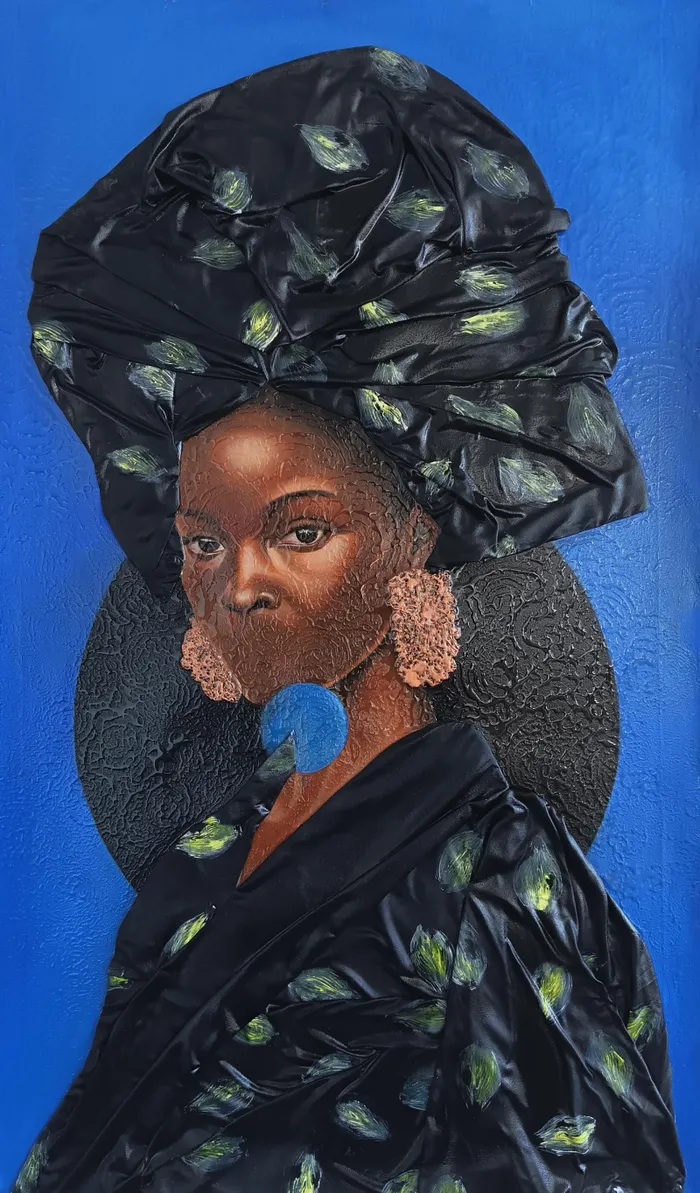
Samantha Maseko challenges ideas of identity and acceptance
Maseko, from Johannesburg, explores the complexities of identity, psychological and cultural belonging, and the experiences of migration.
Her work was prompted by xenophobic events and sentiments in Johannesburg, which raised difficult questions about who is considered to belong.
She said the contradictions in how people relate to one another were central to her artistic practice.
“We often embrace cultural influences, languages, fashion and aesthetics from across our continent, yet reject the very people who carry those cultures,” she said.
Through figurative imagery, colour, fabric and symbolism, Maseko examines the emotional experience of migration and the struggle to be accepted.
One of the most striking features of her work is the absence of mouths in the figures. She uses this to represent language barriers, the struggle to be understood and discrimination people can experience because of their accents or the way they communicate.
These visual elements, she said, express the experience of being physically present in a place without necessarily feeling accepted.
Maseko grew up in a creative environment, with her mother and uncles also interested in drawing.
In 2018, she was introduced to Artist Proof Studio, where she studied printmaking. Her practice has since evolved to include oil painting and mixed media.
She incorporates fabric, textured mediums and epoxy resin into her work to preserve the materials she uses.
“Fabric, in particular, tells stories and carries history. I use it as a way of exploring identity, preserving history and communicating stories that might otherwise go untold,” she said.
Through the NCX programme, Maseko had the opportunity to work alongside other artists and receive guidance from mentor Coljin Strydom.
She said the experience allowed her to look at her work from different perspectives and consider new ways of approaching her ideas.
Maseko believes art can open conversations that people sometimes struggle to have directly. She is looking forward to seeing how audiences engage with the work and bring their own experiences and interpretations to it.
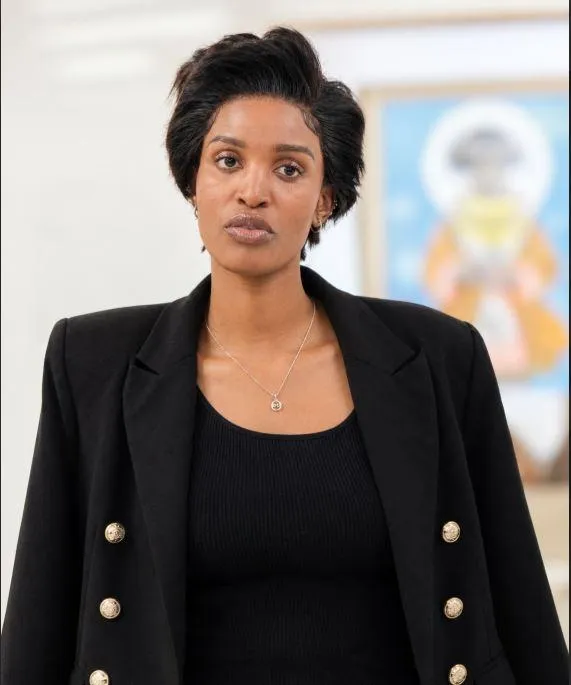
Nando’s Creative Exchange supports emerging artists
All four participating artists are part of Spier Arts Trust’s Creative Block programme, which provides a foundation for artistic development.
Launched in 2011, the Nando’s Creative Exchange programme supports emerging and mid-career artists who demonstrate exceptional ability. It is administered by Spier Arts Trust and sponsored by Nando’s.
The initiative provides participants with exhibition opportunities, mentorship, sponsorship of materials and possibilities for studio collaboration.
Each year, artists work with an invited established artist mentor to develop a cohesive body of work, helping prepare them for future exhibitions and professional gallery representation.
The exhibition is only one part of the programme, which places a strong emphasis on developing artists' professional practices.