Part 1 | The Lopez heirs who ran Rockwell but never controlled it
When Eugenio “Gabby” Lopez III sold his family’s shares in the main Lopez holding company in August, he said the move would allow his family to “channel our family’s resources into businesses aligned with our personal mission,” adding that more announcements would come in due time.
Three months later, his new game plan is clear. It centers on two companies that serve everyday Filipinos: ABS-CBN and Rockwell Land.

On Thursday, November 12, First Philippine Holdings Corporation (FPH), led by Gabby’s cousin, Federico “Piki” Lopez, agreed to sell its 90.74% voting stake in Rockwell Land. The buyer is Gabby’s and his siblings’ private firm, Crème Investment Corporation, and the price tag is P15.92 billion.
This completes a 94-day asset swap that began on August 10. Back then, Crème sold its 25.68% share in Lopez Inc. to San Miguel boss Ramon S. Ang for about P11 billion. Lopez Inc. was originally built as the untouchable top holding company meant to protect the family empire from outside takeovers. (READ: The secret to the Lopez family’s enduring control of ABS-CBN)
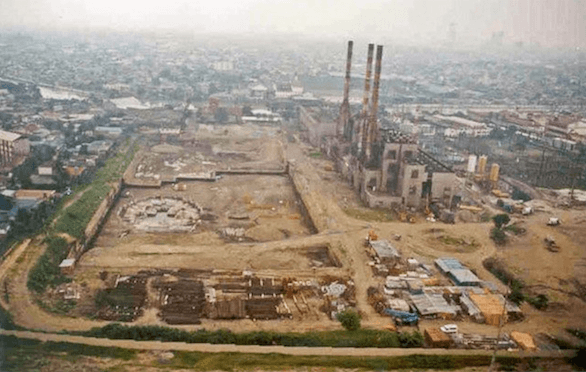 THEN…The Rockwell property with the old Meralco power plant (upper right) in Makati City. Rappler/Rockwell brand rap file image
For decades, Rockwell Land has been the Lopez Group’s luxury lifestyle and consumer jewel. Started in 1995 on the site of an old Meralco power plant in Makati, Rockwell turned an industrial lot into Rockwell Center, which is now home to Power Plant Mall, high-end condos, serviced apartments, and offices.
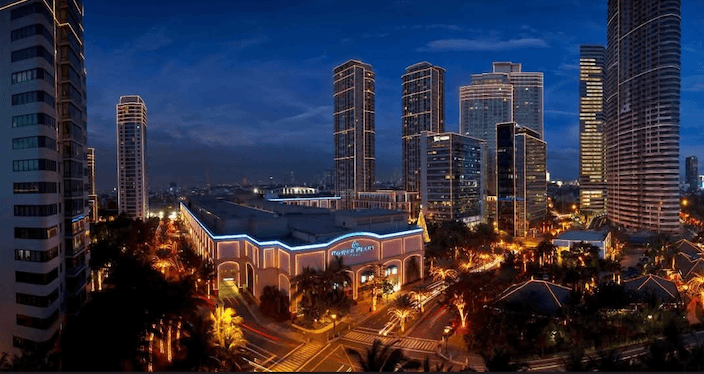 …AND NOW. Bird’s eye view of Rockwell Makati with Power Plant Mall at the center. Courtesy of Rockwell Land
This focus on everyday consumers is a natural fit for Gabby who spent his career in TV, entertainment, and public-facing brands. Just two days after the August sale, Gabby and his cousins pledged P2.2 billion of their own money to help rebuild ABS-CBN. He explained why: “ABS-CBN has been part of this family for generations. The mission our family set out to pursue remains the heartbeat of this family—to be in the service of the Filipino. We are putting our own money behind this conviction.” (READ: Gabby Lopez: Man on a mission)
This is a sharp contrast from Piki Lopez’s world at FPH and First Gen, an ascetic, heavy-infrastructure universe of geothermal steam fields, gas turbines, and pumped-storage hydropower projects that require tens of billions of pesos and years, sometimes decades, of engineering before they make money. At the 2026 annual stockholders’ meetings of FPH and First Gen, Piki repeatedly framed his leadership around the “compounding” value of long-term choices, and that “direction over speed” matters more. In other words, a slow-and-steady approach built for power grids rather than quick profits.
Gabby does not seem to be retreating from the family business. Instead, he is separating the group’s lifestyle and media brands from FPH’s power business and bringing them under his own control.
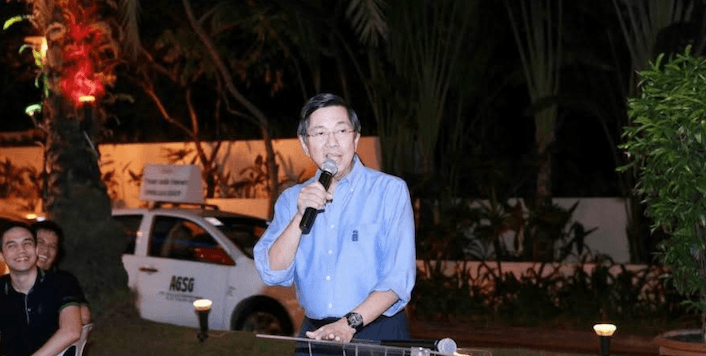 BOSS. Ambassador Manuel “Manolo” Lopez speaks at a corporate event following Rockwell Land Corp.’s listing on May 12, 2012, in Rockwell Power Plant Mall’s premises in Makati City. Courtesy of Rockwell Land FB
Rockwell also has deep ties to Gabby’s late uncle, Manuel “Manolo” Lopez. Manolo ran Meralco for over 30 years and was deeply disappointed when the family and business group, both led then by his older brother Oscar, the father of Piki, forced FPH to let go of Meralco in 2009 to pay off First Gen’s geothermal debts. Manolo was quoted then saying, “Meralco would have been my parents’ legacy.” In March and April 2026, Manolo’s children joined Gabby and other cousins in publicly challenging Piki’s leadership. Buying Rockwell brings a business closely linked to Manolo’s side of the family under Crème’s direct control.
Beyond family history and culture, this deal solves a major money problem for Gabby’s branch: ABS-CBN needs cash, and Rockwell makes it.
In 2025, Rockwell earned P4.73 billion. ABS-CBN lost P4.72 billion. Crème has already pledged P766.7 million to ABS-CBN’s P6-billion fundraising drive. Buying Rockwell gives Gabby’s family an established, profitable company that brings in its own money. (READ: Why ABS-CBN is still retrenching 200 employees with P6 billion on the way)
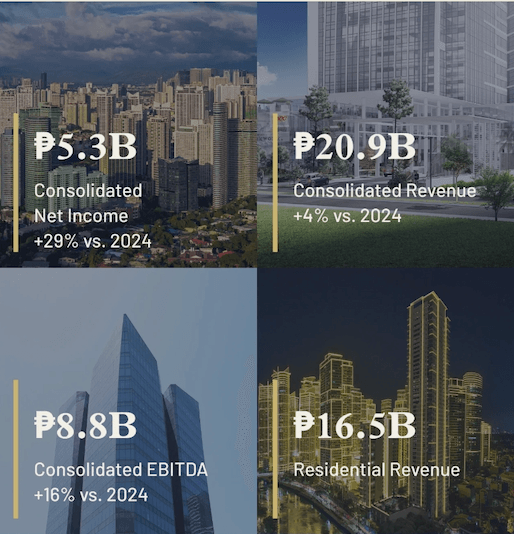 CASH COW. Rockwell Land’s 2025 earnings. Courtesy of Rockwell Land website
Where the dividends went
Before losing its broadcast franchise in 2020, ABS-CBN was a reliable cash machine for its parent firm, Lopez Holdings, former Benpres Holdings and one level below Lopez Inc in the Lopez group shareholder tree. ABS-CBN paid Lopez Holdings P447 million in dividends in 2018 and P269 million in 2019. Once the network went off the air, those payouts vanished. From 2020 to 2025, ABS-CBN racked up about P45.5 billion in losses. (READ: ABS-CBN is now 84% content — and still losing money. Can P6 billion fix it?)
With ABS-CBN out of cash, Lopez Holdings had to lean almost completely on FPH, which owns the group’s power and property businesses. From 2021 to 2025, FPH paid Lopez Holdings a flat P567 million a year in dividends. After Lopez Holdings paid its bills and shared profits with public stockholders, only about P247 million actually reached Lopez, Inc. in 2025.
FPH’s own financial records show where that money came from. In 2025, subsidiary Rockwell paid FPH roughly P630 million in dividends. Meralco—where FPH still owns a 3.95% stake—paid another P1.115 billion. Together, those two companies gave FPH P1.75 billion in cash dividends. That is more than triple the P567 million FPH sent up to Lopez Holdings.
FPH didn’t just hoard the extra cash. As a public company, it had debts, operating costs, outside shareholders, and massive power projects to pay for. First Gen and its subsidiary, Energy Development Corporation, were pouring money into geothermal drilling, hydropower, and battery storage while paying off loans. First Gen President and COO Giles Puno noted at this year’s annual meeting that while the company aims to pay out 30% of its yearly recurring profit, those payouts depend on spending needs, growth plans, and debt payments. To save cash, First Gen cut how much it paid as yearly dividend to its parent FPH from P0.90 per share in 2024 to P0.80 in 2025.
So most of the Piki-led power group’s profits stayed locked inside the operating companies. For family members at the very top of the corporate ladder, including Gabby and the heirs of Manolo, that meant waiting years for bigger payouts. Buying Rockwell lets Crème skip all those corporate middlemen. Instead of waiting for cash to trickle up through FPH, Lopez Holdings, and Lopez, Inc., Gabby’s firm can soon collect dividends straight from the source as Rockwell’s main owner.
Must Read The company the Lopezes gave up Meralco for: EDC, from oil crisis child to takeover target What Rockwell brings Gabby
Rockwell’s net profit for parent shareholders climbed from P3.11 billion in 2023 to P3.71 billion in 2024, reaching P4.73 billion in 2025. The 2025 number got a boost from a one-time gain after buying Alabang Commercial Corporation. Even without that extra boost, Rockwell still earned about P4.1 billion.
Its cash flow has grown right along with its profits. Rockwell brought in P2 billion in cash from daily operations in 2025, up sharply from P144 million in 2024, even though real estate requires heavy upfront spending on land and construction. Its regular dividends grew steadily too, rising from P0.0752 per share in 2023 to P0.1018 in 2024, and hitting P0.1212 in 2025. Renting out commercial spaces gives Rockwell a steady safety net beyond just selling condos. Power Plant Mall in Makati, its office buildings, and its December 2025 purchase of Alabang Commercial Corporation—which added Alabang Town Center and a nearby office tower—bring in reliable rental cash.
Must Read Refreshed Alabang Town Center? What shoppers can expect now that Rockwell has near-full control.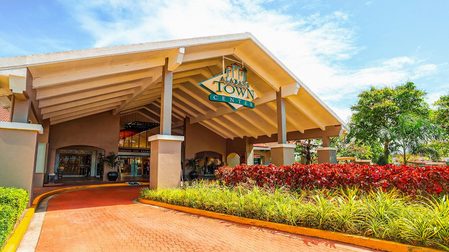
Of course, Rockwell has big bills of its own. Its P21.6-billion Alabang deal is being paid in installments through December 2027, and it raised P10 billion in retail bonds in March 2026 to fund active projects. It can’t pay dividend to its owners every single peso it makes. Still, it gives Gabby a healthy business that makes money rather than drains it.
Rockwell’s ties to ABS-CBNRockwell and ABS-CBN share more than just the Lopez family name. Over the last four years, Rockwell has been one of the main buyers of the real estate ABS-CBN sold to raise cash.
In 2022, Rockwell bought properties from ABS-CBN for P786 million, followed by another P733 million deal in 2023. Those sales gave the network profit gains of P246 million and P232 million. In 2024, Rockwell bought more ABS-CBN land for about P679 million—booking a P223.1-million gain for the broadcaster—and agreed to buy ABS-CBN’s Iloilo property for P91.4 million. Later company filings showed even more property deals between the two firms.
Their shared history goes back even further. Before Rockwell went public in 2012, its housing arm built the 53 Benitez condos in Quezon City on the site of an old movie studio. Lopez Holdings, then known as Benpres Holdings, also owned 24.5% of Rockwell directly before selling it to FPH in August 2009.
Smaller day-to-day ties are still in place. ABS-CBN Holdings Corporation, which handles the network’s depository receipts, keeps its main office at Rockwell Business Center Sheridan in Mandaluyong. Lopez Holdings also pays office rent to Rockwell.
No merger or money-sharing plan between Rockwell and ABS-CBN has been announced, and they remain completely separate companies. Still, Rockwell has repeatedly stepped in to buy the properties ABS-CBN needed to sell, and now Gabby is taking over Rockwell itself.
From minority shareholder to controlling ownerUntil August, Crème’s 25.68% share in Lopez Inc. gave Gabby’s family a small, indirect piece of several businesses, but very little control over dividend payouts.
Under the P15.92-billion deal approved by FPH on November 12, Crème will buy 86.58% of Rockwell’s common shares, plus voting preferred shares that raise its total voting power to 90.74%. Once regulators approve the deal and Crème makes a required buyout offer to the remaining public stockholders, it becomes the controlling owner. That gives Crème a direct say over Rockwell’s board and dividend payouts, within the limits of corporate law, loan rules, and minority shareholder rights.
If Rockwell keeps paying its 2025 dividend rate of P0.1212 per share, Crème’s incoming block of 5.30 billion common shares would bring in about P642 million a year before taxes. Future payouts aren’t guaranteed—they will depend on Rockwell’s profits, spending needs, and board votes.
Three months after leaving Lopez, Inc., Gabby Lopez’s new game plan is clear. He has fresh cash for ABS-CBN, the network he spent his life building, and direct control of Rockwell Land, a profitable lifestyle developer that already makes money. – Rappler.com
Lala Rimando wrote about Philippine business, and managed newsrooms, including Newsbreak, ABS-CBN, Rappler, and Forbes, for over 25 years. She’s now based in La Union, taking care of her mom with dementia, and working on the multimedia biography of the late John Gokongwei.
Part 3 on Monday, November 16 | Why Piki Lopez is letting Rockwell go
Must Read ABS-CBN makes room for new owners