Previously, Singapore could act only after its skyline had faded. Now it has the power to do more before the haze arrives, says NUS law researcher Sean D Tseng.
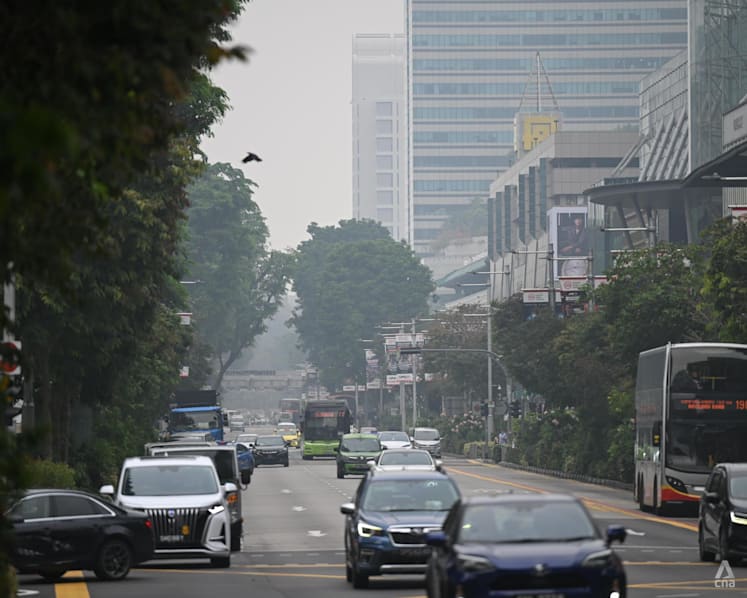
The haze seen in central Bishan on the afternoon of Oct 15, 2026. (Photo: CNA/Marcus Mark Ramos)
The haze seen in central Bishan on the afternoon of Oct 15, 2026. (Photo: CNA/Marcus Mark Ramos)



SINGAPORE: Even as the skies clear, Singapore is turning up the heat after the worst haze episode in more than a decade.
For most of its existence, the Transboundary Haze Pollution Act (THPA) has remained untested. Since it was enacted in 2014, no one has ever been prosecuted or sued under it. That may change with the conviction demonstrated by the government to act over the last few weeks.
In this short time, Singapore has served notices under the THPA on 20 companies, summoned the leaders of 10 of them to meet three Cabinet ministers, appointed a specialist investigations panel and agreed on a joint task force with Indonesia. Perhaps most significantly, it put forward extensive amendments to the THPA, which passed in parliament on Wednesday (Nov 4).
The amendments do not merely sharpen the Act’s teeth; it changes its fundamental character. A law built around proving offences after the fact is being reorganised around preventive action and risk-based enforcement.
CNA Games
 Guess Word
Crack the word, one row at a time
 Buzzword
Create words using the given letters
 Mini Sudoku
Tiny puzzle, mighty brain teaser
 Mini Crossword
Small grid, big challenge
 Word Search
Spot as many words as you can
Show More
Show Less
Taken together, the new powers represent a step change in its deterrent effect. This means that how proportionately they are wielded will also matter.
FROM HAZE TO THE RISK OF HAZE
The most consequential change is also the subtlest. Throughout the Bill, “haze pollution in Singapore” becomes haze pollution “or a risk of haze pollution in Singapore”.
In 2015, and again this year, Singapore could act only once its skyline had already faded. Now, a company commits an offence if it causes or contributes to a fire abroad that merely creates a risk of haze.
A new presumption infers that risk from smoke moving towards Singapore. The Director-General of Environmental Protection from the National Environmental Agency (NEA) can now also issue a certificate that would serve as conclusive evidence of such risk.
CLOSING THE EVIDENCE GAP
The THPA’s chronic weakness has been evidence. Singapore cannot prosecute if it does not know whom to prosecute.
Indonesian concessions overlap and official maps contradict one another. This situation exacerbates if Jakarta declines to hand over concession maps.

The Bill’s answer is to give statutory form to the panel of assessors announced last month. The NEA may direct a company to appoint assessors, at its own expense, where it has reason to suspect involvement, including through supply chains or corporate control.
Assessors can inspect land, demand documents, which could include concession maps from the companies, and report directly to NEA. Obstructing them risks a potentially sizeable fine, and companies can no longer hide behind confidentiality obligations or the privilege against self-incrimination.
The model is not new. Singapore’s exchange regulator can direct listed companies to appoint special auditors and similar probes can arise in money-laundering and sanctions cases. But this appears to be the first time the technique has been turned on environmental harm.
RAISING THE PRICE OF BURNING
The enhancements also count on raising the deterrent effect. Penalties rise tenfold: up to S$1 million (US$0.8 million) a day, capped at S$20 million, plus up to S$500,000 a day for ignoring a preventive measures notice. Courts can also order convicted offenders to surrender any profit gained or loss avoided, disincentivising the “slash-and-burn” gamble to clear land.