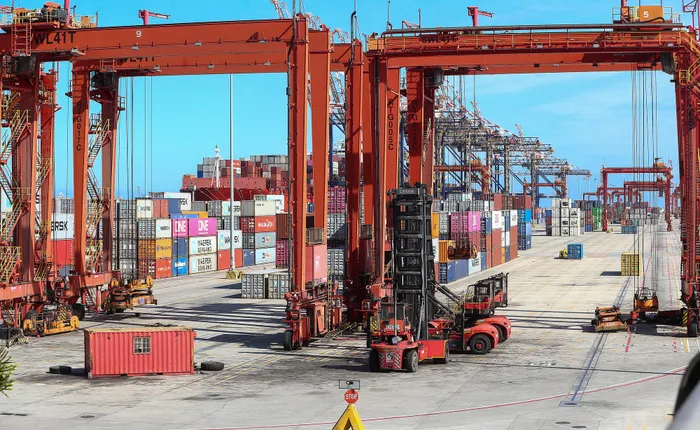
Durban port congestion threatens Western Cape fruit exports, with rerouting through Gqeberha potentially adding R20,000 to the cost of each container.
Western Cape fruit exporters are facing the prospect of higher shipping costs and potential delays as congestion at Durban's Gateway Terminal threatens to disrupt the start of the export season.
Rerouting containers through Gqeberha could add R20,000 to the cost of each shipment, while exporters warn that delays could affect the movement of time-sensitive fruit during a critical period.
Exporters Western Cape (EWC) chairperson Terry Gale said the industry was concerned about the backlog at the Durban Gateway Terminal (DGT), particularly with the first fruit exports expected to begin within the next week.
“We are very concerned about the ongoing situation at DGT, in particular as the first of our fruit exports will be starting within the next week. We cannot afford any delays in our fruit exports, as we also have wind challenges this time of year,” Gale said.
He said fruit exports were vital to the Western Cape economy and warned that delays or vessels bypassing the Port of Cape Town could force exporters to move containers through the Port of Ngqura in Gqeberha.
“This will be at an additional cost of R20 000 per container, so it is not a cost to the economy but an additional cost to exporters,” Gale said.
The concerns come as the industry prepares for its seasonal increase in fruit shipments, following previous delays at the Port of Cape Town.
Transnet implements measures to ease Durban port congestion
Transnet said it was implementing urgent measures to address congestion at the Durban Gateway Terminal following recent operational challenges.
In a statement released last week, the company acknowledged the impact on shipping lines, cargo owners, customers and the wider logistics industry.
“Transnet acknowledges the impact the current congestion has had on shipping lines, cargo owners, customers and the broader logistics value chain. The matter is being treated with the seriousness and urgency it requires, with interventions being coordinated and monitored at senior leadership level,” the statement said.
Transnet Port Terminals (TPT) had reviewed equipment across its operations to determine whether machinery could be transferred to the Durban terminal.
However, the company said the only terminals operating similar equipment were the Cape Town Container Terminal and Cape Town Multi-Purpose Terminal.
Neither could release equipment because both were handling the peak deciduous fruit export season and required their available capacity.
“TPT will nevertheless continue to assess opportunities to optimise equipment deployment across its network as operational conditions evolve,” Transnet said.
The company said clearing the backlog would require sustained action and close co-ordination between terminal operations, the Transnet National Ports Authority (TNPA), Transnet Freight Rail (TFR), shipping lines, customers and other stakeholders across the port system.
Transnet said it appreciated the patience and co-operation of customers and industry partners while it worked to restore operational performance.
Fruit industry raises concerns over port capacity
The latest congestion has renewed concerns about South Africa's ability to handle seasonal export volumes.
The Port of Cape Town's performance has been a particular concern for the industry, with delays affecting the movement of time-sensitive produce.
Transnet had previously outlined preparations for the fruit export season, while Western Cape officials have called for improved efficiency at the port to protect agricultural exports.
Transnet had not responded to questions about the potential consequences of the Durban Gateway Terminal congestion for Western Cape exporters.