The AMLC’s investigation into renewable-energy contract awards, a sprawling corporate network, and billions in financial transactions raises pressing questions about political influence, regulatory discretion, and private wealth.
On August 22, 2017, the Department of Energy (DOE) during the Rodrigo Duterte administration took two contradictory actions that defy conventional regulatory logic.
On the exact same day, the DOE threatened to cancel a Leviste company’s solar contract for failing to deliver—yet awarded brand-new solar contracts to other Leviste-linked firms. Despite facing default, the developer was handed an even bigger share of the country’s renewable energy projects
That same year, according to the findings by the Anti-Money Laundering Council (AMLC), P170.32 million in cash deposits entered the bank accounts of then-Energy secretary Alfonso Cusi. By 2022, his final year in office, Cusi’s annual cash deposits had climbed to P195.25 million. (READ: Cusi is sole billionaire in Duterte Cabinet at end of 2021)
The AMLC identified 243 cash deposits amounting to P434.85 million during his tenure—with 84.1% of the deposit value concentrated in 2017 and 2022. Whether any link exists between those cash inflows and the energy contracts remains an evidentiary issue that investigators must resolve. (READ: Duterte’s wealth remains secret until the end of his term)
Nearly a decade after those controversial awards, the AMLC’s reported allegations extend beyond Batangas Representative Leandro Leviste to his mother, Senator Loren Legarda, alongside Cusi.
According to reported Court of Appeals records, investigators allege that the three acted in concert to facilitate the acquisition, retention, and transfer of exclusive solar development rights to Leviste-linked corporations.
For more than a year, Vantage Point (see links below this paragraph) has examined how state-awarded development rights formed the bedrock of a multibillion-peso corporate empire. The latest disclosures examine the individuals who helped assemble those corporate vehicles and the public officials whose decisions enabled their expansion.
- [Vantage Point] The Leviste gambit: Monetizing clean energy for political gains?
- [Vantage Point] The solar tale: Jurisprudence slays Leviste’s thinly veiled tact
- [Vantage Point] The Leviste solar saga – why markets should be worried
- [Vantage Point] Consumers pay for DOE’s delayed action on Leviste firms
- [Vantage Point] The Leviste sting: The risks of trading farmland for megawatts
- [Vantage Point] As Leandro Leviste cashes out of SPNEC, his private companies remain at the table
Between 2013 and 2021, Leviste reportedly incorporated 35 companies, many sharing the same incorporators and shareholders. Among the recurring names flagged by the AMLC were Legarda’s relatives, former Senate staffers, and even her former nanny.
Figure 1. Recurring names in Leviste’s corporate network
 Source: Reported AMLC findings in Court of Appeals records. Appearances are not ownership percentages or proof of wrongdoing.
Were these individuals beneficial owners risking their own capital, or were they holding shares under arrangements benefiting someone else? Who supplied the equity, exercised effective control, and reaped the financial rewards? AMLC’s allegation of coordinated intervention warrants a rigorous examination of those relationships.
Cusi, meanwhile, faces questions about his role in regulatory approvals. Reported court records state that he personally approved and signed solar energy service contracts for Leviste-associated firms, including awards granted despite alleged defaults on prior commitments. What technical assessments, financial vetting, and compliance reports justified those approvals? Were competing developers held to the same standard?
An exclusive solar service contract reserves a geographic development opportunity, generally barring rival investors from developing the covered area. Granting those exclusive rights to entities unable to deliver can deprive the economy of investments and much-needed generating capacity. According to the AMLC, the 26 contracts which were eventually terminated carried roughly P10.44 billion in unfulfilled obligations. (READ: Duterte approves franchise for solar firm of Loren Legarda’s son)
The financial trail surrounding Cusi extends well beyond cash deposits. Investigators reportedly flagged 735 financial transactions totaling P11.05 billion during his term, spanning inter-account transfers, checks, fiduciary placements and withdrawals, investments, and cash deposits. Transaction volume is not necessarily income or illicit proceeds, but the origins and counterparties demand inspection.
Figure 2. Cusi’s reported cash deposits: P434.85 million
 Source: Reported AMLC findings. 2017 and 2022 account for 84.1% of deposit value; no source of funds is established by this chart.
Investigators also noted substantial activity in Cusi’s accounts after he left public office, coinciding with Leviste’s sale of major shareholdings in SP New Energy Corp. (SPNEC). The reported contract approvals and subsequent financial activity necessitate a thorough review of banking and government records.
Cusi has challenged the accuracy of the Court of Appeals freeze order, categorically denying that he maintained a joint bank account with Golden Sun 999 Realty and Development Corp. He claims the same account number appears twice in the document, with the second entry identifying the correct account holders. The AMLC must address this alleged error and determine whether it affects its financial findings. His denial, however, does not by itself resolve the broader questions surrounding his reported P11.05 billion in financial transactions and the award of solar development contracts to Leviste-associated companies.
Self-made billionaire?Leviste’s widely celebrated entrepreneurial rise merits scrutiny. Beneath the narrative of clean-energy innovation lay a corporate strategy that transformed government-granted development rights into lucrative commercial assets before some projects delivered electricity.
The rising son
As early as January 2026, Ombudsman Jesus Crispin Remulla was examining whether Leviste’s corporate maneuvers circumvented statutory restrictions governing the transfer of congressional franchises.
Although congressional franchises and DOE service contracts are legally distinct instruments, the reported AMLC findings give urgency to that inquiry. Leviste-linked firms accumulated exclusive development rights, consolidated project stakes into the publicly listed SPNEC, and leveraged institutional investments that allowed early shareholders to monetize their positions. (READ: Leandro Leviste sells another P3 billion in SPNEC shares as solar controversies mount)
Across Leviste’s own accounts, the AMLC reportedly traced P57.89 billion in cumulative financial transactions. Investigators separately identified 1,044 checks worth roughly P14.99 billion issued to him by his solar companies, prompting the AMLC to flag potential commingling of personal and corporate funds. Gross transaction totals do not establish personal profit or unlawful enrichment, but they do justify accounting reconciliation.
Leviste maintains that his business dealings were lawful and conducted in the ordinary course of business. Cusi has declined further comment, citing pending court proceedings, while PDP-Laban has dismissed the probe as politically motivated. Yet the DOE’s reported termination notices and payment demands date back to December 2024—predating the flood-control controversy cited in claims of political persecution.
Must Read Leviste denies he made money from selling franchise to Pangilinan’s Meralco group
The Court of Appeals’ freeze orders remain provisional safeguards, not judicial convictions. Allegations involving Legarda must be weighed against official communications and corporate filings; Cusi’s actions, against departmental records and bank transaction records; and Leviste’s operations, against contractual compliance, capitalization, and monetization records.
Entrepreneurial ambition is no crime. But when private wealth is built partly upon exclusive development rights conferred by the state, the public is owed a full accounting of how those rights were secured, who opened the doors, who profited, and why billions in obligations went unmet.
Where wrongdoing is proven, accountability must follow—regardless of surname, fortune, or public office. – Rappler.com
(To be concluded on Saturday, November 28)
Play Video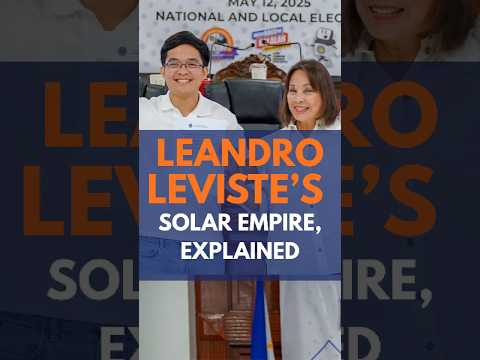
Below are some Vantage Point pieces you might have missed:
[Vantage Point] Corruption floods Philippine economy
[Vantage Point] The Marcos estate tax: A test of presidential statesmanship
Click here for other Vantage Point articles.