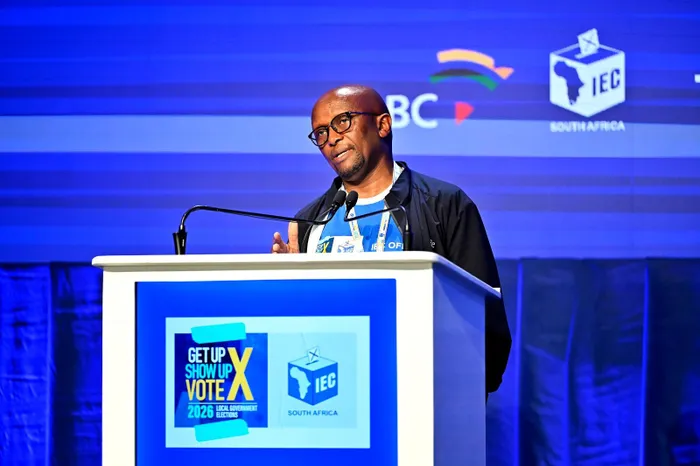
PROGRESS: IEC chairperson Mosotho Moepya, speaking during a press conference at the Results Operation Centre(ROC) at the Gallagher Convention Centre in Midrand.
The Electoral Commission of South Africa (IEC) expects the finalisation of results from the 2026 Local Government Elections to be completed by the weekend, as vote capturing, scanning and verification pick up pace across the country.
IEC chairperson Mosotho Moepya says more than 60% of the 66 073 results had been captured by 5pm on Thursday, 5 November, with the Commission maintaining that all results must undergo the necessary verification and quality assurance processes before being made official.
During a media briefing, Moepya reported that 40 202 results slips had been scanned, while 32 238 had undergone independent auditing to safeguard the accuracy and integrity of the electoral process.
Moepya said: “We are pleased to report that the capturing and verification of election results are progressing steadily across the country.”
The Northern Cape was leading the provincial capturing process at 87%, followed by the Western Cape at 69%, the Free State at 64% and the Eastern Cape at 60%.
Mpumalanga had captured 52% of its results, while KwaZulu-Natal stood at 37%. North West and Gauteng were both at 35%, with Limpopo recording the lowest capturing rate at 23%.
At municipal level, 65 of the country’s 213 municipalities, excluding district councils, had completed the capturing, scanning, auditing and exception processes, representing 31%.
The Northern Cape was also leading in this category, with 21 of its 26 municipalities having completed the process, followed by the Western Cape, where 14 of 25 municipalities had finalised the required procedures.
Moepya cautioned that the figures remain provisional until all objections that could materially affect an election have been finalised.
The Commission has also highlighted the enhanced Issue Tracker system, introduced ahead of the elections to allow electoral contestants and officials to report challenges that could affect the electoral process.
The system, now integrated into the Virtual Results Operations Centre (ROC), has resolved more than 1 000 cases logged since the commencement of special voting.
“The Commission remains committed to finalising the results as expeditiously as possible,” Moepya said, emphasising that the prescribed verification and quality assurance processes would not be compromised.
He also commended the thousands of electoral officials working to finalise the results and urged political parties, independent candidates, the media and the public to remain patient.
“We therefore urge political parties, independent candidates, the media and members of the public to exercise caution when interpreting partial results,” he appealed.
Moepya further warned against spreading disinformation, calling on all stakeholders to rely on officially verified information released by the IEC.