Production: By Europod, in co-production with Sphera Network.
EUobserver is proud to have an editorial partnership with Europod to co-publish the podcast series “Briefed” hosted by Léa Marchal. The podcast is available on all major platforms.
Find the full transcript below:
EU greenhouse gas emissions continue to fall, and clean technologies are expanding. That’s what the latest EU Climate Action Progress Report and the Carbon Market Report, published on Monday, show. Yet, progress is still needed to achieve the 2030 objectives.
How are EU countries performing in reducing their carbon footprint? By the end of this decade, the EU should have cut its emissions by at least 55 percent compared with 1990 levels. By 2050, it should be climate neutral. Is it on the right track?
The EU is reducing its emissions, but at a slower pace than needed. In other words, efforts will have to accelerate in the second half of the decade, starting now.
Read more
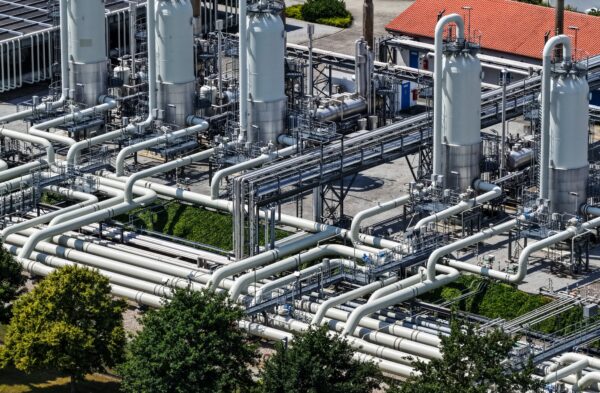
EU states back one-year methane delay, but leave door open for more
Last year, in 2025, greenhouse gas emissions fell by 1.6 percent compared with the previous year.
The report distinguishes between two types of emissions: those covered by the carbon market, the ETS, and the rest.
Emissions covered by the carbon market tend to fall a bit faster, by 2 percent exactly. We are talking about sectors such as electricity production, refineries, metals, aviation and maritime transport. They fall faster because companies have to pay for every tonne of carbon they emit. That’s the polluter pays principle.
Now, 1.6 percent, 2 percent: that’s not much compared with the climate emergency.
On Monday, the Global Carbon Project released a study showing that global greenhouse gas emissions decreased last year for the first time since 2020. The decrease was 0.4 percent, so not huge, and the authors warned it was far from enough to counter climate change. The emissions peak is still not in sight.
The conclusion is: we need to accelerate that transition.
In the EU, which countries are lagging? Nine member states are not making sufficient progress towards their 2030 targets, according to the commission’s report. They are Austria, Croatia, Cyprus, Germany, Italy, Ireland, Lithuania, Malta and Sweden.
Read more
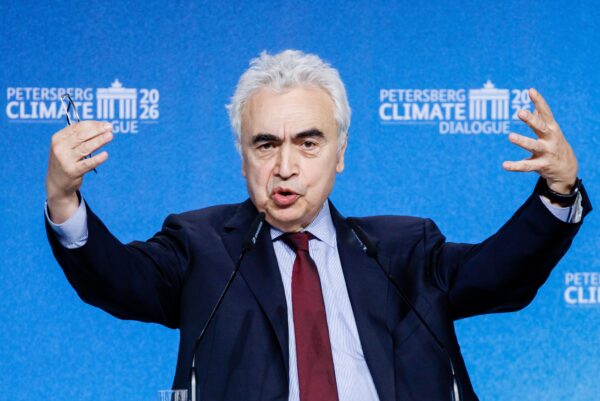
From India to Africa, renewables race ahead but Europe is lagging, IEA report shows
What is holding them back? Well, each country has its specificity. In Italy, the energy mix is still very much dominated by gas. In Sweden, rising energy demand, looser climate policies and fewer carbon sinks undermine the climate objectives. Some countries struggle to solve problems with land use, while others are not switching to renewables fast enough.
In any case, the commission will ask these nine countries to submit a corrective action plan to speed up emission-reduction measures and investments.
Another EU plan to accelerate the transition is to extend the carbon market to road transport, heating and small industry, which have so far been exempt. This should help reduce pollution. But it was supposed to start next year, and member states have already delayed it by a year.