Hey trendsetters,
“A dancing Jollibee!”
This is what my newfound media friends from different parts of Southeast Asia blurted out when I introduced myself during the Glico Fam Trip, where I was the only representative from the Philippines. All of them gushed about how the Bee’s versions in their respective home countries aren’t as chaotic as the one from back home (I bet they saw those unhinged TikToks).
It’s interesting how their knee-jerk reaction to knowing where I come from is to associate me with a popular fast food chain’s mascot. But even more amusing is to realize how the impact of brand mascots is ultimately having a global resurgence.
The brand mascot renaissancePreviously “cringe,” brand mascots are now taking over the spotlight (again), said Little Black Book. The Wall Street Journal recently reported a rise in new mascots even from unexpected industries. Tech giants are no exception, with Meta recently unveiling an AI agent called Jolly, who might be intentionally made cute to grow people’s trust amid skepticism. And of course, we can’t deny the massive online impact of Duolingo’s Duo.
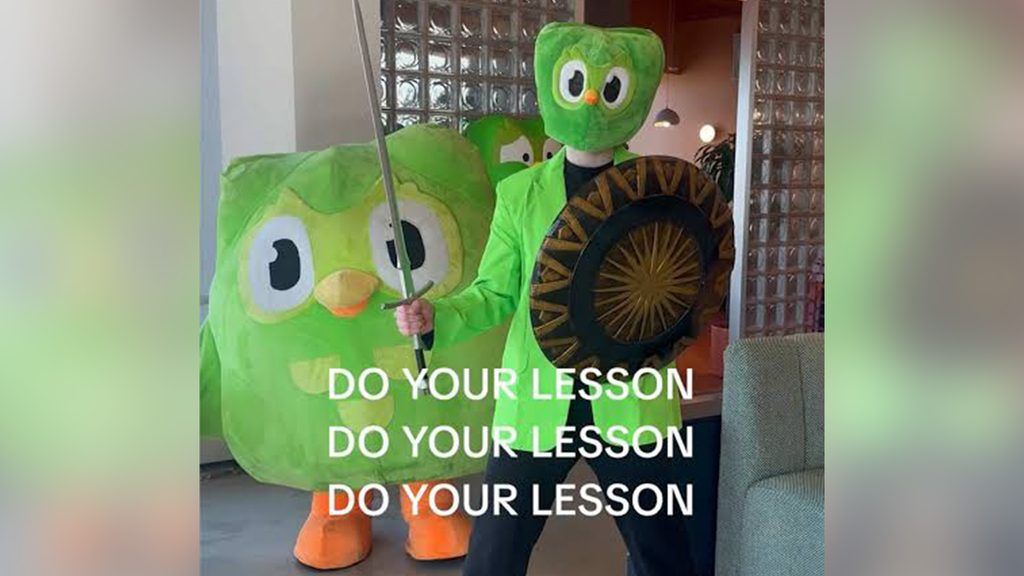 Screenshots from @duolingo on TikTok, showing funny videos of Duo the mascot
Here in the Philippines, we’ve seen Potato Corner’s Poco get its own talking plushie and blind box toys.
In other parts of Asia, Butterbear of Coffee Beans by Dao (Thailand) is a pop culture sensation, Mixue’s Snow King (China) is having an amusement park based on him, and Buldak (South Korea) is introducing a “next-generation character.” The emotion even evolves from love to grief. Take, for example, people’s sentimental reaction to the retirement of Suica, the penguin fronting Japan’s JR East transportation smart card system.
“Mascots work when you need people to remember you even when they’re not paying attention. Children, tired parents, anyone scrolling half asleep. What connects them? Brands that win by being liked, not just respected,” said Jacopo Pesavento, CEO of Branding Records, in Marketing-Interactive.
The Glico Man’s iconic statusBut if there’s a total hall of famer in the brand mascot department, it would have to be Japan’s Glico Man – the runner almost every Osaka visitor poses with.
Whether you’re taking a well-timed photo in the Dotonbori River or shooting a Reel along with a thick crowd of tourists along the Ebisubashi Bridge with Anri’s I CAN’T STOP THE LONELINESS playing in the background, the Glico Man always makes an appearance, seemingly adding to the major city’s vibrancy.
 People on TikTok posing with the Glico Man as backdrop in different spots
Before its 2014 version with LED lights, the Glico Man was established in 1935 to promote Ezaki Glico’s first product in 1922: A heart-shaped caramel candy with the slogan, “300 metres in a single piece,” implying that this health booster would give you enough energy to run 300 meters.
In case you didn’t know, the Glico Runner is actually inspired by a Filipino. Enter Fortunato Catalon, a track and field legend.
“Not many people know this, but Glico Runner has a Filipino connection. The runner’s pose is said to have been inspired in part by Fortunato Catalon, the Filipino sprinter once celebrated as Asia’s fastest man, together with two Japanese runners – marathon pioneer Shizo Kanakuri and top sprinter Sasago Tani,” said a representative from Glico Philippines.
More than a face of a brandThese days, Osaka tourists are “last chance rushing” their way to Glico Man’s photo spots. The multinational confectionery company announced that the iconic sign will be covered starting December 1, as it’s up for a revamp, marking its seventh redesign since 1935. Don’t fret, as the runner will remain and is planned to be unveiled by spring (approximately March to May) in 2027.
How people on TikTok are documenting their final sight at the landmark is testament enough to the Running Man’s impact as a brand mascot – it no longer just represents a brand, but has already become synonymous with an entire city.
The brand mascot to cultural landmark pipeline rarely happens, but when it does, it’s pretty worth it. In this case, a successful brand mascot is one that acts on its own, without needing constant deliberate action from its creators, as the audience has already become a huge player in promoting it through organic user-generated content. Plus, the accessibility it offers has allowed it to become an unofficial tourist spot.
We may chalk this phenomenon up to the “kidult” economy or people’s sudden drive to add whimsy to their mundane lives. But this interesting era of brand mascot renaissance in the age of AI may ultimately remind us that we might just need something overwhelmingly physical to see – or maybe even touch.
Which brand mascot pulled you in recently? Share your stories (or photos!) with us.
Until the next scroll!
Jelou Galang
Culture Desk Content Producer