Even as life kept pushing them forward, some Wang Fuk Court fire survivors say justice has yet to be served.
Yip Ka-kui, resident of Wang Fuk Court, poses for photographs during an interview in Hong Kong, on Nov 12, 2026. (Photo: AP/Chan Long Hei)
Yip Ka-kui, resident of Wang Fuk Court, poses for photographs during an interview in Hong Kong, on Nov 12, 2026. (Photo: AP/Chan Long Hei)
HONG KONG: Yip Ka-kui still sends WhatsApp voice messages to his wife even though they will never be heard. She was one of 168 people killed last November in Hong Kong’s deadliest fire in decades.
Over the past year, the 68-year-old Yip never turned on the television, struggled to step into a supermarket and stopped taking photos outdoors with his camera - all things he used to do with his wife, Pak Shui-lin. He learned to dine alone. Sometimes, he would cry when thoughts of her crept in. The hardest moments came at night, when sleep eluded him hours past midnight.
Now living at his eldest son's place within walking distance of their charred apartment at Wang Fuk Court, Yip has preferred mostly to stay at home in recent months because the familiar streets are full of memories.
“Sometimes, a feeling would suddenly flood in,” he said. “I can't believe she's no longer here."
RESIDENTS RAISED CONCERNS BEFORE DEADLY FIRE
CNA Games
 Guess Word
Crack the word, one row at a time
 Buzzword
Create words using the given letters
 Mini Sudoku
Tiny puzzle, mighty brain teaser
 Mini Crossword
Small grid, big challenge
 Word Search
Spot as many words as you can
Show More
Show Less
Like Yip, many residents displaced by the fire that swept through seven apartment buildings were still grieving. Over the past year, they returned to their old homes to collect belongings, learned of improper practices and inadequate oversight that led to the fire, and last month watched officials bow in apology over the tragedy.
But even as life kept pushing them forward, some said justice had yet to be served, and felt pressure from authorities when voicing their concerns. Some residents planned to offer flowers to mark the first anniversary on Thursday (Nov 26), with various religious commemorations to be held in the city.
Before the fire, some residents had already complained to the government about fire hazards during the complex’s building maintenance project. Yip had raised concerns about workers smoking with the main contractor and complained about the project to the Urban Renewal Authority.
But the residents' worst fears came true on Nov 26, 2025. That day, Pak knocked on her neighbours’ doors to warn them of the fire, saving some, but could not make it out herself. An investigation found the blaze was likely caused by a lit cigarette and spread rapidly through non-fire-retardant scaffolding material.
When the investigation hearings laid bare the facts, Yip was furious.
In May, he returned to their home of over 20 years with flowers. Most of their belongings were burned to ashes, and he could fit all he retrieved into a single ziplock bag. He found his wedding band, but not his wife's.
“You go to a peaceful place, and don't worry about us," he then told her at their home.
 Yip Ka-kui, resident of Wang Fuk Court, holds his smartphone displaying WhatsApp messages to his late wife during an interview in Hong Kong, on Nov 12, 2026. (Photo: AP/Chan Long Hei)
SOME SURVIVORS WHO SPEAK OUT FACE PUSHBACK
Betty Ho, another survivor, spent 18 years paying the mortgage and only began her retirement last year. When the blaze broke out, she was asleep, and a call from her former colleague checking in on her got her out in time.
The 61-year-old now lives in temporary housing with a view of Wang Fuk Court and can sometimes only fall asleep after sunrise.
When Ho returned to her apartment in May, she found the floor melted and the walls damaged. Her vinyls had warped and her toy cars were ruined, though she retrieved some Doraemon toys.
Ho wished their homes could be rebuilt at the original site, but the government rejected that, saying reconstruction would take about a decade.
She had planned to hang a banner bearing that wish at her old home. But police told her not to do it, she said. Posters making the same demand were also removed in other apartments, local media reported.
In the end, she could only put up posters expressing her love for Wang Fuk Court.
“I'm not doing anything illegal, just sticking them inside my own home. But even that had so many restrictions. I feel the Hong Kong government is no longer the one I knew,” she said.
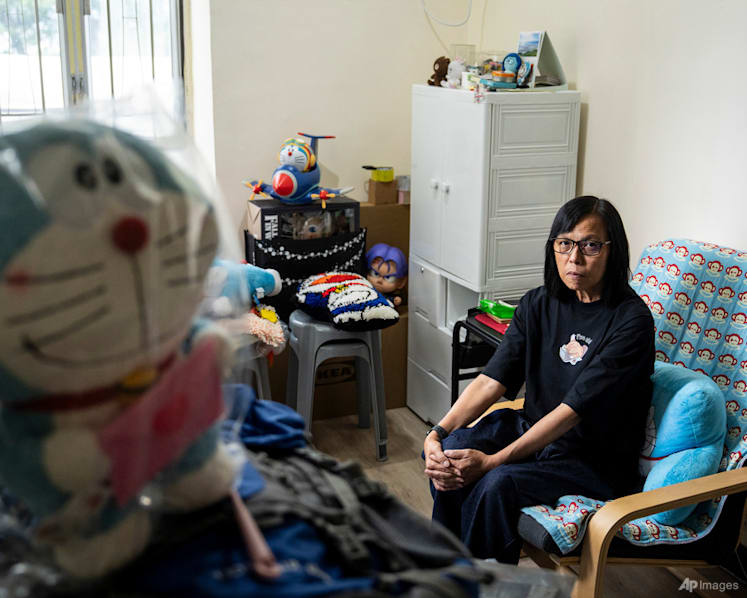 Betty Ho, resident of Wang Fuk Court, poses for photographs during an interview in Hong Kong, on Nov 13, 2026. (Photo: AP/Chan Long Hei)
In a city where national security laws have all but silenced political opposition, the tragedy is a sensitive issue.
The government condemned those it said were “using the disaster to stir up chaos". After people who posted allegedly seditious content online or organised a petition were detained, not everyone felt free to speak. The arrests of an outspoken Wang Fuk Court resident and his wife over fraud allegations unrelated to the fire sent a chill.
Last Friday, Hong Kong Chief Secretary for Administration Eric Chan said the government would not obstruct any lawful commemoration activities but urged residents to carefully choose what to take part in and not to be exploited by people with ulterior motives.
In an emailed response to questions from The Associated Press, the government said Hong Kong is a society governed by the rule of law and any activity that does not violate the law may proceed. But the authorities did not address questions over the posters.
It said the arrests of the former residents had nothing to do with the tragedy, and police declined to comment on the case because it has entered judicial proceedings.
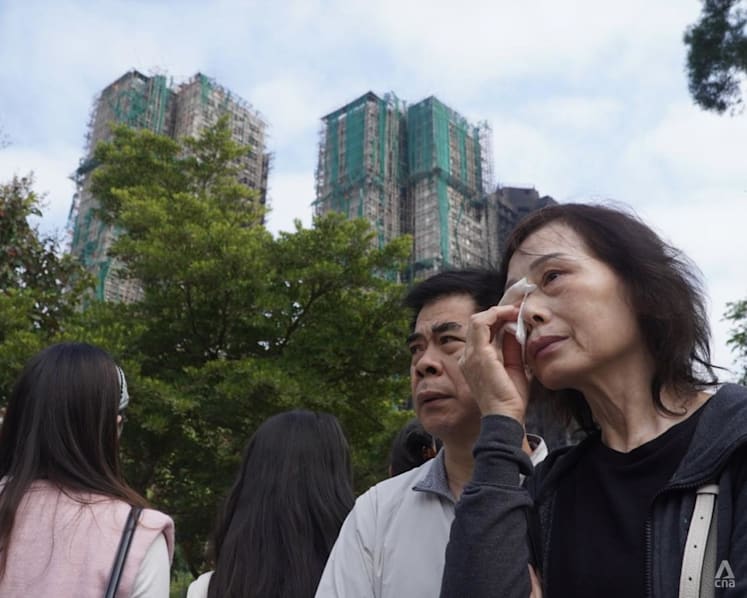
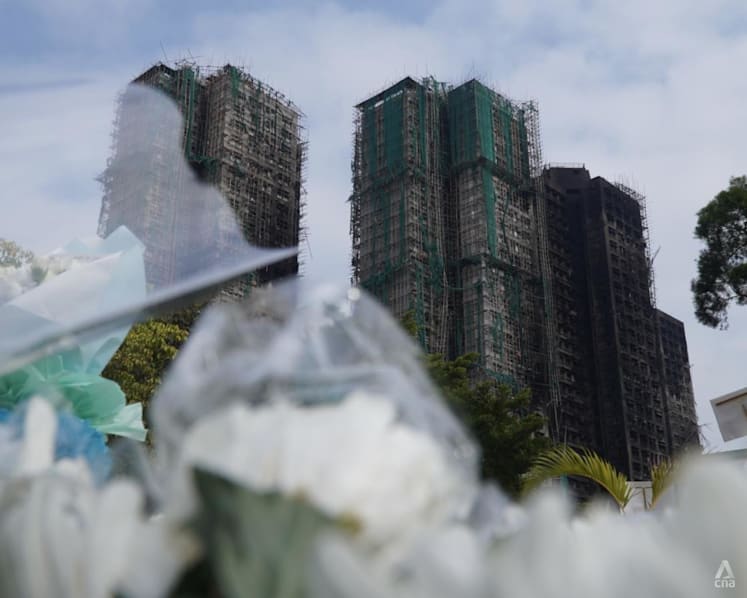
SURVIVORS MAKE HARD CHOICES ON RESETTLEMENT
Residents had also been navigating difficult choices about whether to accept the administration's resettlement plan by its Aug 31 deadline and sell their homeownership rights to the government.
The government deemed that the seven buildings would be difficult to repair cost-effectively and was inclined to demolish them. In September, it said over 99 per cent of the owners of the seven buildings and the remaining one unscathed by the fire agreed to sell.
But Ho refused, saying it was unfair and pointing to a lack of a property inspection report for them to read.
She now faces an uncertain future as the government could later introduce legislation to acquire the remaining apartments. She said the Basic Law, the city's mini-constitution, protects the right of private property ownership.
“I want to see how far it can go,” she said.
Some sold reluctantly. Yip said he had no choice after weighing his family's finances and future - though he deliberately signed just before the deadline.
“The only gesture I could still make was to let you know I would hold on until the very last moment," he said.
 Police officers on duty outside Wang Fuk Court in Hong Kong on Nov 12, 2026. (Photo: AP/Chan Long Hei)
RESIDENTS QUESTION ACCOUNTABILITY
Prosecution of the companies and individuals involved in the maintenance project is still ongoing.
But an official investigation report in October found faults in the maintenance work and deficiencies in regulatory oversight.
Hong Kong leader John Lee apologised, saying his housing minister had resigned to bear “political accountability". Various reform measures were also announced.
But Ho felt the minister's resignation was not the same as bearing political accountability. She said the government’s apology was not sincere as it came 11 months late.
“Whatever they do now, it will be very hard to accept as satisfactory,” she said.
Yip said he couldn't understand why three other bureaus that oversaw other departments where failings were identified did not have to bear political responsibility.
The authorities, he said, needed to show they were genuinely facing the disaster with a sense of commitment, but their swift rejection of rebuilding at Wang Fuk Court and their strict deadlines for the homeownership buyout plan suggested otherwise.
He said he was not picking a fight, but he just could not let go of how they lost their home and how they were treated afterwards.
“It felt as though we were recast from disaster victims to troublemakers. I can't swallow it,” he said.
Yip could not say how long it would take to move on.
“All I can say is that, for now, I will keep going,” he said.