Production: By Europod, in co-production with Sphera Network.
EUobserver is proud to have an editorial partnership with Europod to co-publish the podcast series “Briefed” hosted by Léa Marchal. The podcast is available on all major platforms.
Find the full transcript below:
Tajikistan has officially announced that it wants to leave the International Criminal Court (ICC). This comes as Donald Trump steps up his campaign against the court, with Washington threatening sanctions and putting diplomatic pressure on its allies. So, how serious is the threat to the ICC?
Tajikistan was until now the only country in Central Asia to have ratified the Rome Statute, the treaty that established the ICC. And it’s not the only country withdrawing. No fewer than six other countries have notified the UN of their intention to withdraw this year: Niger, Burkina Faso, Mali, Venezuela, Chad and Nauru.
Another blow to the court came last week, when Donald Trump, Vladimir Putin and Xi Jinping issued a joint declaration warning the court not to abuse its jurisdiction.
Here’s a quick reminder of what the ICC is, and what it isn’t. The ICC was established in 2002. Its job is to investigate and prosecute individuals accused of four of the most serious international crimes: genocide, crimes against humanity, war crimes and the crime of aggression.
The ICC is a court of last resort. It is supposed to step in only when national authorities are unwilling or genuinely unable to investigate and prosecute these crimes themselves.
Read more
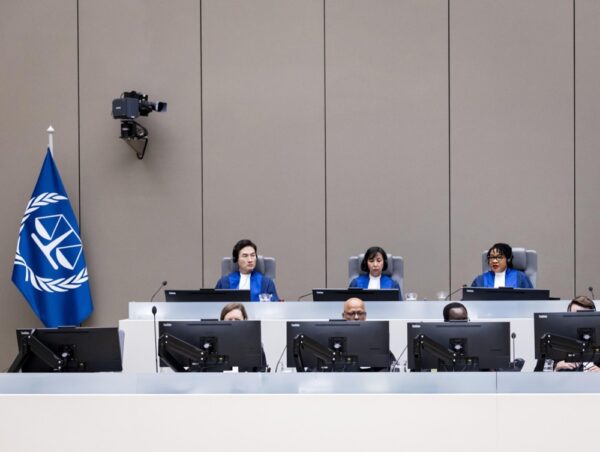
The clock is ticking: Europe is running out of time to save the International Criminal Court
That’s how it came to issue an arrest warrant against Russian president Vladimir Putin in March 2023 over the unlawful deportation and transfer of Ukrainian children from occupied territories to Russia.
In November 2024, the court issued arrest warrants against Israeli prime minister Benjamin Netanyahu and his former defence minister, Yoav Gallant. They are accused of war crimes and crimes against humanity in Gaza, including using starvation as a method of warfare.
Those warrants were made possible by the fact that the ICC can investigate crimes committed on the territory of a member state, even when the alleged perpetrators come from a country that has never accepted its authority.
It can also exercise jurisdiction when the accused is a national of a member state, or when the UN Security Council refers a situation to it.
Now, Washington wants to challenge that principle and, more broadly, dismantle the ICC.
The US is seeking to prevent the ICC from exercising jurisdiction over individuals from countries that are not members of the court, even when the alleged crimes were committed on the territory of a member state.
Such a change would fundamentally alter the court’s reach. On top of that, the Trump administration is also putting pressure on the ICC and its member states.
According to Politico, US diplomats have been urging NATO allies to withdraw from the Rome Statute and immediately stop providing material support to the court.
Read more
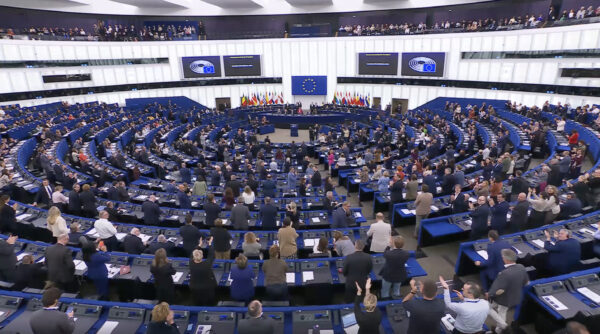
International Criminal Court wins EU’s top human rights prize in defiance of Trump’s sanctions
We cannot say whether the seven countries that have notified their withdrawal this year have done so because of US pressure. But the timing is noteworthy, particularly in the cases of Venezuela, Chad, Nauru and Tajikistan.
And then, there are the sanctions. Over the past months, Washington has sanctioned several judges and prosecutors, including the court’s president, Tomoko Akane. In October this year, the United States went a step further and sanctioned the ICC as an institution.
These sanctions have concrete consequences: restrictions on financial transactions, frozen assets, and bans on entering the United States, among other things.
According to MEP Chloé Ridel, these sanctions are already affecting the ICC’s work: the prosecutor’s activities have slowed down, and some people have been sidelined from certain cases.
But can the US actually dismantle the ICC? If fewer countries cooperate, the court becomes increasingly difficult to operate.
The court still has 125 member states, and the withdrawal process takes time. But its ability to function depends heavily on international cooperation, financial resources and political support.
The combination of American sanctions, diplomatic pressure and growing opposition from major powers is, however, sending a very negative signal about respect for international law.
That’s why many actors are calling on the EU to activate its Blocking Statute, in order to neutralise the effects of US sanctions in Europe, at least.
This would not be a game changer, but it could make the ICC’s work slightly easier if fewer companies were reluctant to work with the court because of the risk of US sanctions.
So far, however, the commission has not proposed activating it.