Prime Minister Anwar Ibrahim’s anti-corruption agenda has taken a perceived hit even though he does not have the final say in former premier Najib Razak’s house arrest.
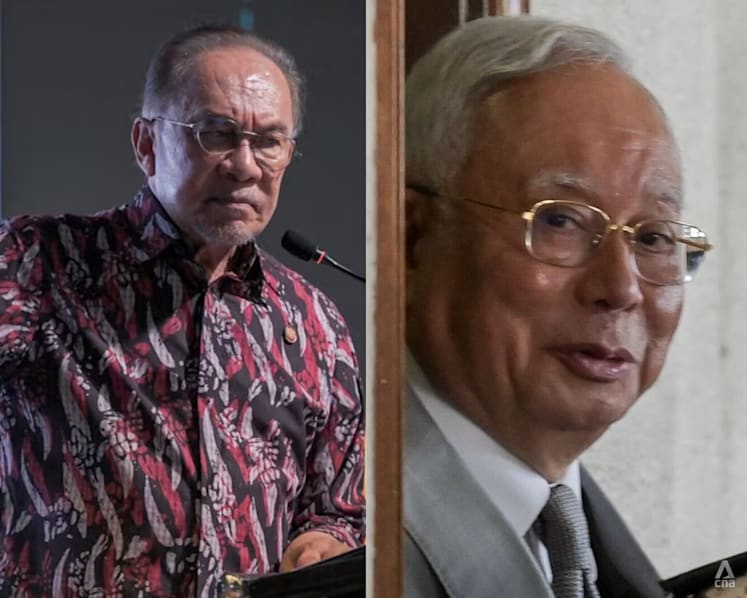
A composite image of Prime Minister Anwar Ibrahim (left) and former premier Najib Razak. (Photos: CNA/Zamzahuri Abas, Fadza Ishak)
A composite image of Prime Minister Anwar Ibrahim (left) and former premier Najib Razak. (Photos: CNA/Zamzahuri Abas, Fadza Ishak)





KUALA LUMPUR: After a high-profile legal struggle regarding a disputed royal order that started in 2024, Malaysia’s former premier Najib Razak finally returned home on Tuesday (Nov 10) to serve the remainder of his prison sentence for corruption.
For the embattled Najib, who still faces other legal battles linked to the 1Malaysia Development Berhad (1MDB) scandal, the move marks a significant personal victory after four years behind bars - one that has also sent political ripples through Prime Minister Anwar Ibrahim's unity government.
Analysts said Najib’s shift from prison to house arrest has created an optics problem for Anwar, even as they believe this, and the ensuing resignation of a Cabinet minister and key coalition partner, would not further threaten the stability of his federal unity government.
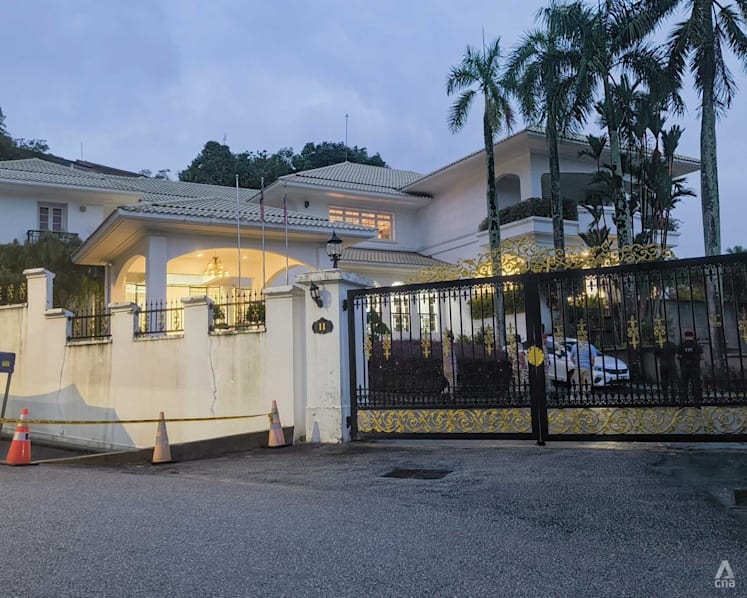
 Former Malaysian Prime Minister Najib Razak is seen arriving at his home in Taman Duta, Kuala Lumpur, at around 9.30pm to serve the remainder of his SRC International sentence under house arrest on Nov 10, 2026. (Photo: CNA/Fadza Ishak)
The current administration, which includes Anwar’s Pakatan Harapan (PH) coalition and the Malay-based Barisan Nasional (BN) alliance that Najib once led, is on shaky ground after fighting out several state elections as foes. They are set to lock horns once more at the Melaka state election this Saturday.
CNA Games
 Guess Word
Crack the word, one row at a time
 Buzzword
Create words using the given letters
 Mini Sudoku
Tiny puzzle, mighty brain teaser
 Mini Crossword
Small grid, big challenge
 Word Search
Spot as many words as you can
Show More
Show Less
Najib’s return could further embolden BN lynchpin party United Malays National Organisation’s (UMNO) dealings with Anwar, the analysts said, and spark growing calls from UMNO’s grassroots for an early general election, otherwise due by February 2028.
On Tuesday, the same day that Najib began serving his house arrest, Deputy Prime Minister Ahmad Zahid Hamidi - who is also UMNO president - reiterated his call for parliament to be dissolved early.
At the country’s 16th national polls, PH supporters must decide whether the perceived leniency for Najib is worthy of punishing the reformist coalition, the analysts added, allowing BN and its likely partner, the opposition Perikatan Nasional (PN) coalition, to wrest control of Putrajaya.
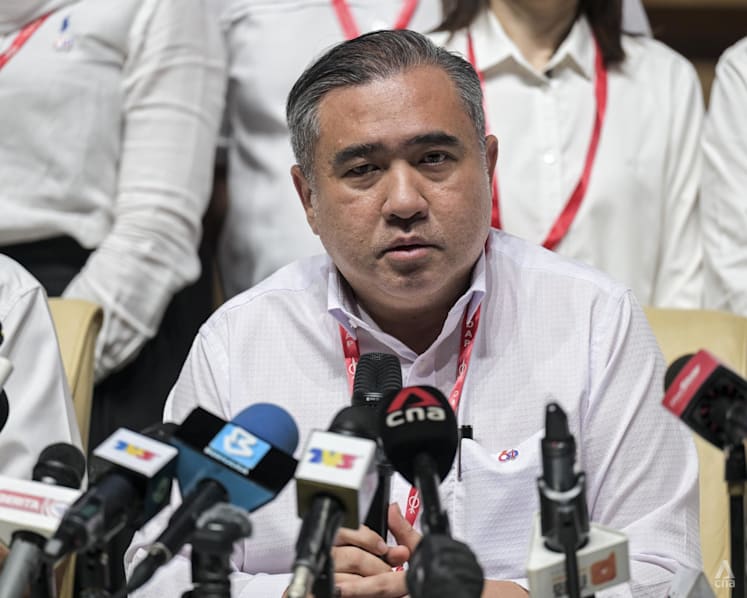
Syaza Shukri, a political scientist at the International Islamic University Malaysia (IIUM), said Najib’s house arrest made it appear as though Anwar and his government were not able to stop the former premier from getting off easy.
The 1MDB scandal was key to BN’s fall at the 2018 general election, she noted, and PH’s core supporters now face a difficult dilemma over how to respond at the ballot box.
“They need to decide now what to do, whether to punish PH and help BN-PN or support PH with a heavy heart,” she told CNA.
Najib’s conditional royal pardon to serve the remainder of his SRC International - a former 1MDB subsidiary - sentence under house arrest came from Malaysia's king Sultan Ibrahim Sultan Iskandar, who publicly rebuked the Attorney-General for the latter’s decision to temporarily block the former premier’s move from prison last week.
“NEGATIVE PERCEPTION”
Azmi Hassan, a senior fellow at the Nusantara Academy for Strategic Research, predicted fallout among PH voters, particularly within the Democratic Action Party’s (DAP) support base.
DAP, a Chinese-majority PH component party, had been one of the most vocal opponents of Najib’s house arrest.
The fact that DAP chief Anthony Loke resigned as transport minister in a final message of defiance would make no difference to their supporters, Azmi told CNA.
“Even though Loke resigned, there is a negative perception that DAP has not done enough to curtail the house arrest,” he said.
“This fallout stems from the growing perception that the government failed to block the house arrest decision, despite having Cabinet representation on the Pardons Board.”
The board, which includes Federal Territories Minister Hannah Yeoh from the DAP, advises the king on pardons, though the king ultimately has the final say.
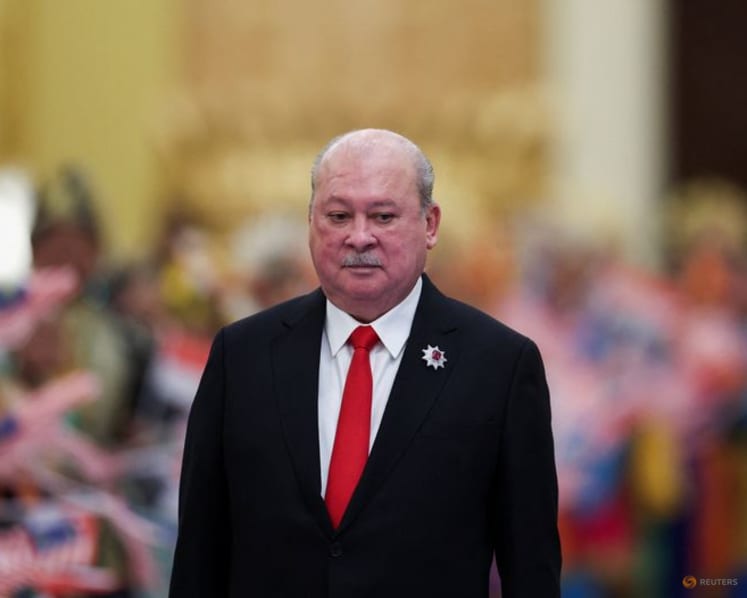
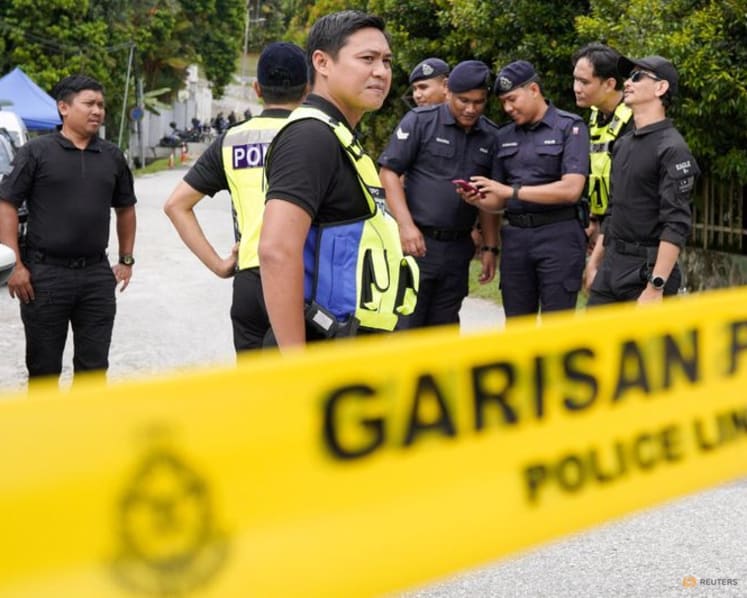
James Chin, a professor of Asian studies at the University of Tasmania, however, feels that any damage to Anwar and PH is likely contained because the public had long anticipated Najib’s eventual release following his initial royal pardon in 2024.
Najib, 73, had been in jail since August 2022 when the Pardons Board announced in February 2024 that his initial 12-year prison sentence and RM210 million (US$51.5 million) fine for his conviction in the corruption case linked to SRC International would be halved to six years and an RM50 million fine.
It was then that Najib claimed that a supplementary addendum order - also issued by the then-king from Pahang - permitted him to serve the remainder of his prison sentence under house arrest instead of at Kajang Prison.
That Najib’s potential house arrest had been known since then minimised any true shock factor from the latest developments, Chin said.
Chin also felt that Loke’s resignation was an “overreaction” driven by fear of losing the Chinese community's trust, even though neither DAP nor Anwar held the legal authority to block the royal pardon.
“DAP felt they must do something very public to show to the Chinese community that they don't agree with this decision,” he said.
“It's a stupid move because the Chinese community also knows that DAP or even Anwar cannot stop this process, because the pardon is at the absolute discretion of the king.”
UNITY GOVERNMENT STABLE FOR NOW
While Loke’s resignation is a “damaging signal” for PH given that DAP has the lion’s share of the coalition's seats in parliament, Najib’s house arrest would not pose an immediate threat to the unity government’s survival, another political analyst told CNA.
“DAP’s continued parliamentary support and the presence of its other ministers limit the immediate risk,” said Asrul Sani, a partner at strategic advisory firm ADA Southeast Asia.
Anwar continues to retain support from several Borneo-based parties and coalitions, and in October seven opposition lawmakers agreed to support his government on key parliamentary votes.
Syaza also expects the federal PH-BN pact to stay intact, especially since UMNO got what it wanted in respect to Najib.
“I think they know support for them is slowly improving and it makes sense for them to continue staying in government for now,” she said.
UMNO accounts for 26 of BN’s 30 seats in parliament.
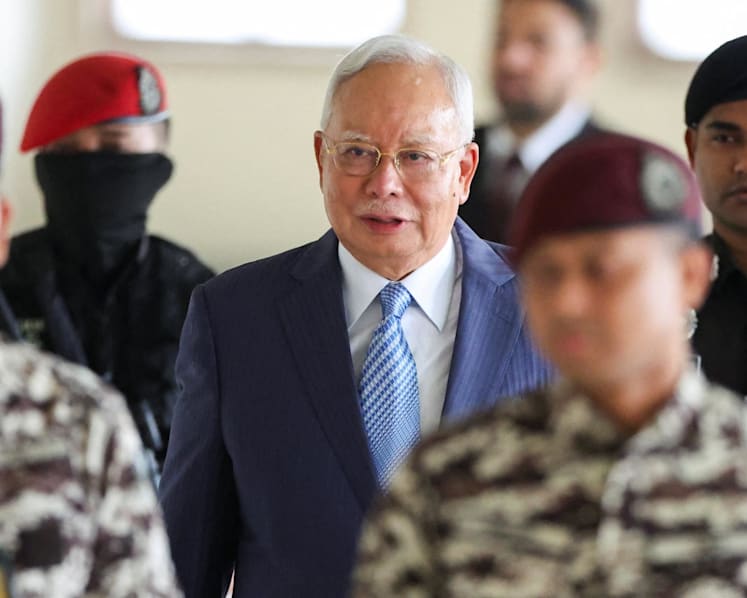
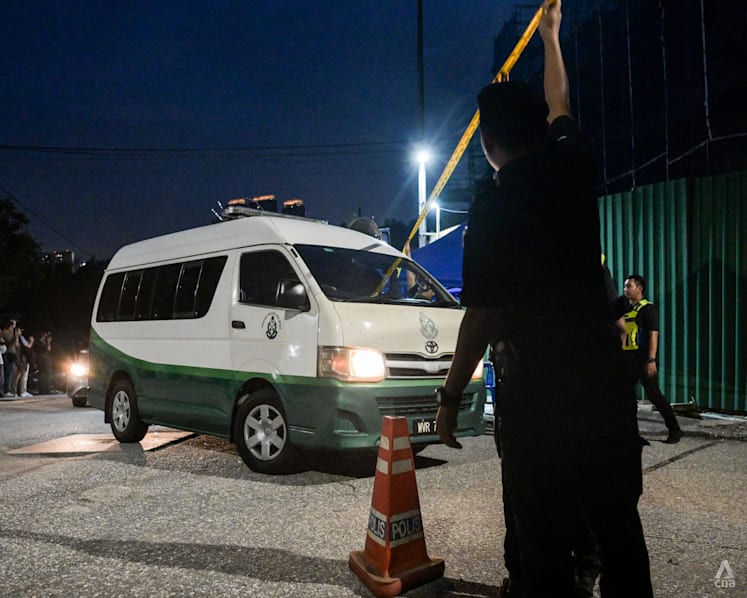 Prison authorities enter the residence of former Malaysian prime minister Najib Razak to conduct inspections ahead of his anticipated house arrest on Nov 10, 2026. (Photo: CNA/Fadza Ishak)
BN will not withdraw from the governing coalition as it had previously pledged allegiance to the previous king’s calls to maintain political stability, Azmi said.
However, he said that internal pressure within the ruling alliance will inevitably mount, particularly if the Melaka state election results signal a clear rejection of PH.
“The pressure will be on but I doubt that Anwar will dissolve the parliament because currently PH is in a weak position and the unity government will hold on for as long as possible, most probably until the end of next year,” he said.
UMNO TO GAIN
Still, Azmi described securing Najib’s house arrest as a massive triumph for UMNO’s leadership, who had faced continuous calls from the party's base to secure clemency for their former leader.
“The perception is that Najib and the party still have grassroots support especially as a huge number of people contributed to the fund. It shows that UMNO tried its best and succeeded in getting him out of prison to his home,” he said.
Syaza called Najib’s return a “double-edged sword” for UMNO, explaining that while the party could now say Najib’s rights were upheld despite his crimes, this issue could no longer be weaponised against Anwar.
The Anwar administration had faced criticism after the initial royal order granting Najib’s house arrest was seen to have been suppressed and not adhered to.
“So, they (UMNO) need a new angle against Anwar,” Syaza said.
Separately, Asrul said Najib’s return strengthens his political relevance and could embolden UMNO in its dealings with Anwar, while triggering growing calls from party grassroots for an early general election.
“The threat becomes more serious if that pressure translates into UMNO withdrawing parliamentary support,” he said.
With UMNO and Parti Islam Se-Malaysia (PAS) - which leads PN - seeking to contest the next general election together, Najib’s return could give their cooperation greater momentum, Asrul said.
“However, consolidating the Malay vote will still require agreement over seats and leadership,” he said.
Another question is whether UMNO can find a “balance” between Najib and current chief Zahid, Asrul said.
While Najib retains strong grassroots support and could help UMNO strengthen its relationship with PAS, Zahid has rebuilt UMNO’s relevance following its 2018 defeat under Najib and has the final say over UMNO’s candidates for the next general election, he pointed out.
“Najib’s ability to shape decisions will depend on his relationship with Zahid, his house arrest conditions and the outcome of the appeal against his separate 1MDB conviction,” the analyst added.
The federal government has not yet publicly disclosed the full conditions of Najib’s house arrest, which does not cover a separate 15-year prison sentence imposed in December 2025 for corruption and money laundering in a second major trial tied to the 1MDB scandal.
Najib is appealing that conviction and sentence, though the Attorney-General has specified that Najib should be transferred back to Kajang Prison on Aug 24, 2028 to serve his sentence in the 1MDB case.
Morning Brief
An automated curation of our top stories to start your day.