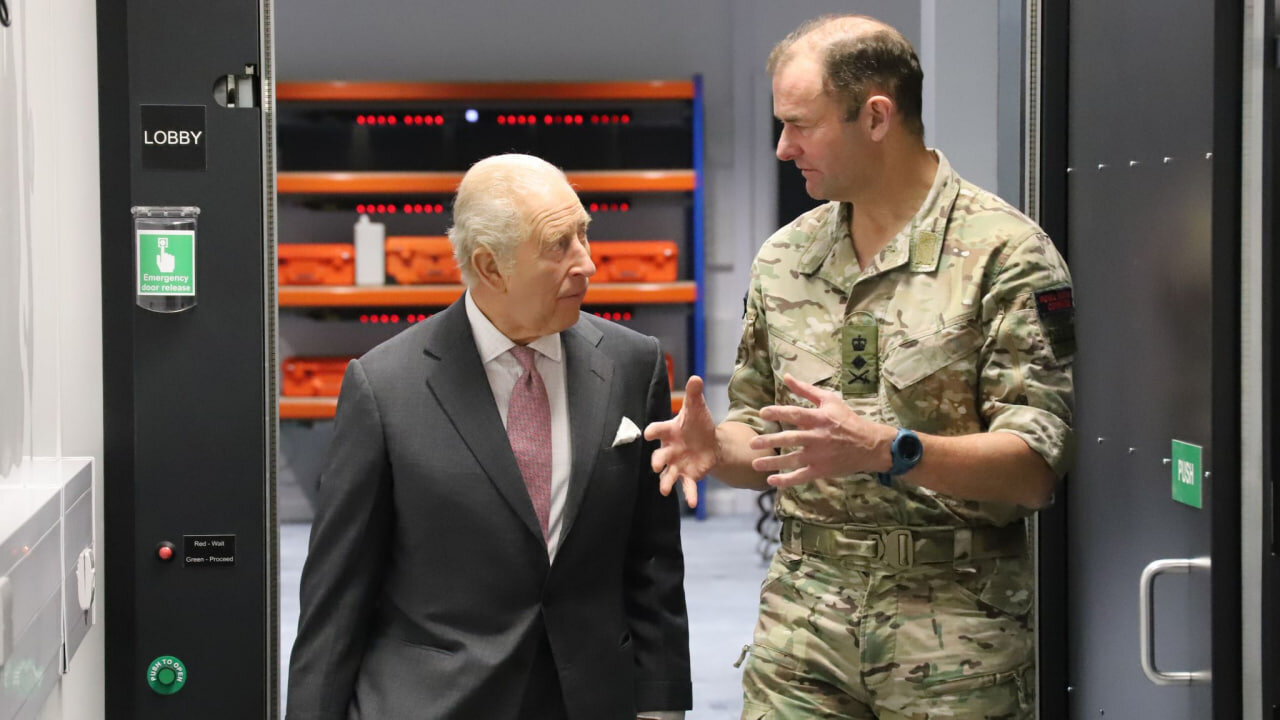
TEHRAN — A British four-star general has shamelessly claimed that his country’s hackers are operating inside the computer networks of Iran, Russia, China and North Korea. He produced no proof that any of the four had done anything to invite it.
Rob Magowan, who runs the Cyber and Specialist Operations Command, was asked whether the National Cyber Force carries out offensive missions. “Absolutely,” he told Sky News.
The force can supposedly map an “adversary’s” systems and “achieve effect inside that network,” and anyone who tries something will “meet that threat with threat,” he claimed.
Magowan cited no incident, no victim, and no technical finding. Four governments became threats to Britain’s “way of life” on his word alone, then shared a sentence with criminals who harm children.
In 2023, the force told the public it runs operations daily and described itself as “accountable, precise and calibrated.”
The British military has never mentioned the civilian harm it has caused during its cyber operations.
The law suits the work. London holds that violating another state’s sovereignty in cyberspace is not unlawful in itself, and that only coercion crosses the line.
Tehran has heard this genre of charge before. Earlier this month its Foreign Ministry dismissed France’s claim that Iran hacked supermarket refrigeration as “baseless and malicious.”
Iranians know the answer. In October 2021, the cards that deliver subsidized fuel stopped working at all 4,300 stations. Drivers queued, and those who finally pumped paid unsubsidized prices.
The late President Ebrahim Raisi said the aim was to anger people “by creating disorder and disruption.”
In December 2023, roughly 70 percent of the country’s 33,000 stations went dark, and the oil minister confirmed a cyberattack.
During the 12-day U.S.-Israeli campaign of aggression in June 2025, Iran’s Information and Communications Technology Ministry counted more than 20,000 attacks on payment systems, fuel distribution, healthcare networks and retail platforms.
When U.S. and Israeli strikes opened the 2026 war on February 28, Iran was the recipient of more cyberattacks. Even a popular calendar and prayer app was hijacked.
U.S. cyber and space operations “effectively disrupted communications and sensor networks,” claimed chairman of the Joint Chiefs of Staff Dan Caine.
Banks in Iran were hit again in June, and Communications Minister Sattar Hashemi said in August that attacks were continuous and growing more complex.
The precedent was set by Stuxnet, a cyberattack carried out by the United States and Israel.
Britain has let Washington use its bases to wage attacks against Iran since March, and Prime Minister Andy Burnham renewed that permission in July.
Magowan called all this “a grey zone.” The Sky News report built around his interview cited 1,831 reported cyberattacks on Britain last year, 80 of them nationally significant, and tied none of them to Tehran.