Ten years after Rodrigo Duterte launched his deadly crackdown on drugs, thousands of Filipino families are still seeking justice. As the former president prepares to face trial at the ICC, CNA examines the human cost of his campaign, his enduring political influence and the divisions that continue to shape the Philippines.
A mother whose son was killed during former Philippine President Rodrigo Duterte's war on drugs, holds a picture of him in their home in Quezon City, Philippines, Nov 26, 2026. (Photo: Reuters/Noel Celis)
MANILA / THE HAGUE: At De La Salle University in Manila, a brightly painted van stands out on campus.
The words “Stop the killings” are emblazoned across its side. A mural depicts a woman cradling her dead family. Between windows, a huge “X” crosses over a skull and the words “death squad”.
Above the windscreen is a simple message: “Coffee. Stories. Human rights.”
CNA Games
 Guess Word
Crack the word, one row at a time
 Buzzword
Create words using the given letters
 Mini Sudoku
Tiny puzzle, mighty brain teaser
 Mini Crossword
Small grid, big challenge
 Word Search
Spot as many words as you can
Show More
Show Less
It is run by Silingan Coffee, a social enterprise that offers employment to families who lost loved ones during former Philippine President Rodrigo Duterte's bloody war on drugs.
Beyond serving coffee and pastries, the project provides a space for survivors to share their stories, spread awareness about the killings and keep their pursuit of justice alive.
“This is the Justice Van. It's been to a lot of places,” said Grace Garganta, the brand’s operations head.
“What we really hope for with Silingan is not only to sell coffee. We really need justice. We believe that seeking justice means we can't just be silent.”
 A customer buys a beverage from the Justice Van, a mobile cafe run by Silingan Coffee that supports families of victims of the Philippines' war on drugs, at De La Salle University in Manila. (Image: CNA)
Founded in 2021 with a single outlet in Quezon City, Silingan has since expanded to six branches across the Greater Manila Area, providing jobs to members of more than 40 families affected by the drug war.
Many of its employees are mothers, widows and daughters of those killed.
“Here at Silingan, we don't look at your educational background. The only thing we look for is a death certificate and a police report. These are proof that you are a victim or a relative of a victim of the war on drugs,” said Garganta.
“When (customers) learn we're all from families of victims of extrajudicial killings, they're surprised. We don't force anyone to listen to us or believe us. What matters is for us to be heard,” the 34-year-old added.
“(Silingan) doesn't just give us job opportunities. It also gives us dignity.”
LIVING WITH THE SCARS OF THE DRUG WAR
For Garganta, the struggle for justice is deeply personal.
Her father and brother were killed just three weeks after Duterte launched his nationwide anti-drug campaign in 2016.
“My father was killed inside our home. My brother was taken from our home and dumped in a grassy field. They said my father resisted arrest,” she told CNA.
“I was a student and had to stop studying. I had to find a job because I had to feed and support my siblings. But instead of being able to earn a living, I had to lie low.”
Fearing that she too could be targeted, Garganta sought refuge at Baclaran Church in 2017.
“I was afraid of staying outside. I think if I hadn't fled to the church, I would probably be dead too. I'm deeply grateful to the people in the church who really supported me,” she said.
 Grace Garganta walks along the Wailing Wall, a mosaic memorial to honour those killed, at Baclaran Church in Manila. She created this wall with other families of drug war victims while seeking refuge at the church. (Image: CNA)
Her experience reflects the fear that gripped many communities during Duterte's crackdown.
Families of those killed often faced not only the loss of their loved ones, but also the stigma of being associated with illegal drugs and the fear of further harassment or violence.
Duterte had repeatedly urged law enforcement officers to take a hard line against suspected drug offenders, including using lethal force when confronted with violent resistance.
Human rights groups condemned the campaign as a war against the poor.
Many of those killed were fathers and sons who were breadwinners, leaving wives, mothers and other relatives to support their families.
At another Silingan Coffee branch at the Monument of Heroes in Quezon City, one mother still struggles with the loss of her son.
He had been earning a living as a tricycle driver when he was shot dead by an unidentified assailant on Christmas Day. He was 21 years old.
“I took on all kinds of honest work to provide for my family so we could survive hardship and get through each day, only for my son’s dreams to be shattered,” she said.
“Instead of being able to help support the family, my son was killed. The person just shot him, then ran off. He was hit in the back of his neck. My son died on Dec 25. We held his wake and we were grieving at Christmas.”
The gunfire also killed his passenger, a 16-year-old neighbour.
When Duterte was arrested last year, she felt that justice might finally be within reach.
“We were relieved, as if a weight was lifted from us. We thought at last we will get our due. I hope we win. We really hope that if (Duterte is found guilty), he will stay in prison,” she said.
 A mother still carries her son’s photograph in her wallet – a daily reminder of how the drug war cut his young life short and the devastating loss her family has endured.
For years, families have struggled to secure accountability through the Philippine justice system. Despite attempts to prosecute police officers implicated in drug war killings, convictions have been rare.
In March 2025, Philippine authorities arrested Duterte and transferred the 81-year-old to the custody of the International Criminal Court (ICC) in The Hague, where he faces trial for crimes against humanity.
Garganta, who works at Silingan Coffee’s justice van, also hopes the international proceedings will deliver answers that have long eluded victims.
“I hope he (Duterte) stays safe and healthy because while he is strong and alive, the trial can continue,” she said. “I don't hope for his death. I hope the trial can proceed swiftly, so that families like us can quickly attain justice.”
A COUNTRY CONFRONTS ITS PAST
Duterte swept to power in 2016 on a promise to eradicate illegal drugs and restore law and order.
What followed was a campaign of bloodshed that shocked the country and drew international condemnation.
Night after night, suspected drug offenders were killed in impoverished neighbourhoods, some by police officers claiming self-defence, and others by masked vigilantes on motorcycles.
The Philippine government puts the death toll at around 6,000, but human rights groups estimate that between 12,000 and 30,000 people were killed.
 Catholic priest Flavie Villanueva prays at the Dambana ng Paghilom, or Shrine of Healing, a memorial to victims of the Philippines' war on drugs, at La Loma Cemetery in Metro Manila. (Image: CNA)
Away from the bustling streets of Metro Manila, La Loma Cemetery offers a quiet refuge from the noise of the surrounding city. There, an unimposing structure called Dambana ng Paghilom, or Shrine of Healing, stands as a reminder of one of the darkest chapters in recent Philippine history.
With 100 vaults that can hold as many as six urns each, the shrine serves as a final resting place for just a fraction of the thousands who lost their lives during Duterte's crackdown.
Catholic priest Flavie Villanueva led the construction of the memorial to offer a place of dignity for the dead and healing for those left behind.
Through his Program Paghilom initiative, he has supported devastated families and helped survivors cope with grief, rebuild their lives and seek justice.
But even after a decade of working with victims, he continues to grapple with how such violence could have unfolded in a deeply religious country.
“Why did a Catholic country with deep faith and devotion go through this bloody nightmare? Where did we go wrong? How can we make right the bad choices we made in the past?” he asked.
In September this year, Duterte made his first physical pre-trial appearance before the ICC.
The court has found “reasonable grounds” to believe that he is individually responsible as an indirect co-perpetrator of killings between November 2011 and March 2019, covering part of his tenure as mayor of Davao City and the first three years of his presidency.
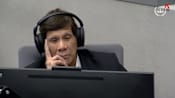
 Former Philippine president Rodrigo Duterte appears before the International Criminal Court in The Hague, where he faces charges of crimes against humanity linked to his war on drugs. (Image: CNA via ICC)
For the families of those killed, the proceedings offer a long-awaited opportunity for accountability.
But former Filipino ICC judge Raul Pangalangan believes a criminal conviction alone would not be enough to address the damage left behind.
“Of course, a finding of guilt in a criminal case is important ... but that alone won’t suffice. We would have to reach out to victim communities to assure them that those years, when everyone looked the other way, will not happen again,” he said.
Pangalangan now chairs a newly formed independent Truth Commission, which aims to establish a credible record of the violence through testimonies and documentary evidence from victims' families, witnesses and even perpetrators.
Its work seeks to address questions that go beyond who ordered or carried out the killings: how did the violence become possible, and why was it accepted – even celebrated – by sections of society?
THE APPEAL OF A STRONGMAN
Sociologist Filomin Gutierrez said the answer lies partly in long-standing public frustration over crime, inequality and economic progress that has failed to benefit many Filipinos.
Duterte tapped into those grievances by presenting himself as a decisive leader willing to use force to restore order.
“The nostalgia for a strong-arm leader was there, and Duterte spoke the language,” said Gutierrez, a University of the Philippines (UP) professor.
“He had charisma and he was able to usher the drug crisis into the picture and convince everyone that if we get rid of the drug problem, then we get rid of the crime problem.”
She warned that the acceptance of violence as a solution to social problems could have consequences far beyond Duterte's presidency – it could normalise the use of strongman tactics by politicians.
“When you have a leader who advocates and relies on violence as a solution to political, social, economic or whatever problem, then it may not only activate the official channels such as the PNP (national police), but will also activate the dormant violent sources within the community – the ones they call vigilantes, the ones they call death squads,” she said.
Despite his detention in The Hague, Duterte and his family remain widely popular and politically influential.
His daughter, Vice President Sara Duterte, is widely regarded as a leading contender for the 2028 presidential election.
Political observers say she has drawn heavily on her father's political appeal and style of governance, often described as “Dutertismo”.
But the ICC proceedings could influence the country's political landscape, said UP political science professor Jean Encinas Franco.
“Filipinos have normalised electing people from political dynasties. It's very easy for them to transfer their support for Rodrigo Duterte to Sara Duterte,” she said.
“(But) if Duterte is convicted, then his opponents or Sara Duterte's opponents in the 2028 elections can actually use it to say: ‘Hey, we were right in the first place’.”
Franco believes Duterte's enduring popularity reflects a conviction among many Filipinos that his drug war made the country safer.