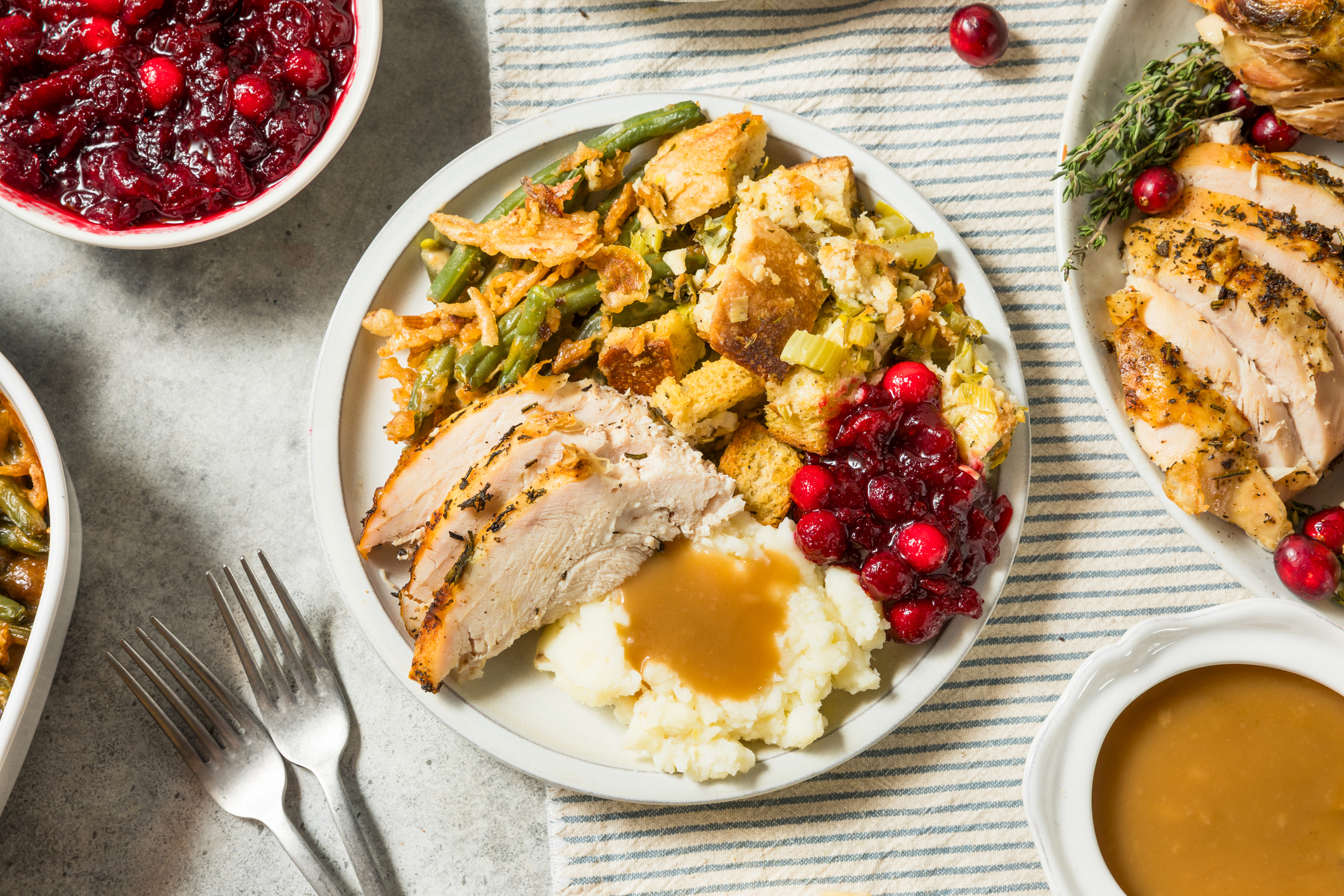
 Thanksgiving food is often about abundance—but that can often lead to a lot of food waste. —iStock—Getty Images Plus
For millions around the country, Thanksgiving preparations are in full swing. But after we fill up on turkey and countless sides, what’s left often goes to waste.
One study found that, in 2025, Americans discarded enough food to fill 40 football fields from their Thanksgiving meals. We spoke with experts about how you can avoid food waste this Thanksgiving.
Read more: Will Bad Weather Disrupt Thanksgiving Travel?
Make a realistic plan before you shop
Avoiding food waste starts long before your meal is on the table. Before you go shopping, look through your kitchen to see what you already have.
As you plan your groceries, think through how much food you’ll need. “Really be realistic about how many people are coming to your gathering and try to get as accurate as you can about how much food you need,” says Robin McClave, program director for the Healthy Schools, Healthy Communities initiative at American University. “Thanksgiving in general, we usually find that people try to prepare in abundance, but then don't necessarily have a plan for the leftovers. A lot of extra food was served intentionally just to have abundance, but also unintentionally because they weren't sure how much food would be consumed.”
Make sure the items you’re making are things your guests will enjoy. “Plan for the likes and dislikes of the folks around the table,” said Norbert Wilson, director of the World Food Policy Center at Duke University. “If your group doesn’t like sweet potato casserole with pecans, or there are allergies to nuts, then do not make it or make a smaller version for the folks who like it.”
Read more: 13 Habits Food-Waste Experts Practice in Their Own Kitchens
Wilson also recommends using a sign up sheet if you’re hosting a potluck, to ensure you don’t end up just eating mashed potatoes all night.
And if you’re not cooking for a big group, consider using canned or frozen vegetables that can be easily saved and stored for later, McClave adds.
Be practical—and creative—with your leftovers
Don’t toss out any trimmings—they can easily be used to make a future meal. “If there's ways to use peels or trimmings like bones from turkey or other proteins, for example, you can also save those to make stock that you can use for soups and other items later,” says Brenna Ellison, professor of agribusiness management at Purdue University.
Encourage guests to bring Tupperware to help make leftovers more manageable. “The food is more likely to get utilized across everyone, and then it's not just the host’s responsibility to come up with solutions for all the food,” says Ellison.
If you’re tired of turkey, freeze leftovers to eat later. “If you're not someone that has a ready-to-go plan to use the leftovers immediately, also think about, can we freeze some of them and store them to where we can have a planned use for them in the future?” says Ellison. “So then you're also saving yourself money down the road if you can incorporate those dishes into another meal later.”
Otherwise, Ellison recommends getting creative with your leftovers—and maybe making new memories along the way. “I have a friend whose family always makes turkey tetrazzini the next day with leftover turkey, for example,” says Ellison, “and that's also part of their tradition that they get really excited about.”