With the Asian Cup pushed back to December 2027, Singapore faces fresh questions over its ageing senior players and whether younger talent can step up.
Football Association of Singapore president Forrest Li's vision for Singapore football involves developing young talent, strengthening the national team and attracting investment to build a sustainable football ecosystem. (Illustration: CNA/Li Lyn Tan)
Football Association of Singapore president Forrest Li's vision for Singapore football involves developing young talent, strengthening the national team and attracting investment to build a sustainable football ecosystem. (Illustration: CNA/Li Lyn Tan)



When Mr Forrest Li first assumed the reins as president of the Football Association of Singapore (FAS) in April 2025, he was taking on what many thought was an impossible mission: the revitalisation of Singapore football.
The billionaire pledged to raise the standard of football and bring "positive energy" back to the sport.
The naturalised Singapore citizen in his late 40s was born in China and is best known as the founder of Sea Group, the technology giant behind e-commerce platform Shopee and gaming platform Garena. Media company Forbes estimated Mr Li's wealth at about S$6.3billion (US$4.9 billion).
His foray into a sport held back by public apathy and poor national team performances was seen as an injection of much-needed star power and ambition.
CNA Games
 Guess Word
Crack the word, one row at a time
 Buzzword
Create words using the given letters
 Mini Sudoku
Tiny puzzle, mighty brain teaser
 Mini Crossword
Small grid, big challenge
 Word Search
Spot as many words as you can
Show More
Show Less
He had his work cut out for him. Although the association's most visible successes and shortcomings are reflected in the men's national team, FAS also oversees domestic leagues, youth development, women's football and commercial development, among other things.
He quickly rolled up his sleeves. In August 2025, Mr Li said that the national team's immediate goal was to qualify for the Asian Cup. He committed to a financial incentive structure under which players' win bonuses were tripled and local training allowances almost doubled.
The team achieved that goal in November last year, when Singapore beat Hong Kong 2-1 away from home to qualify for the Asian Cup for the first time on merit under then-interim coach Gavin Lee.
To mark the achievement, Mr Li announced a S$2 million reward for the team.
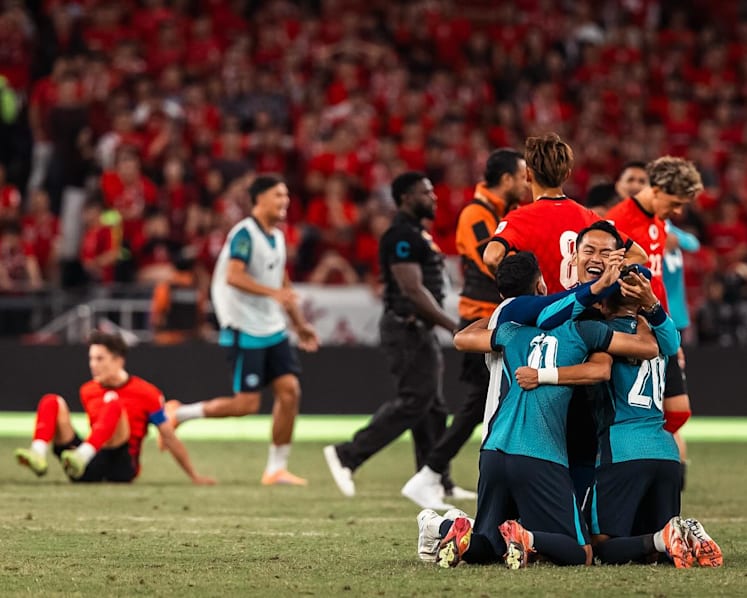 Singapore players celebrate their Asian Cup qualifier victory over Hong Kong at Kai Tak Stadium on Nov 18, 2025. (Photo: Facebook/FAS)
Shortly after the historic match, Mr Li appointed Mr Lee as permanent national coach. Results have generally been positive since then.
The win rate of the Singapore men's national team rose from 25 per cent in 2024 to 40 per cent in 2025, when Mr Li became FAS president, and to 50 per cent as of Nov 12, 2026.
But there have been setbacks, too. Still fresh in the minds of many supporters is the 6-0 mauling by arch-rivals Malaysia in October.
The humbling FIFA ASEAN Cup defeat may have been a sobering reality check, but it is hard to deny the Lions' progress under Mr Li.
After all, Singapore has produced encouraging performances this year, including draws with regional powerhouses Vietnam and Indonesia and their first away win over Thailand in 14 years.
Mr Li has also backed his commitment to Singapore football with substantial funding. Earlier this year, his company Sea pledged S$50 million, with an initial S$10 million already donated to FAS.
The money will support the long-term development of football in Singapore, the association said in March.
Beyond the national team, Mr Li has also pledged to build a stronger football ecosystem, with improved youth development and a more competitive domestic league.
But how much progress has been made on these fronts in his first 18 months as FAS president?
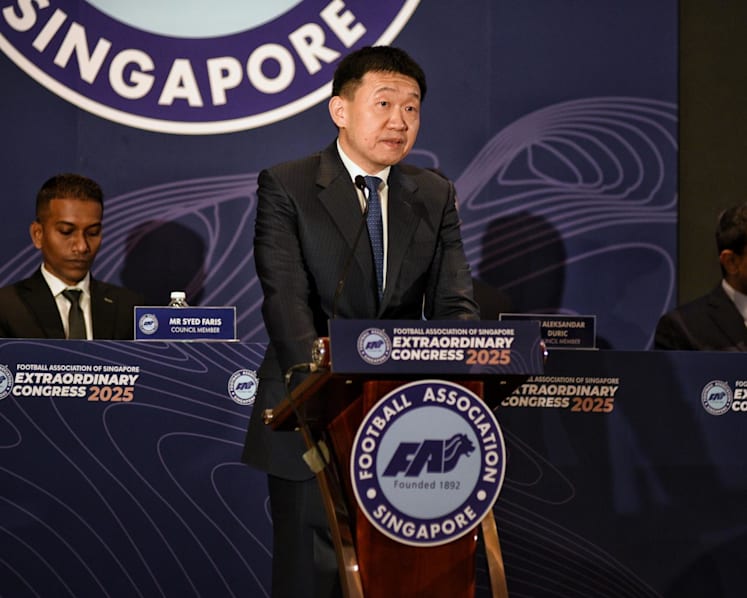 Mr Forrest Li speaking at the Football Association of Singapore's Extraordinary Congress on Apr 28, 2025, after being elected as the council's new president. (Photo: Football Association of Singapore)
Analysts who spoke to CNA described Mr Li's passion project as a work in progress.
CNA sought an interview with Mr Li, but he was unavailable. FAS instead responded through its general secretary, Mr Badri Ghent, who said the association's goal was to "bring the pride and joy back to Singapore football".
"We are working to build more competitive teams, raise standards and professionalism across the sport, and make the game more inclusive," he said.
"This means strengthening support for our players and clubs, while developing clearer pathways for the next generation to fulfil their potential."
Former football commentator Edwin Yeo said the "most visible" change under Mr Li's FAS presidency was the national team's improvement following increased funding.
"A football association isn't just about the men's national team. It's about the administration of the sport of football across all ecosystems," he said.
These responsibilities include youth development and the management of the Singapore Premier League (SPL).
"If you look at everything else, in the most neutral way, we can say that the jury is still out," Mr Yeo added.
NATIONAL TEAM'S PERFORMANCE
Despite recent mixed results, pundits and fans agreed that Mr Li had done a satisfactory job overseeing the national team.
His decision to appoint Mr Lee as permanent head coach has so far proved to be the right one, they said.
Mr Yeo said Mr Lee's appointment could initially have seemed "hasty", given the young coach's relative inexperience in international football.
But the 36-year-old has since proved his detractors wrong.
Mr Lee was coaching Tampines Rovers FC when then-national head coach Tsutomu Ogura recruited him to join the Lions' coaching team in 2024.
He later became an assistant coach and took over as interim head coach following Mr Ogura's departure in 2025, before securing the permanent role.
Mr Yeo, a former FAS communications consultant, said that he had seen firsthand how Mr Lee developed under Mr Ogura's guidance.
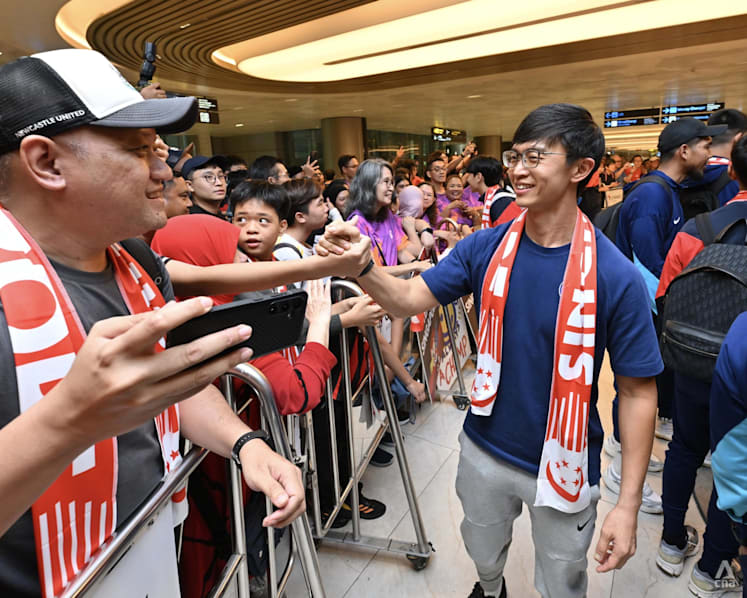 Singapore's then-interim national football coach Gavin Lee greets supporters at Changi Airport Terminal 2 on Nov 19, 2025, following the team's historic 2-1 win over Hong Kong to qualify for the Asian Cup. (Photo: CNA/Jeremy Long)
After taking charge, Mr Lee built on Mr Ogura's philosophy, emphasising tactical discipline and organisation. Players were expected to maintain positional awareness both on and off the ball, Mr Yeo noted.
But Mr Lee also introduced his own style of play.
"Gavin had a more patient approach, which was to draw (opposing) attackers in, then play out from the back and attack from there," Mr Yeo said.
The defensive statistics suggest that these tactics have paid off.
In 2026, the Lions conceded an average of 1.4 goals per game, despite the 6-0 loss to Malaysia. That was close to the 1.2 goals per game recorded in 2025, and well below the 2.6 in 2024.
Football presenter and former professional footballer Rhysh Roshan Rai said that beyond tactics, Mr Lee instilled a "never give up" mentality in the team.
"He knows what he wants from his side, and we tend to see some of that on the pitch," Mr Rai added.
"He's able to extract a lot from some players who I feel, when it comes to the context of international football in the region, are technically not as good as some of our neighbours. But they are hardworking, they run a lot and they are certainly fighters for the team."
Mr Dil Amarasekara, a member of the Lions supporters' group SingaBrigade, agreed, pointing to Singapore's 1-3 loss to Thailand at the ASEAN Championship in August as an example of the team's fighting spirit.
The 36-year-old managing director of a laboratory equipment company said: "Thailand is probably the strongest team in our region, and our boys were not giving up, they were really fighting, and we could see it as well.
"Despite missing a penalty that could have made (the final score) 2-3, they just kept going, and the fans were responding to that."
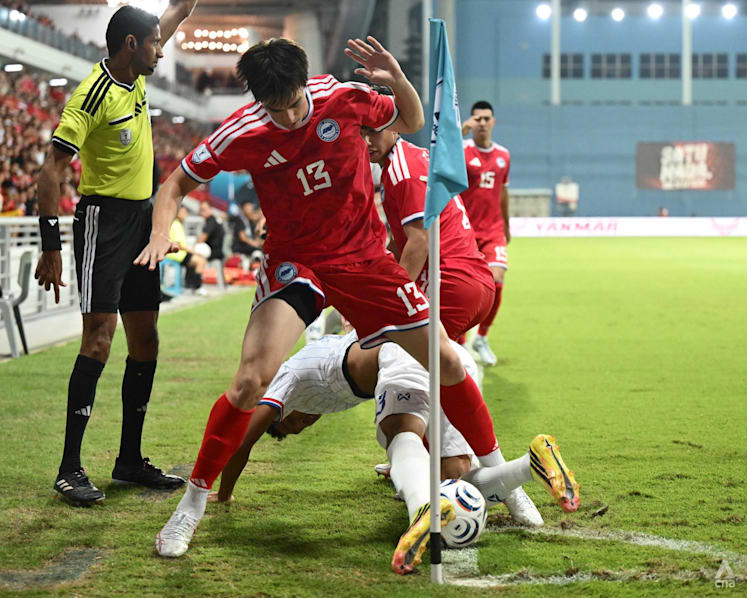 Singapore's Harhys Stewart in action against Thailand during the ASEAN Championship semi-final first-leg match at Jalan Besar Stadium, Aug 15, 2026. (Photo: CNA/Wallace Woon)
Responding to CNA's queries, Mr Lee said that his goal had always been to "have a national team that Singaporeans can identify with – a team that never gives up despite the challenge in front of them, a team that always gives 100 per cent".
"In our football, we want people to see players willing to receive the ball under pressure, support one another and react together when we lose it," Mr Lee said.
He added that the team would "remain humble and hungry as we continue to try to earn the trust and belief of the people, and to give them more memorable nights like the one in Hong Kong".
Choosing a Singaporean coach to lead the national team was also a public relations masterstroke on Mr Li's part, Mr Yeo said.
"There was a huge public relations uptick with having a young local coach who just proved himself ... because one of the things that the football association has to do is get more fans to come and support the sport."
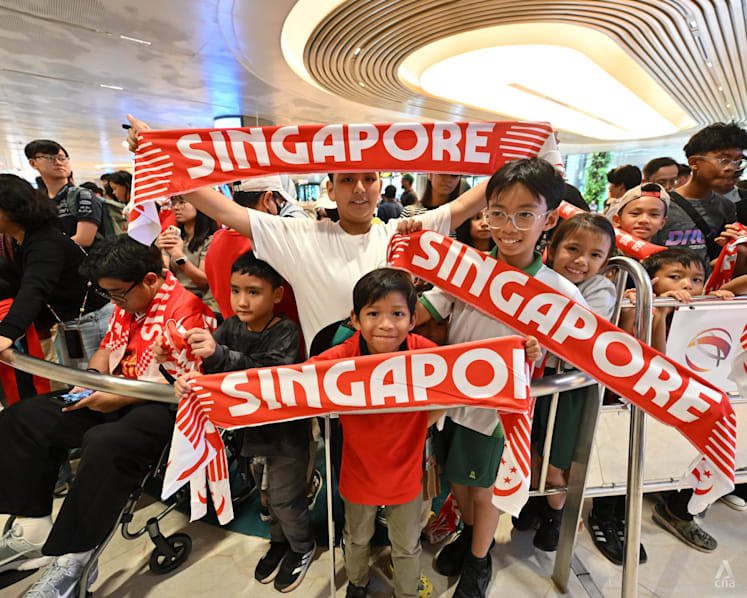 Lions supporters welcome the footballers home at Singapore’s Changi Airport on Nov 19, 2025. (Photo: CNA/Jeremy Long)
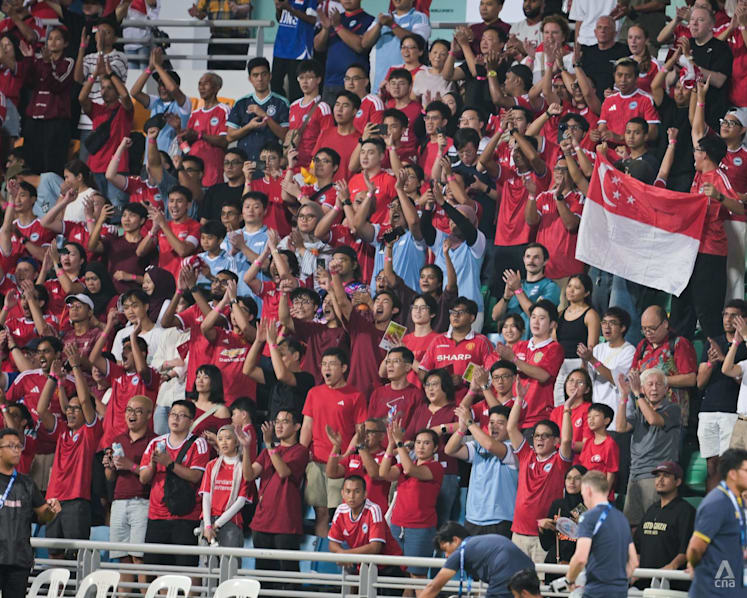 Singapore national football team fans cheer on the team against Indonesia at Jalan Besar Stadium on Aug 7, 2026. (Photo: CNA/Syamil Sapari)
Former FAS general secretary Yazeen Buhari, who stepped down from the role in 2024, said he was encouraged by the national team's direction, particularly its ability to rally fan support.
"Whether at the stadium, in our homes, in the social media space or at public viewing venues, there is a renewed sense of excitement and belief surrounding our national team."
Mr Yazeen added that he had been involved in football for "long enough to appreciate that the good times will not always last, and that there will inevitably be bumps along the way".
"But speaking now as a fan, I think we can all recognise the shift in mindset among the Lions," he said.
"There is a growing sense of self-belief, a willingness to compete and importantly, a mentality of not fearing whoever stands in front of us."
Beyond appointing Mr Lee as head coach, Mr Li has also poured substantial resources into the national team's development.
FAS' annual reports showed that spending on the national team rose from S$2.63 million in the financial year 2024/2025 to S$4.65 million in 2025/2026 – a 77 per cent jump.
Asked about the increase in national team spending, FAS said that the Lions' backroom team has grown "several fold".
The expanded team includes more specialist coaches providing individualised training, dedicated performance analysts studying players and opponents, and a larger medical team supporting player care, injury prevention and recovery.
FAS also said that many staff members previously worked on old, slow laptops, while "only a handful even had an additional monitor".
"Most people would assume these basics were in place. They were not," the association said.
The old equipment has since been replaced with newer devices that "most offices take for granted", FAS said.
Mr Lee acknowledged that the team was now fortunate to have greater resources.
"But the question is, what do you do with the resources, right? Just because you got more resources doesn't mean you're going to become a better organisation," he said.
The national coach credited Mr Li with bringing in the right people to lead FAS.
For instance, Mr Li appointed Mr Ghent, the former sporting director of top SPL club Lion City Sailors, as FAS general secretary.
"With (Mr Li) leading the charge, I think he has brought in new changes, new people, new faces, to try to drive the whole organisation into a new direction," Mr Lee said. "The national team is just a consequence of that."