South Korea, Hong Kong, Shanghai and Singapore were all deep in negative territory.
A currency dealer watches monitors as an electronic screen shows South Korea's benchmark stock index (KOSPI) in a foreign exchange dealing room at the Hana Bank headquarters in Seoul on Nov 23, 2026. (Photo: AFP/Jung Yeon-je)
A currency dealer watches monitors as an electronic screen shows South Korea's benchmark stock index (KOSPI) in a foreign exchange dealing room at the Hana Bank headquarters in Seoul on Nov 23, 2026. (Photo: AFP/Jung Yeon-je)
HONG KONG: Asian stock markets struggled to recover from last week's sell-off, with tech firms again in the firing line as investors tracked an eye-watering rout on Wall Street.
A healthy bounce in US futures was unable to inspire buying amid fears over the AI trade, the prospect of more Federal Reserve interest rate hikes and tighter regulation under a Democrat-led Congress.
Scandal-hit Nvidia characterised the collapse in New York on Friday, plunging 14 per cent and helping to drag the Nasdaq into negative territory for the year.
The index has lost almost a fifth of its value since hitting a record high just last month, with strong earnings from Nvidia and a blockbuster IPO from Claude-creator Anthropic unable to staunch the bloodletting.
CNA Games
 Guess Word
Crack the word, one row at a time
 Buzzword
Create words using the given letters
 Mini Sudoku
Tiny puzzle, mighty brain teaser
 Mini Crossword
Small grid, big challenge
 Word Search
Spot as many words as you can
Show More
Show Less
The selling continued into Asia, with Seoul diving more than 4 per cent as chip titans SK Hynix and Samsung dropped 4 per cent each.
"These are not peripheral players in the AI boom but two of its most important semiconductor suppliers," said SPI Asset Management's Stephen Innes.
"Their continued weakness suggests investors are still more interested in reducing exposure than celebrating a few hours of improved sentiment in US futures."
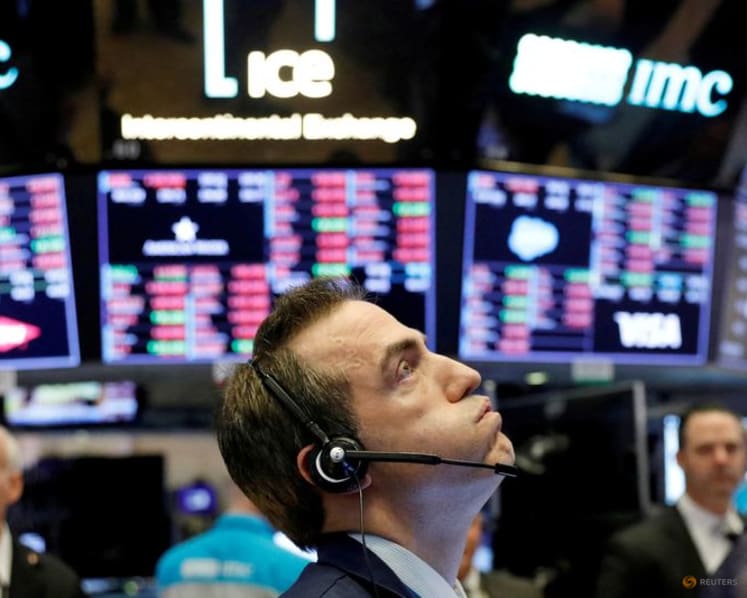
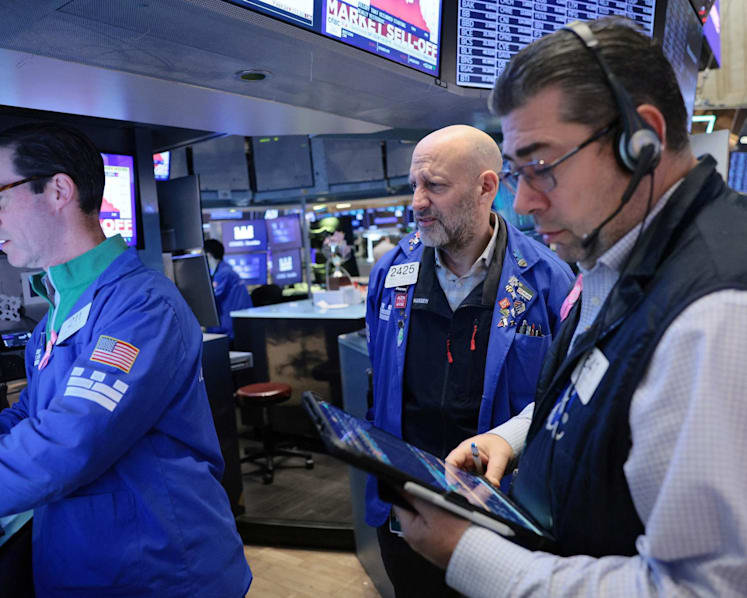
The losses have led authorities to introduce measures aimed at minimising the negative impact.
Taiwan was making it harder to short stocks, while China made it easier to borrow money to buy them and South Korea eyed a stabilisation fund not used since the global financial crisis.
Taipei flickered between gains and losses but Hong Kong, Shanghai, Sydney, Singapore, Wellington and Jakarta were all deep in negative territory.
Meanwhile, the VIX Index - which is seen as the market's fear gauge - spiked to its highest level since April last year, when Donald Trump unveiled his wide-ranging tariff bazooka.
Traders have also been spooked by the US Commerce Department's move to close a loophole allowing Chinese companies to access Nvidia's powerful AI chips remotely.
Fiona Cincotta at Forex.com said "nerves have been showing in the AI trade, amid increased scrutiny over AI capital expenditure, the scale of investment, the returns on those investments and when they might materialise".
"Furthermore, the Democrats taking control of Congress, which is expected to slow the AI buildout, combined with expectations of higher rates for longer, are fueling concerns about the sector."
Week in Review

Our chief editor shares analysis and picks of the week's biggest news every Saturday.
Morning Brief
An automated curation of our top stories to start your day.
Week in Review
Our chief editor shares analysis and picks of the week's biggest news every Saturday.