After two weeks of climate talks in Antalya, the debate is still about who will pay Africa. A better question is how much of Africa’s own wealth leaves before anyone counts it.
Every climate summit ends with the same image: Africa waiting at the door for money others have promised. That image is wrong, and it is costing the continent its strongest argument.
The number at the door
The money that does arrive is real, and it is growing. Climate finance flowing to Africa more than doubled, reaching about USD 74 billion a year in 2023 and 2024, according to the Climate Policy Initiative’s 2026 report. But the same report estimates Africa’s annual mitigation needs alone at USD 300 to 572 billion. In Antalya, a revised draft decision on 21 November dropped a proposed target to raise adaptation finance to USD 120 billion a year by 2035.
So the door remains half closed. And Africa keeps knocking.
The number going out the back
Now consider the other side of the ledger. UNCTAD estimates that about USD 88.6 billion leaves Africa every year through illicit capital flight, about 3.7% of the continent’s GDP and close to the total aid and foreign investment Africa received in a year. That estimate is now six years old. Nobody has a better one, which is itself part of the story.
Put the two numbers side by side. The climate finance coming in is less than the money estimated to be leaving through the back door. Africa is not waiting for the world to finance it. In a very real sense, Africa has been financing the world.
Where the money leaks
Illicit flows are only the most visible leak. Most of what Africa loses leaves legally, through what it sells raw and buys back as finished goods.
Oil is the clearest example. One West African producer earned USD 31.5 billion from crude in 2025 and spent USD 10 billion buying fuel abroad: 32 cents of every crude dollar went back out on fuel. The same country flared between 204 and 323 billion cubic feet of gas in 2025, depending on which regulator’s count you use. On the higher count, that amounted to about USD 1.1 billion burnt and 17.2 million tonnes of carbon dioxide released. That is a climate loss and a cash loss in the same flame.
The pattern repeats on the smallest scale. In one Kenyan county, our research found that less than a third of the money budgeted for flood drains went toward drains that worked. The county saw the evidence first, cleared the blockage, and the water ran again on 14 November 2026.
Count what stays, not only what arrives
The climate debate counts pledges and disbursements. It rarely counts what stays. Yet what determines whether a community survives the next flood is not how much was promised in Antalya. It is how many cents of each dollar, whether a climate dollar or a resource dollar, reach the drain, the field or the clinic, and remain there.
That is what we measure at UNU-INRA. We call it the keep rate: the cents of each natural resource dollar that stay at home. Alongside it, we count the jobs each kept million creates, with pay compared with the minimum wage. The method is public.
What this changes
Counting what stays shifts Africa’s position at climate talks from asking to showing. A minister who can say “of every dollar our oil earned, we kept this many cents, and here is what we lose in flared gas” is not asking for charity. She is showing where the next investment pays twice: once in money kept, and once in emissions avoided.
It also changes what Africa can do without waiting. Gas that is not flared becomes cooking gas. Fuel refined at home keeps foreign exchange at home. A share of each oil dollar kept can pay for solar on farms and clinics, soils rebuilt with compost, and forests left standing. Let today’s barrel pay for tomorrow’s economy. Each of these creates work for young people, funded with value that was leaving anyway.
None of this replaces the obligation of rich countries to pay what they promised. It strengthens Africa’s hand in asking for it, because a continent that counts what it keeps can show exactly where each outside dollar will be multiplied.
The real door
Africa will keep going to climate summits, and it should. But the bigger door is at home: the customs desk, the central bank ledger, the gas flare, the county drain. That is where the counting starts, and where the jobs come from.
My grandmother never judged the year by what the neighbours had gifted. She judged it by what remained in the granary.
Africa is not poor. Africa is uncounted.
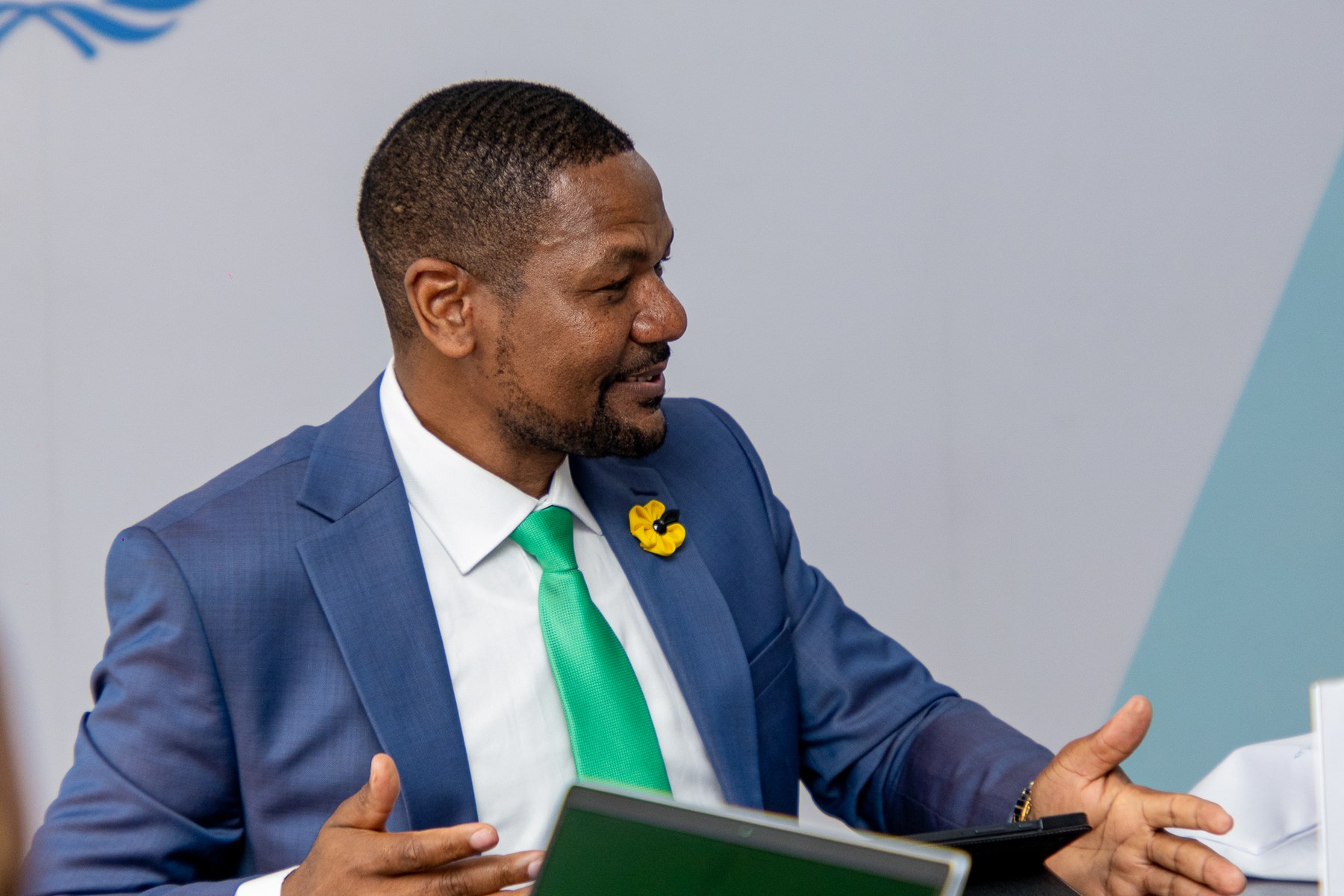
Dr Richard Munang, Director of UNU-INRA, in Accra. Photo: UNU-INRA.
The post Africa Is Not Waiting for Climate Finance. It Has Been Financing the World appeared first on African Arguments.