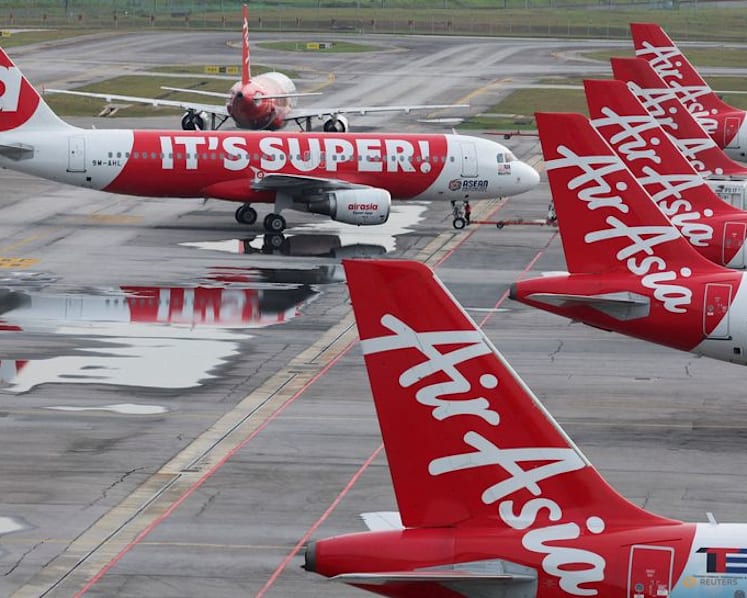
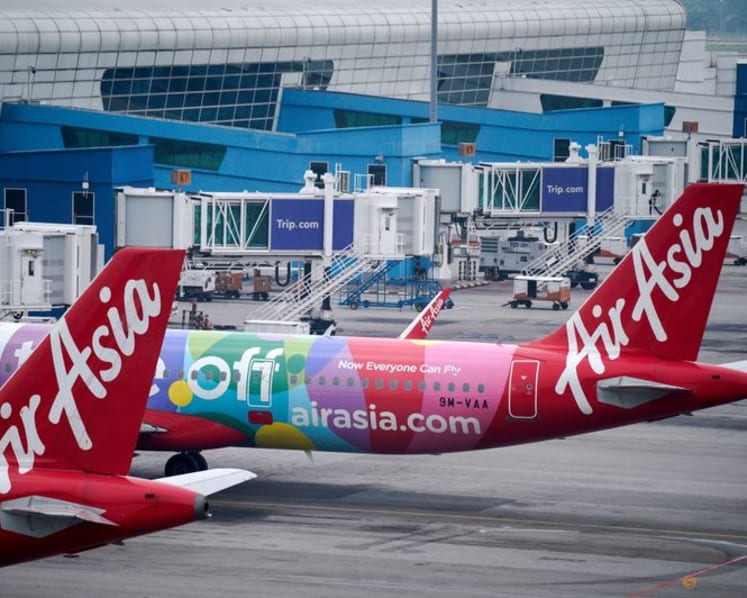
AirAsia controls about 60 per cent of Malaysia’s domestic aviation market but is grappling with high fuel prices, currency swings and billions of ringgit in liabilities.
File photo. An AirAsia plane takes off at Kuala Lumpur International Airport Terminal 2 (KLIA2) in Sepang, Malaysia, Sep 18, 2026. (Photo: Reuters/Najjua Zulkefli)
File photo. An AirAsia plane takes off at Kuala Lumpur International Airport Terminal 2 (KLIA2) in Sepang, Malaysia, Sep 18, 2026. (Photo: Reuters/Najjua Zulkefli)
KUALA LUMPUR: Malaysia is weighing how to support AirAsia without risking public funds and will not simply pump money into the private airline, said Anthony Loke, who resigned this week as the nation's transport minister.
The finance ministry, not the transport ministry, is still reviewing various options to financially aid Southeast Asia's largest low-cost airline as it grapples with high jet fuel prices and currency swings, Loke told Reuters, citing discussions at Cabinet meetings.
AirAsia, unlike state-owned Malaysia Airlines, is a private company, Loke said, and any support would have to take a regulated form. "It has to be a formal kind of arrangement," he said. "Government is not going to pump in money just like that."
He declined to provide details about the options under consideration and said Prime Minister Anwar Ibrahim, who is also finance minister, would decide on any conditions.
CNA Games
 Guess Word
Crack the word, one row at a time
 Buzzword
Create words using the given letters
 Mini Sudoku
Tiny puzzle, mighty brain teaser
 Mini Crossword
Small grid, big challenge
 Word Search
Spot as many words as you can
Show More
Show Less
The finance ministry and AirAsia did not respond to requests for comment.
Loke made the remarks in an interview on Wednesday, a day after he resigned in protest of a High Court decision that allowed former Prime Minister Najib Razak to be released from prison and serve under house arrest the rest of his sentence over his role in the 1MDB scandal.
AirAsia, which controls about 60 per cent of Malaysia's domestic aviation market, had current liabilities of RM18.4 billion (US$4.52 billion) as of Jun 30.
With AirAsia, the Malaysian government is aiming to strike the right balance, Loke said, "without jeopardising public funds, but at the same time maintaining air connectivity, which is important."
PROTECTING WORKERS, NOT SHAREHOLDERS
Tengku Zafrul Aziz, a senior political adviser to Anwar who chairs the Malaysian Investment Development Authority, said in a separate interview that any government rescue of a private company must protect the business and its workers, not its shareholders.
The right policy for any government "is not to interfere in the commercial sector", Zafrul said, adding that any government support for a company considered strategic to the country must be justifiable.
Zafrul, who was responding to questions about AirAsia, spoke to Reuters in general terms about government intervention in private companies and described his comments as his personal view.
AirAsia has said it is looking to raise up to US$1 billion from international debt markets plus RM700 million in local credit facilities. AirAsia co-founder Tony Fernandes told Reuters last month he expected the US$1 billion fundraising to be completed between December and February.
At the time, Fernandes denied asking the government for financial assistance, though he said AirAsia would not turn away help if offered.
The finance ministry said last month it had made no agreement or commitment to provide financial assistance to AirAsia, whether in the form of guarantees, loans or public fund injections.
Loke said the transport ministry coordinated modest relief for airlines this year, including longer credit terms on aviation charges. The Civil Aviation Authority of Malaysia extended the credit period for aviation fees and charges from 30 days to 60 days from May 1.
Loke said the measures were "not major" but gave airlines "some breathing space" as they dealt with high jet fuel prices.
The ministry was inclined to help because fuel costs are passed on to passengers through pricier tickets, which dampens demand and hurts tourism and the wider economy, he said.
Morning Brief
An automated curation of our top stories to start your day.