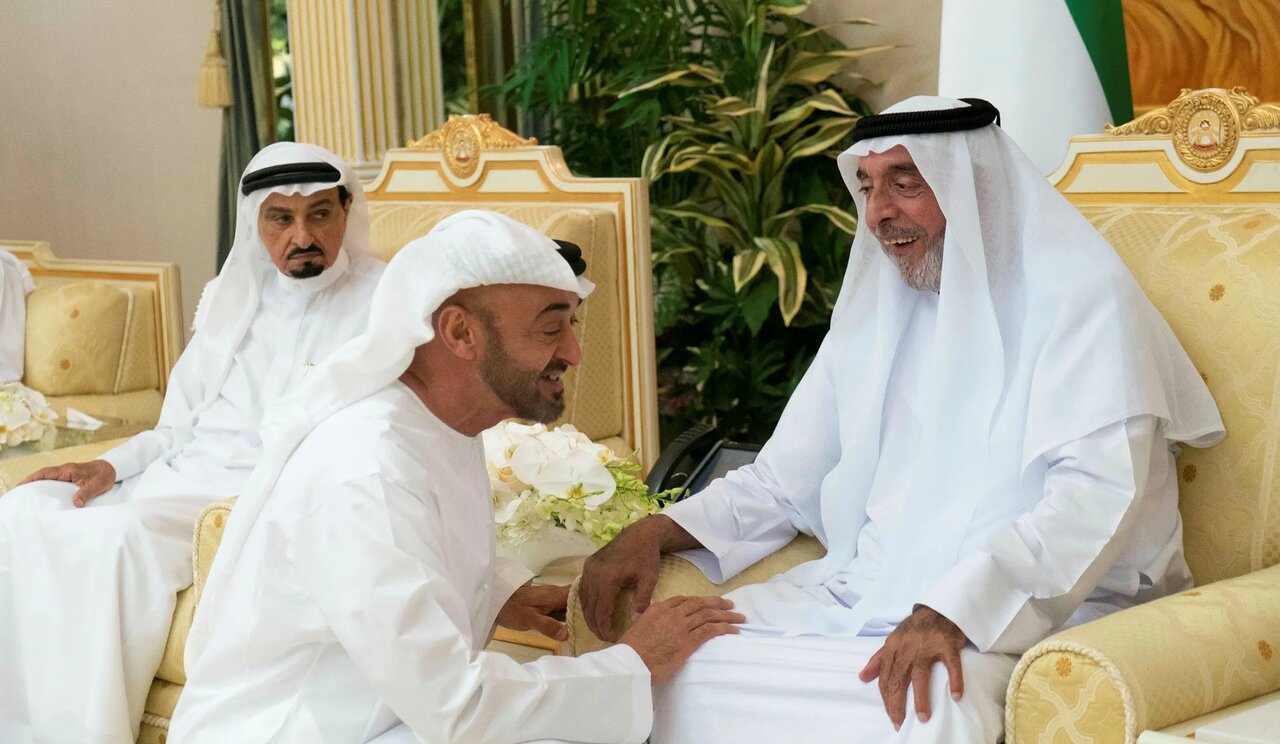
TEHRAN — Past the hacked iPhone and the $2 billion said to have sat within Jared Kushner’s reach, Matthew Cole’s “Princes and Thieves” tells an older story. It begins in the 1990s in a hotel room in southern Europe, and it ends with American policy in West Asia allegedly shaped by a foreign ruler who learned early that a secret can do the work of an army.
Cole writes that Mohammed bin Zayed, known as MBZ, hired two Syrians to film his older and allegedly homosexual brother and rival, Khalifa bin Zayed, having sex with a man in that hotel room.
Russian handlers then allegedly delivered the recording to their father, Zayed bin Sultan Al Nahyan, founder of the United Arab Emirates.
The old man saw through it. He was “amused,” Cole says, and admired the “cunning.” Inside the family, the episode came to be read as an early sign that MBZ intended to rule.
Cole’s account of Khalifa’s sexuality has not been verified elsewhere. Nor have his allegations that MBZ later lobbied Washington against Saudi Crown Prince Mohammed bin Nayef, known as MBN, over rumors of homosexuality, though similar claims appear in books by Ben Hubbard and by Bradley Hope and Justin Scheck.
MBN was eventually pushed aside by Mohammed bin Salman, whose rise to power MBZ actively backed.
The book also disputes the official explanation for Khalifa’s retreat. Khalifa became UAE president in 2004 but deferred to his younger brother, which was blamed on a 2014 stroke.
Cole says Khalifa was already struggling with alcoholism and an undiagnosed mental illness, and that MBZ, newly deputy crown prince of Abu Dhabi in 2003, allegedly drugged him through forced medical treatments that left him in a stupor and damaged his nerves.
An American nurse with a family connection to MBZ allegedly helped. Cole adds that MBZ fathered a child with the nurse’s niece, Lisa, who raised the boy in Southern California.
On Israel, Cole says MBZ was an admirer by the 1990s, over the objections of a father sympathetic to the Palestinians.
In 1998, as armed forces chief of staff, he read in Aviation Week about a new American F-16 fitted with Israeli software and pressed to buy it.
The UAE agreed to purchase 80 aircraft with Israeli systems installed. Washington was a participant, not a bystander: the Clinton administration hosted secret Israeli-Emirati talks to calm Israeli fears that the sale threatened its “Qualitative Military Edge.”
The Abraham Accords, signed in September 2020, merely announced what the two militaries had long practiced, according to the book.
The bargain Kushner, MBZ and MBS allegedly discussed was blunt.
Arab states in the Persian Gulf would recognize Israel and sideline the Palestinians. Jordan would take the vast majority of the roughly three million Palestinians in the occupied West Bank, cutting its population by 90 percent. Prime Minister Benjamin Netanyahu would then recognize a rump Palestinian state, with some Negev and Jordanian land attached.
One Emirati stood in the way. Habib Al Sayegh, a poet, editor at Al Khaleej and secretary general of the Arab Writers Union, was no dissident.
He had defended the blockade of Qatar. In August 2019, he published a column titled “Israel Is Our Real Enemy and A Dangerous Project.”
Security officers allegedly seized him on MBZ’s orders, pulled out teeth with pliers and whipped him with a strap tipped with sharp metal for three days. An MBZ aide described the body as “almost unrecognizable.”
Cole says a source explained the killing as a message: “We’re all rowing in the direction that I choose.” The rights group Democracy for the Arab World Now (DAWN) has asked the United Nations to open an independent investigation.
Qatar crisis and the 666 Fifth Avenue tower
Cole says Kushner held the most consequential foreign policy job in Washington with no Senate confirmation, few notes, and almost no oversight.
Tom Barrack, now ambassador to Turkey, allegedly wanted a Persian Gulf-funded Marshall Plan for the region and was handed only “the Egyptian part.”
When Saudi Arabia and the UAE blockaded Qatar in June 2017, Cole says Kushner quietly approved it and told no one.
Then-Secretary of State Rex Tillerson later phoned Mohammed bin Salman to stop what Cole’s sources describe as a possible Saudi incursion, in a country hosting 10,000 American troops.
One White House official told Cole Qatar was about 72 hours from losing its ruling family. Qatar later helped bail out the Kushner family’s 666 Fifth Avenue tower, according to Cole.