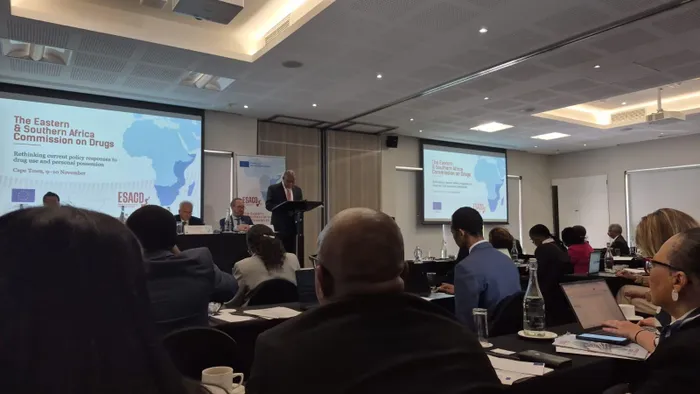
Kgalema Motlanthe says decades of drug policies have failed to tackle the illicit trade, calling for drug use and organised crime to be addressed together.
South Africa's drug policies have failed to stop organised criminal networks from profiting from the illicit trade, with former president Kgalema Motlanthe warning that the country's approach as done more harm than good.
Speaking at a drug policy gathering in Cape Town, Motlanthe questioned why enforcement continues to target drug users while those behind the illicit trade remain active.
Motlanthe, chairperson of the Eastern and Southern Africa Commission on Drugs (ESACD), was speaking at the commission's discussions on rethinking policy responses to drug use and personal possession in Cape Town.
He stressed that drug-related challenges and organised crime must be addressed as interconnected issues.
The commission brings together government leaders, civil society, public health experts and law enforcement officials to advance evidence-based responses to drug-related challenges across the region.
Motlanthe calls for a rethink of drug policy
Motlanthe warned that the real criminals remained actively involved in the illicit drug trade, while existing policies had, in many instances, done more harm than good.
“For decades, our policies have failed to solve the problems created by the illicit drug trade. In many cases, they have done more harm than good.”
He pointed to the region's strategic position along major shipping routes through the Indian Ocean, which exposes countries and communities to the effects of illicit drug trafficking.
Motlanthe stressed that drug policy and organised crime could not be addressed in isolation, as both continued to affect countries and communities across the region.
Acting Police Minister Professor Firoz Cachalia, who delivered a keynote address at the gathering, acknowledged the devastating impact of drugs on families, communities and institutions.
“These harms demand a serious response. They also demand that we are honest about what works, what does not, and how we can better protect the people that we serve,” Cachalia said.
Target trafficking networks, not users
He said the police had a responsibility to protect communities by responding to their needs while dismantling organised criminal networks involved in the production and distribution of dangerous narcotics.
Cachalia emphasised that those profiting from illicit drug markets must be held accountable through effective intelligence gathering, dedicated investigations, stronger law enforcement and regional cooperation.
The discussions are expected to contribute to a broader rethink of regional responses to drug use and trafficking, with an emphasis on evidence-based policies and stronger action against organised criminal networks.