As the saying goes, the first casualty of war is the truth. But in the case of Russia’s full-scale invasion of Ukraine, it seems the truth had been under attack for a while.
As recently as this summer, claims that Russia had actually made significant battlefield gains were debunked after analysis found that interpretation was based on misuse of a report which actually found Ukraine had made the greater advances.
It chimes with the continuing battle for control of the narrative over Ukraine, not least when it comes to the prospect of that country, and possibly its neighbour, Moldova, ultimately joining the EU.
Media organisations in those countries have become acutely aware of what they say is Russian disinformation about EU enlargement, often circulated via the Telegram app and other online platforms such as Facebook.
They have heard various narratives against EU membership, such as a purported loss of state sovereignty, of the EU wishing to prolong a ‘proxy war’ with Russia through Ukraine, and even of Ukraine being divided up between EU member states.
As Russia’s war of aggression against Ukraine approaches its sixth year, the likelihood of it joining the EU is still being actively debated. Neighbouring Moldova is also driving towards EU membership, even though it is aware that Russia is actively opposed.
It means both countries, and others in the region where people have expressed a desire to join the EU, such as Georgia, find themselves the subject of online campaigns which, critics say, are aimed at undermining those efforts.
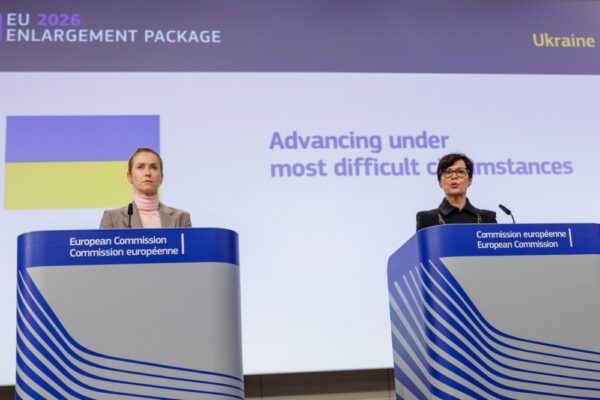
Read more
Moldova seen as ‘best performer’ on EU-accession reforms, despite onslaught of Russian sabotage
Disinformation is not new
It is also hard to argue that this is a new phenomenon. Over 10 years ago, the EU set up a task force in order to challenge “Russia’s ongoing disinformation campaigns”.
A number of months after the war began in 2022, the OECD think-tank in Paris published a policy paper on ‘Disinformation and Russia’s War of Aggression against Ukraine’, in which it said: “The Russian disinformation narratives are often false, or obscure facts with half-truths and ‘whataboutisms’.”
And just last year the delegation of the European Union to Ukraine looked at information manipulation and disinformation that summer targeting Ukraine-EU relations.
It was a topic of discussion when the deputy prime minister for European integration of Moldova, Cristina Gherasimov, visited Ireland earlier this year.
Speaking to The Journal in Dublin last February, Gherasimov said that disinformation “continues constantly”.
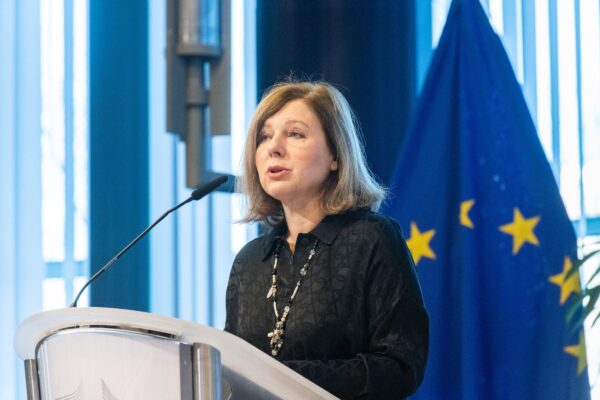
Read more
How EU hopes to ‘shield’ elections against Moscow’s propaganda
“This is one of the most powerful tools of Moscow: disinformation, not necessarily about our own country or process in our own country, but a narrative that targets the EU as such. It targets the EU credibility for candidate countries or aspiring countries, for EU membership.
“Some of the narratives are usually around the future of candidate countries in the EU, saying that we are not ready,” she said.
This argument, she added, also centred on the idea of the EU as weak and unable to stand up for its own citizens.
Another line is that new entrant countries would be seen as a ‘poor relation’ and would not be as competitive when it comes to agriculture and other areas once they joined the EU.
“What we’ve learned from our own elections is that disinformation does not stop after the elections, it continues constantly, and it adapts very quickly in terms of the narratives that it promotes, depending on the vulnerabilities that exist in each society that is targeted,” she added.
“One very usual narrative targeting the EU is that all the land will be expropriated once Moldova joins the European Union, and that is meant to draw equal lines with how it used to be during the Soviet Union period for us, and that is meant to inflict fear that the EU is not there to support and protect its citizens, but it’s there to actually prey on them,” said Gherasimov.
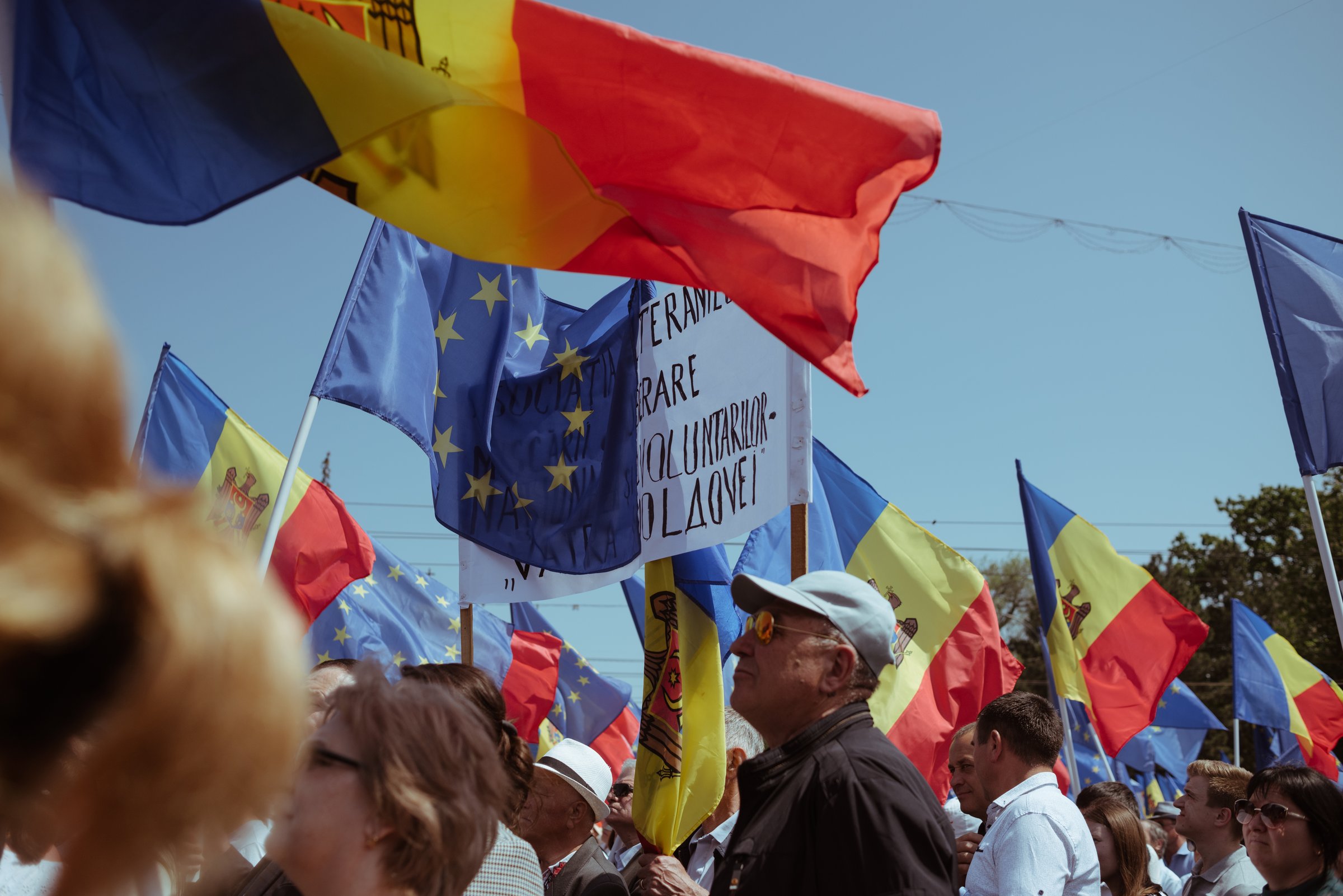 The depths of Russian interference in Moldova are staggering. Moldovan intelligence reveals a chilling reality: in 2023 alone, over $55m [€51.2m] was funnelled into destabilising the country (Photo: Ecaterina Buruiană, Moldova.org)
Ukrainian accession efforts labelled ‘futile’?
Moldova knows about disinformation: a report in the New York Times last September said the Stimson Center – a research organisation in Washington – called the country “a testing ground for hybrid warfare operations” that “are likely to shape similar efforts” across Europe.
The same New York Times article referred to how, ahead of Moldova’s parliamentary election, social media platforms were flooded with fabricated posts, videos and websites, sometimes created using AI.
As outlined in this Euronews report, one post even impersonated the celebrity magazine OK! with a false story declaring “Moldovan president in celebrity sperm scandal!”. The concocted story, which incorrectly claimed that president Maia Sandu was buying sperm from gay celebrity donors to have a child, falsely used the name of a real reporter.
This demonstrates how disinformation frequently attempts to erode political reputations and steer voters towards particular political agendas.
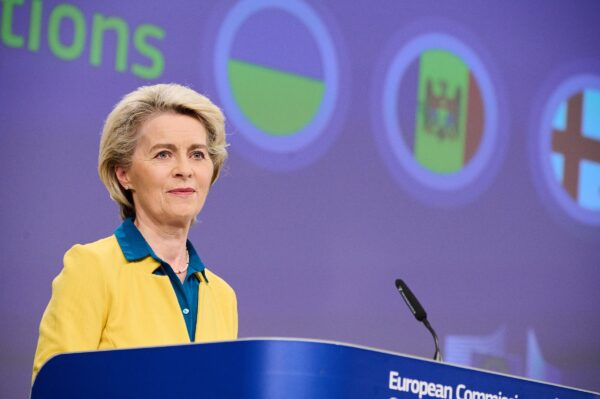
Read more
EU accession of Moldova and Ukraine is alternative to Nato, as Russia draws new Iron Curtain in Europe
As with other forms of political disinformation, this takes many forms when it comes to EU accession, according to Vladyslav Lesyk, a journalist at Ukrainian media outlet Rubryka.
“One of the primary Russian narratives regarding Ukraine’s EU accession is the claim that Ukraine’s efforts to join the Union are futile,” he said.
“For instance, Russian sources have spread fakes asserting that granting candidate status is a merely formal decision that offers no actual benefits. The functions of this narrative are to demoralise Ukrainian society and create the impression that the reforms required for EU membership are pointless,” he added.
“Another Russian narrative suggests that joining the EU would mean Ukraine losing its sovereignty. This builds upon a broader Russian narrative, maintained since the start of the Russo-Ukrainian war in 2014, which portrays Ukraine as a state with an illegitimate government controlled by the West, specifically the EU and the US,” said Lesyk.
Read more
Wave of Russian sabotage attacks exposes counter-intelligence gaps on Nato’s eastern flank
Disinformation is not new: EUvsDisinfo documents numerous past examples, including the infamous false story from 2014 of a boy allegedly being crucified by Ukrainian nationals in Slovyansk. This was cited to be part of a Kremlin-orchestrated campaign targeted at inciting hatred against Ukrainians.
Ukraine has long articulated a desire to join the EU and the process is well underway. Since June 2022, Ukraine has official EU candidate status, with accession negotiations having formally started. Last September Ukraine successfully completed its screening process.
Billions of euros in financial assistance have already been provided, while the EU has repeatedly affirmed its support for Ukraine’s independence, sovereignty and territorial integrity.
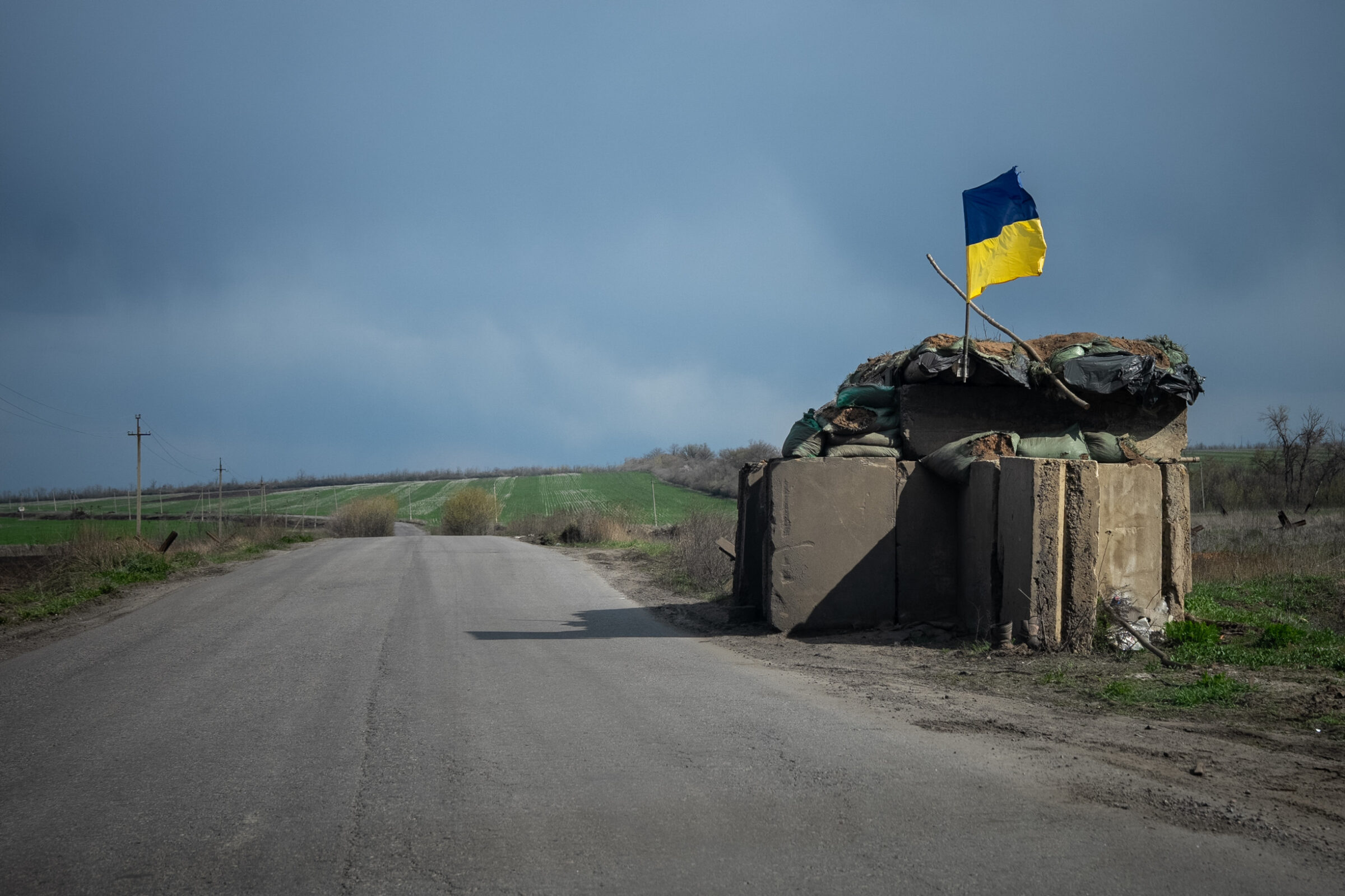 Ukraine has long articulated a desire to join the EU and the process is well underway. Since June 2022, Ukraine has official EU candidate status, with accession negotiations having formally started. (Source: Gabriel Kuchta, Deník N)
The ‘burden’ narrative
On the flip side, Lesyk said narratives spread in European countries lean into the idea of Ukraine becoming a “burden” on EU member states.
“In this context, Ukraine is presented as a poor and corrupt state whose accession would supposedly drain the European budget. A specific sub-narrative focuses on the negative impact of Ukrainian grain on European farming. Russians have been spreading the narrative of ‘harmful’ Ukrainian grain for several years to sow discord,” he said.
Yet as this analysis from the European Policy Centre points out, Ukraine joining the EU would have very obvious benefits – including opening up the country’s energy potential to the EU, boosting EU food security, and providing ready trade in critical minerals.
Lesyk said Telegram is the primary hub for disseminating these Russian narratives in Ukraine, as it allows for the use of anonymous channels and is one of the most popular sources of information in the country.
Regarding Moldova, media and fact-checking organisations have tracked a number of lines of attack regarding proposed EU membership, ranging from farms there closing due to Moldovan agricultural products not being in demand, to higher utility bills, and same-sex marriage.
These were analysed in depth by the website NewsMaker.md. Romanian fact-checking website Veridica has tracked numerous disinformation campaigns, including that Moldova could become a destination for migrants, could lose its statehood, or even be annexed by Romania.
Read more
[Interview] ‘Whenever we take pro-European political decisions, Russia cut or reduced gas supplies’. Moldova energy minister Dorin Junghietu on why Chișinău is betting on diversification
Homegrown issues
In Georgia, another country seemingly at a crossroads when it comes to possible EU membership, websites such as OC Media have tracked what they believe are coordinated Russian information operations in recent years.
Salome Khvedelidze of OC Media said some of this runs on Facebook and other platforms. The International Society for Fair Elections and Democracy detailed material it described as “the dissemination of anti-Western, particularly anti-EU narratives”.
Common themes include the EU being a threat to Georgian values, such as EU support for LGBTQ+ rights, the potential for EU interference in Georgian domestic affairs, and the idea of the EU and the US more broadly wanting to spark conflict.

Read more
Zelensky stalls on his EU promises to protect gay rights, even as Ukraine rushes through minority-languages law
Since Russia’s war against Ukraine in 2022, Georgia has turned increasingly authoritarian, suspending EU accession talks and deepening its ties with Moscow.
Recently, the ruling Georgian Dream party sought to ban the five main opposition parties – a move which is currently being fought in court. The European Parliament warned that this puts the country’s path towards EU membership at risk.
According to Khvedelidze: “What makes Georgia different from Ukraine and Moldova, however, is where the main source of anti-EU propaganda actually comes from.”
“In Ukraine and Moldova, disinformation about EU membership is driven by Russian proxies, Russia-backed/funded media, and certain political figures, while the governments themselves are pro-European,” she said.
Arguably, it gives the impression of a message that is always changing but always the same. According to Cristina Gherasimov: “It adapts very quickly in terms of the narratives that it promotes, depending on the vulnerabilities that exist in each society that is targeted,” she added.
It is not always straightforward to verify which narratives come directly from Russia and which originate elsewhere, but there is little doubt about Russia’s attitude towards the EU, and its history of spreading disinformation abroad.
This article was written as part of a cross-border European journalistic collaboration within the framework of the EUNEIGHBOURS EAST programme. The original version was published by The Journal.