Through FOUND, Miguel Moctezuma applies the lessons of Chevening to harness technology and community knowledge in the search for missing persons.
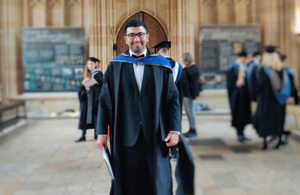
Miguel Moctezuma is a Chevening Scholar from Mexico. Inspired by his own purpose and the experiences he obtained in the UK, he has been able to channel his knowledge into tangible results. He has brought together partners and communities around a mission that truly matters – helping find missing people and bring answers to their families. We asked him to share his experience with us.
I grew up in Zacatecas amid violence, losing friends along the way. Some returned; others disappeared. My friend Rafa was one of them. When his body was finally found, his mother said, “Now I know where I can take him flowers.” That sentence changed the way I understood absence, memory, dignity, and the importance of finding answers. In many ways, it was also where my Chevening journey began, long before I even applied.
I knew Chevening would give me the opportunity to pursue a master’s degree in the UK. What I did not know was how profoundly that opportunity would shape my life, the people I would meet, and the purpose it would help me turn into action. Before applying, people I had never met, took the time to share their experiences, listened to my story, and helped me shape my application. Along the way, guidance turned into friendship, teaching me that the most meaningful achievements are never accomplished alone, but through the support and collaboration of others.
In the UK, I developed a vision of change built on collaboration. Chevening placed me within networks where humanitarian needs meet academic and institutional expertise and taught me that meaningful impact comes from building bridges. I learned that the knowledge we seek often already exists within communities, and that lasting solutions are created by listening, learning, and building together.
Inspired by that lesson, I co-founded FOUND – an initiative that uses technology to search, find, remember and dignify those who have disappeared. Working at the intersection of frontier technologies and the lived knowledge of search groups, FOUND brings together searching mothers, academia and authorities to improve how governments respond to disappearances. What began as a pilot in Jalisco has grown into a transnational programme across Mexico and Colombia – demonstrating how innovation can serve a deeply human purpose.
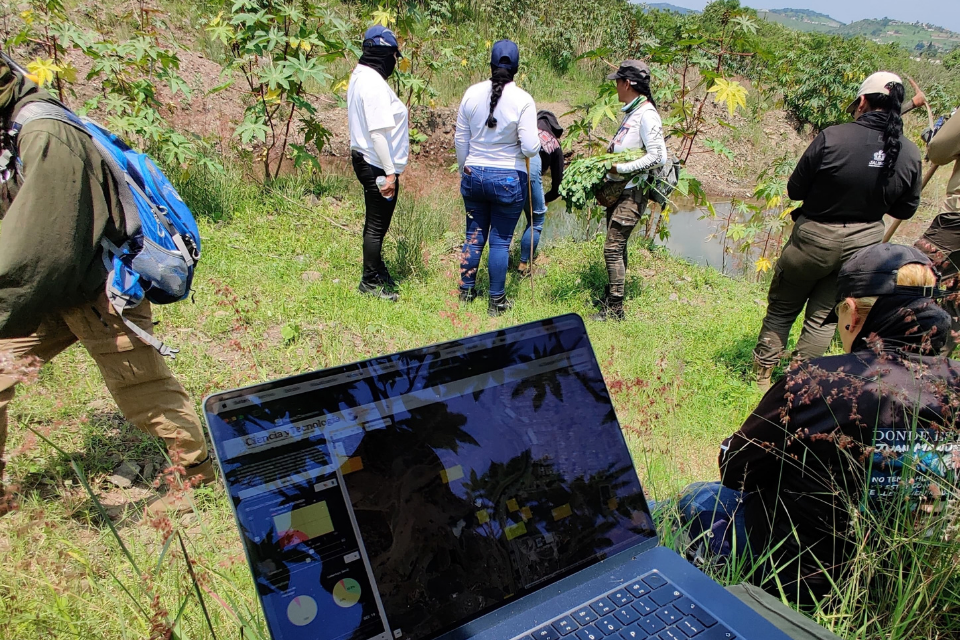
At its core, FOUND is built on a simple belief – those closest to a problem often hold the knowledge needed to solve it. By combining the experience of searching mothers with tools such as remote sensing, geophysics, and machine learning, we are contributing to turning citizen knowledge into institutional capability. For me, this is the most enduring lesson from Chevening – meaningful change happens when different people, institutions and forms of knowledge come together around a shared purpose.
Something I always keep in mind is that the true value of innovation lies not in the technology itself, but in the lives it can touch. In July 2026, a machine-learning platform developed by FOUND´s implementer CentroGeo contributed to the recovery of the remains of disappeared persons in Jalisco. Working alongside the Jalisco Search Commission and the National Guard, we saw how technology, collaboration, and the experience of those closest to the problem can come together in service of families searching for answers. It was a powerful reminder that every technological advance must ultimately serve a human purpose.
From the loss of my friend Rafa to the creation of FOUND, one lesson has remained constant – lasting change is built by bringing people together around a shared purpose. Chevening strengthened that conviction, giving me the networks, perspective, and confidence to turn it into action. I am deeply grateful for a programme that not only invested in my education but also helped me build bridges that continue to create impact across the UK, Mexico, and Colombia.