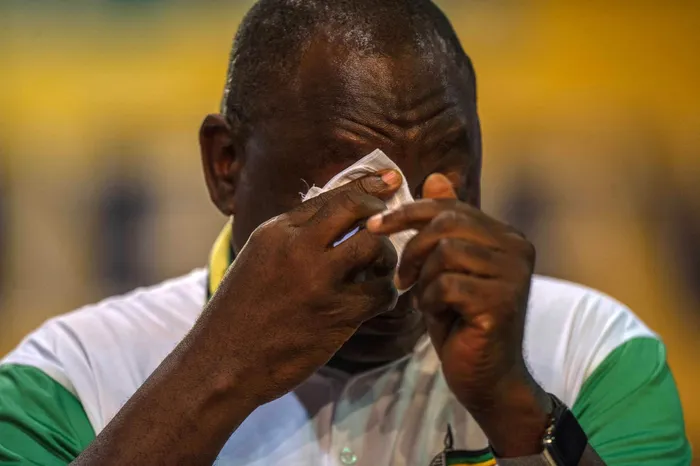
The ANC goes into NEC meeting divided over President Cyril Ramaphosa’s future, election losses and pain of working with DA in Johannesburg.
The “growing pain” of working with the DA in Johannesburg, President Cyril Ramaphosa’s reported resignation consideration, and the 2026 local government election results are dividing the ANC ahead of its National Executive Committee (NEC) meeting on Thursday.
The fears also include the tensions from the Government of National Unity (GNU) being imported into local government.
The meeting, scheduled to take place in Boksburg, Ekurhuleni, comes as the ANC grapples with mounting internal dissatisfaction over its electoral performance and the implications of its coalition relationship with the DA.
ANC insiders told IOL that there was growing frustration among members in Gauteng, particularly over the prospect of having to work with the DA in Johannesburg.
“There is growing frustration within our structures about the prospect of going into coalition with the DA in Johannesburg. Members are asking why we should continue entering arrangements with a party whose approach at the national level has created so much tension,” one insider said.
He added that “it’s a serious pain to work with the DA, trust me”.
Tension and discontent
Some members fear that the tensions and political disagreements characterising the Government of National Unity (GNU) could be carried into local government.
The second insider said members were unhappy with what they viewed as the DA’s confrontational approach towards the ANC, warning that the same difficulties experienced at the national level could complicate municipal governance.
“What is happening in the GNU is exactly what some of us fear will happen in local government. We cannot afford to take the same political battles into municipalities. Johannesburg cannot become another battleground,” he said.
The discontent was further fuelled by the DA’s decision to intervene at the Constitutional Court over the ANC’s failure to submit its proportional representation candidate lists within the Electoral Commission of South Africa’s prescribed deadline ahead of the elections.
The DA argued that the ANC should not receive preferential treatment for missing a deadline that applied equally to all political parties.
The Constitutional Court subsequently ruled in favour of the ANC, allowing its candidates to be reinstated.
The third insider said “The DA's decision to take the ANC to court over the candidate lists did not sit well with many members. We are supposed to be government partners, yet when an opportunity arose, they chose confrontation. That has raised serious questions about the relationship.”
The proceedings also saw ANC secretary-general Fikile Mbalula collapse in court.
For some ANC members, the episode reinforced concerns about the political relationship between the two parties and whether cooperation in municipalities would be sustainable.
Meanwhile, Ramaphosa’s future has emerged as another source of uncertainty ahead of the NEC gathering.
The president reportedly offered to vacate office during discussions with the ANC’s top seven leaders while calling on the party’s leadership to take collective responsibility for its disappointing electoral performance.
Another source said the matter would be discussed at the meeting.
“The president's reported willingness to step aside has opened another difficult conversation within the organisation. Members want accountability, and they want to know who takes responsibility for the electoral losses,” she said.
“We cannot keep losing electoral support and pretend everything is fine. The results demand serious introspection. People must account, from the national leadership down to the structures on the ground.”
However, ANC leaders have dismissed suggestions that Ramaphosa is preparing to resign, insisting that there is no decision for him to leave office.
The leadership questions come against the backdrop of a significant decline in the ANC’s electoral support, with its national vote share falling from 45.59% in the 2021 local government elections to 30.76% in the 2026 elections.
The result has placed renewed focus on accountability, the party’s electoral strategy and the leadership’s response to its declining support.