
In brief: Russia is using its final year as a chair of the Collective Security Treaty Organization (CSTO) to promote closer military cooperation and a new counterterrorism strategy. But the Moscow summit comes amid a deepening crisis of confidence in the alliance. Armenia has suspended its participation, while Russia’s war against Ukraine has strained its military resources and weakened its ability to act as a regional security guarantor.
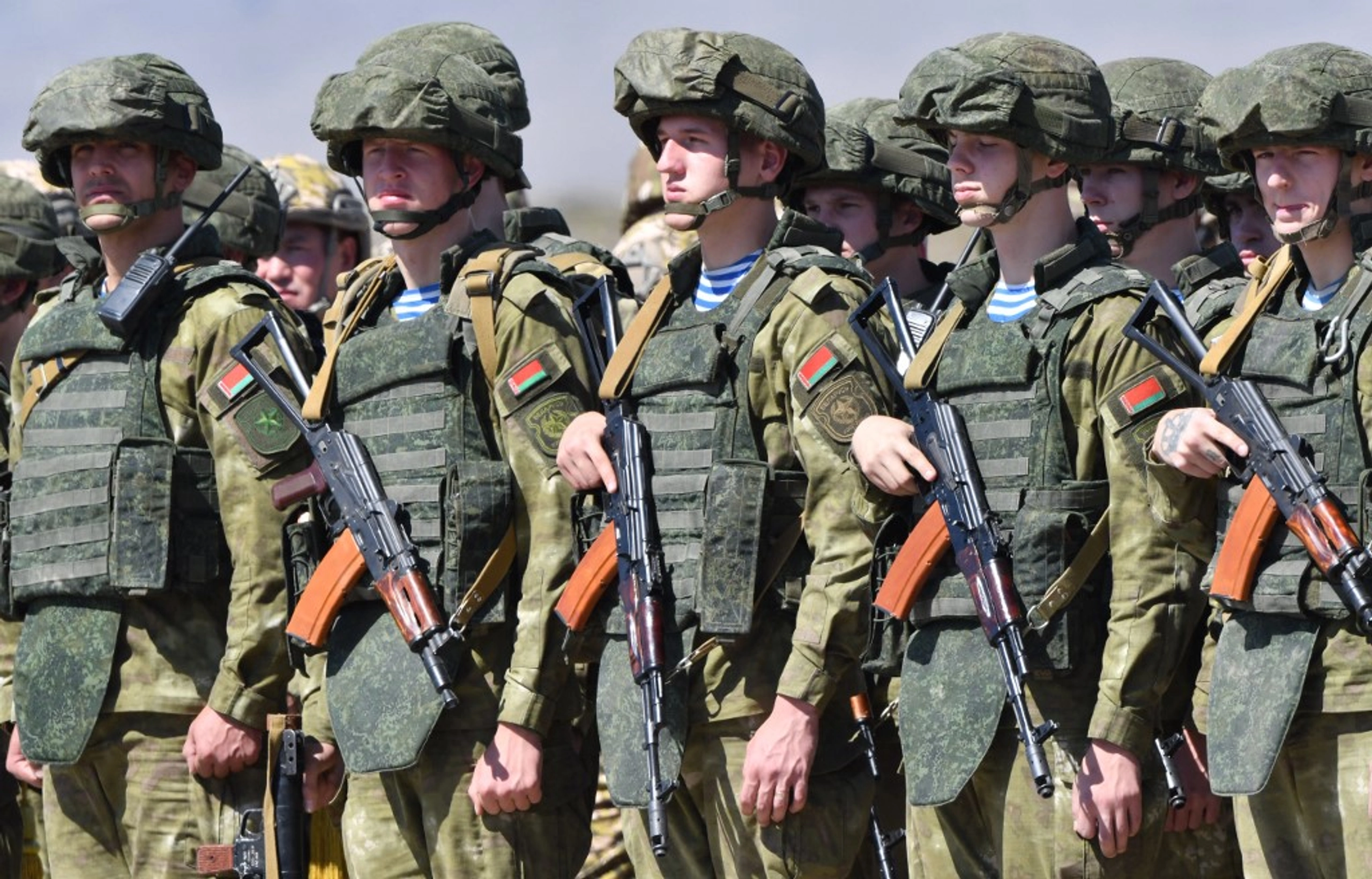
Leaders of the Collective Security Treaty Organization (CSTO) – a Russian-led security alliance – have gathered in Moscow.
Yet the summit comes at a difficult time for the Kremlin, with one member effectively boycotting the alliance and questions mounting over Moscow’s ability to deliver on its security commitments.
JOIN US ON TELEGRAM
Follow our coverage of the war on the @Kyivpost_official.
The two-day meetings, which began on Tuesday, Nov. 10, include the International Collective Security Forum and a session of the CSTO Collective Security Council.
Russia is seeking to reinforce its position as the leading security power in the former Soviet Union by using its outgoing chairmanship to promote defense technology cooperation, regional security coordination and a new counterterrorism strategy through 2030.
The chairmanship is due to pass to Tajikistan in 2027.
The CSTO, comprising Armenia, Belarus, Kyrgyzstan, Russia and Tajikistan as active participants, was established as a collective security framework. Its central premise is that an attack against one member should be treated as an attack against all. However, the alliance’s record has increasingly raised questions about the practical value of that commitment.
The most visible challenge to the summit’s unity is Armenia’s continued absence. Yerevan froze its participation in the CSTO in February 2024, accusing the organization of failing to respond to security threats from Azerbaijan in 2021 and 2022.

Russia’s New Mass-Produced Cruise Missile Crammed With Sanctioned Electronics
Relations deteriorated further after Azerbaijan regained control of Nagorno-Karabakh in September 2023, despite the presence of Russian peacemakers. Armenian Prime Minister Nikol Pashinyan subsequently questioned the alliance’s value and pursued closer ties with the EU and the US.
The issue had been raised before the summit. On Tuesday, Nov. 10, Russian Foreign Minister Sergey Lavrov said Armenia’s voting rights would be suspended under Article 25 of the CSTO charter because Yerevan had not paid membership contributions since 2024.
Oksana Martsun is a philology graduate of Zhytomyr State Ivan Franko University. She has worked as a professional writer and has joined several international humanitarian missions to communities near the front lines, documenting the realities of life during Russia’s war against Ukraine.