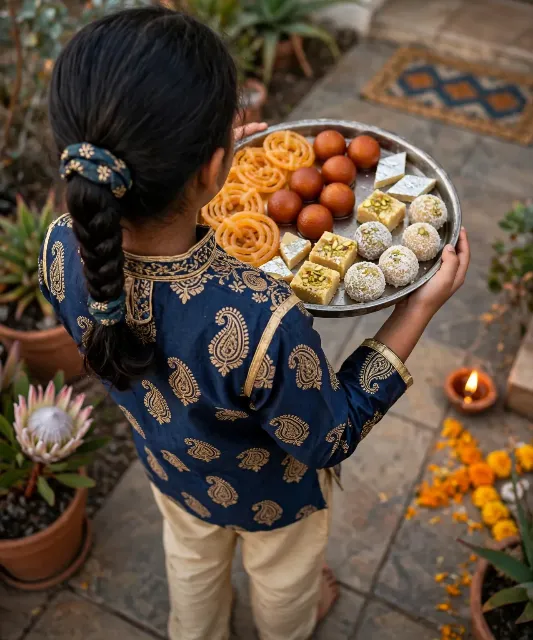
A plate of sweetmeats may begin a connection; continued interest and respect will sustain it, says the writer.
THERE is a familiar moment in many South African Hindu homes on Diwali evening. The preparations are finally complete. The food is ready, the sweetmeats are being shared and someone bends down to light the first in a long row of lamps. For a few seconds, everyone pauses. The excitement is palpable. The small flame grows and an ordinary corner of the home becomes sacred.
Watching that flame and feeling the excitement of Diwali, it is easy to forget how much it took to keep our traditions alive on South African soil.
Our ancestors arrived carrying their languages, beliefs and memories of home. Under the hardships of indenture, sustaining those connections was difficult. Long working hours, separation from familiar places of worship and limited opportunities for religious learning made passing on their heritage a challenge.
Community life also developed across religious boundaries. Many Hindus joined their Muslim neighbours in local Muharram observances, which became shared gatherings across religious divides. In colonial Natal, employers permitted time off for these occasions, while Diwali did not enjoy the same recognition. Diwali had yet to acquire the central place it holds in South African Hindu life today.
Into this landscape came Swami Shankaranand in 1908. Travelling among towns and communities, he encouraged Hindus to reconnect with their religious heritage. Through his teachings, he helped deepen the understanding of Hindu beliefs and traditions, renewing awareness of festivals such as Diwali. He also helped build organisations through which religious learning and community life could continue.
His campaign for recognition brought important advances.
In 1910, the education department recognised Diwali as a school holiday, and Durban Municipality employees were granted leave to celebrate. These were important local gains.
His efforts also helped bring Hindu communities together, leading to the establishment of the South African Hindu Maha Sabha on May 31, 1912, uniting Hindus across languages and traditions.
Today, this history invites us to value our roots alongside the relationships we share with people of other faiths. Understanding our heritage can give us the confidence to share it generously and approach another person’s traditions with curiosity and respect.
When we light our lamps, we carry that inheritance with us. Earlier generations worked to preserve the celebration. How do we give its meaning life through our actions?
Perhaps we begin with what happens after the lamps burn out. When the visitors leave and we return to work, school and our responsibilities, how much of Diwali’s light do we carry into everyday life?
Across Hindu communities, Diwali is observed through different stories and customs. The triumph of light over darkness, knowledge over ignorance and good over evil offers a shared invitation to reflect. These familiar ideas become meaningful through the choices we make.
Darkness is easy to recognise around us: cruelty, injustice, dishonesty and suffering. It takes greater courage to notice our own contribution to it. A harsh word, an unfair judgement, resentment we continue to feed, or a refusal to value others' contributions can all make another person’s world a little harder.
Lighting a lamp can become a moment of honest reflection. Where could I bring more patience? Whose feelings have I dismissed? What needs to change in the way I treat others?
We may welcome visitors warmly while speaking impatiently to our families. We may offer others our attention while barely listening to a child, a partner, or an elderly parent. Those closest to us sometimes receive whatever remains after the world has taken our quota of energy for the day.
Bringing Diwali into everyday life might mean putting down the phone during a conversation, sharing household responsibilities, or apologising sincerely. These ordinary gestures help make a home feel welcoming long after its decorations have been packed away.
Our children learn from this. They watch how we behave when we are tired or frustrated. We can explain the lamp’s meaning through examples they understand: telling the truth, including a lonely classmate, or choosing kinder words.
They also need room to ask why we pray, why families observe customs differently and what a story teaches us. Welcoming their curiosity helps them build a meaningful relationship with their heritage.
Diwali’s values belong in our workplaces too. Fairness becomes practical when we acknowledge another person’s contribution, listen to a quieter colleague, or treat someone respectfully regardless of their position. Integrity asks us to admit mistakes and question decisions that disadvantage others.
These choices may be uncomfortable. The ideals we celebrate need our participation through the decisions within our reach.
In South Africa, that responsibility extends beyond our own community. Sharing Diwali with a neighbour or colleague can open a conversation and create an opportunity to learn about their life too. A plate of sweetmeats may begin a connection; continued interest and respect will sustain it.
Generosity can become a habit beyond the festive season. We might help a pupil, visit an isolated elder, or support a community kitchen. Often, a useful contribution begins with noticing someone and listening to what they need.
Our online lives deserve the same care. Before sharing information, we can check whether it is true. Before responding, we can consider the effect of our words. Explaining our beliefs confidently can go hand in hand with respecting another person’s dignity.
There must also be room for those facing a difficult Diwali. Some families are grieving. Others are carrying illness, financial pressure, or exhaustion. A quieter celebration can hold deep meaning. A meal, a visit or a phone call may be the light someone needs most.
Earlier generations fought to make space for Diwali in South Africa. Today, we honour their efforts by making space for its teachings in our lives: in the courage to do what is right, the humility to keep learning and the compassion to notice who needs us.
When the last lamp burns out, the work of carrying its light continues. It asks something of us the next morning and for the weeks and months that follow, in the conversations we have, the decisions we make and the people we choose to stand beside.
Our ancestors kept Diwali alive for us. Now it is our turn to keep its light alive for others.

Preba Iyavoo Naidoo is the creator of Just Another Akka, a platform exploring Hindu traditions and their meaning within the South African experience. Through storytelling, workshops and classes for adults and children, she makes Hindu teachings accessible and helps communities connect with their cultural heritage.