Estonia will close its road border crossings with Russia from Dec 1 for at least six months, citing security concerns after accusing Moscow of orchestrating two attempted arson attacks on its defence companies this year.
Estonia police and border guard service members stand guard on the bridge over the Narva River at the border crossing point with Russia in Narva, Estonia, Nov 17, 2026. Estonia plans to close all road border crossings with Russia on Dec 1. (Photo: Reuters/Janis Laizans)


SAATSE, Estonia: In a remote corner of southeastern Estonia, a narrow stretch of road offers a stark reminder of the Baltic nation's complicated relationship with its much larger neighbour, Russia.
The road passes through the Saatse Boot, a roughly 115ha slice of Russian territory that protrudes into Estonia.
Named for its distinctive boot-like shape, the section cuts across about 1km of the Varska-Ulitina road, which connects several Estonian villages near the border.
This left motorists with an unusual choice: take a detour of nearly 20km, or pass briefly through Russian territory without a visa or border checks, provided they did not stop.
CNA Games
 Guess Word
Crack the word, one row at a time
 Buzzword
Create words using the given letters
 Mini Sudoku
Tiny puzzle, mighty brain teaser
 Mini Crossword
Small grid, big challenge
 Word Search
Spot as many words as you can
Show More
Show Less

Even during a vehicle breakdown, drivers had to remain inside and contact Estonian border guards for assistance. Stepping onto Russian soil could constitute illegal entry into the country.
But that arrangement came to an abrupt halt in October 2025, when Estonia closed the route after armed Russian military personnel were spotted in the vicinity.
Authorities accelerated the construction of bypass roads to skirt around the boot, allowing drivers to avoid Russian territory.
For a country sharing a roughly 340km border with Russia, the episode illustrates how even a tiny geographical anomaly can become a security concern amid heightened tensions between Moscow and the West.
INCREASED VIGILANCE ALONG THE BORDER
Since Russia launched its full-scale invasion of Ukraine in February 2022, Estonia has stepped up efforts to secure its increasingly sensitive frontier.
“We've made changes to our training systems just to be more ready if some sort of crisis happens here,” said Renet Merdikes, head of the Saatse Border Guard Station, whose team patrols nearly a third of the border.
 Estonian border guards patrol along the border with Russia near Saatse. (Image: CNA)
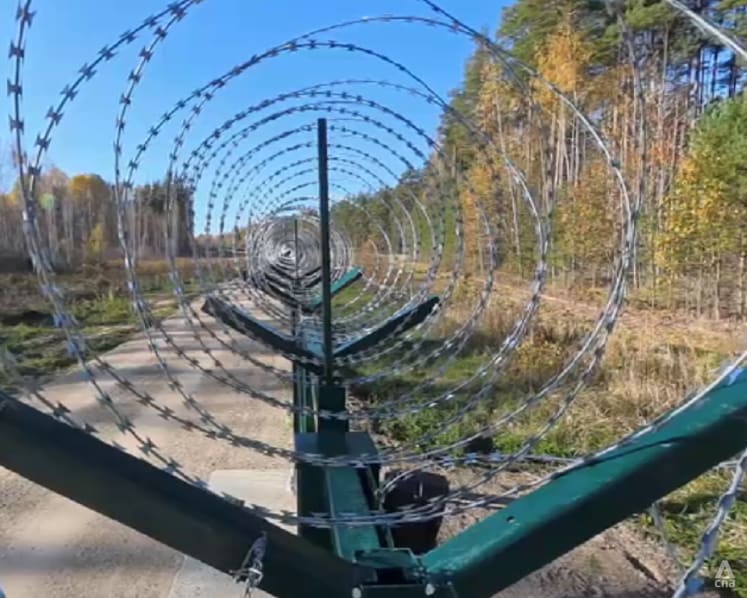 A barbed-wire fence along the border between Estonia and Russia. (Image: CNA)
 A road leading into Russia is closed off at the Estonian side of the border. (Image: CNA)
Remote Saatse is far removed from Estonia's major population centres – it is more than 280km from the capital Tallinn. But the proximity of Russian military activity is a regular reminder of the potential risks.
Residents frequently hear Russian military exercises taking place across the border while Estonian guards closely monitor developments.
But officials say the more immediate threat is not necessarily a conventional military incursion, but less visible forms of interference. These include the jamming of surveillance drones, which border guards say occurs almost daily.
Such incidents form part of a broader pattern of hybrid warfare, ranging from cyberattacks and disinformation campaigns to sabotage and electronic interference, aimed at destabilising an adversary without outright military confrontation.
SUSPECTED SABOTAGE RAISES ALARM
Estonian authorities have accused Russia of orchestrating a series of sabotage operations targeting the country's defence industry.
In August, officials blamed Moscow for an arson attack on Tallinn-based Milrem Robotics, which manufactures unmanned vehicles, some of which have been deployed to Ukraine.
 Estonian defence company Milrem Robotics, which authorities say was targeted in a Russia-linked arson attack in August. (Image: CNA)
Estonia also said it thwarted an attempted arson attack on defence company Threod Systems on Nov 14, which authorities attributed to Russia's GRU military intelligence agency.
In response, Estonia announced it would close its three remaining road border crossings with Russia from Dec 1 for at least six months, saying the move would help address security concerns and limit further attacks.
Moscow has denied involvement in the arson attacks and vowed to respond with political and diplomatic measures, accusing Tallinn of trying to “erect a new Iron Curtain”.
The incidents have fuelled concerns that Russia could step up covert attacks against defence manufacturers and critical infrastructure.
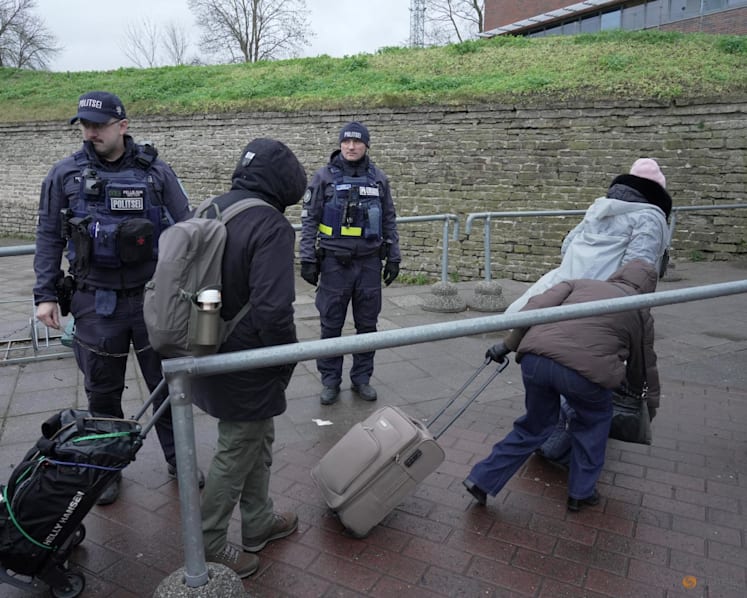 Estonian police and border guard service members watch as travellers walk to the border crossing point with Russia in Narva, Estonia, Nov 17, 2026. (Photo: Reuters/Janis Laizans)
 EU, Estonian and NATO flags flutter near a bridge over the Narva River at the border crossing point with Russia in Narva, Estonia, Nov 17, 2026. (Photo: Reuters/Janis Laizans)
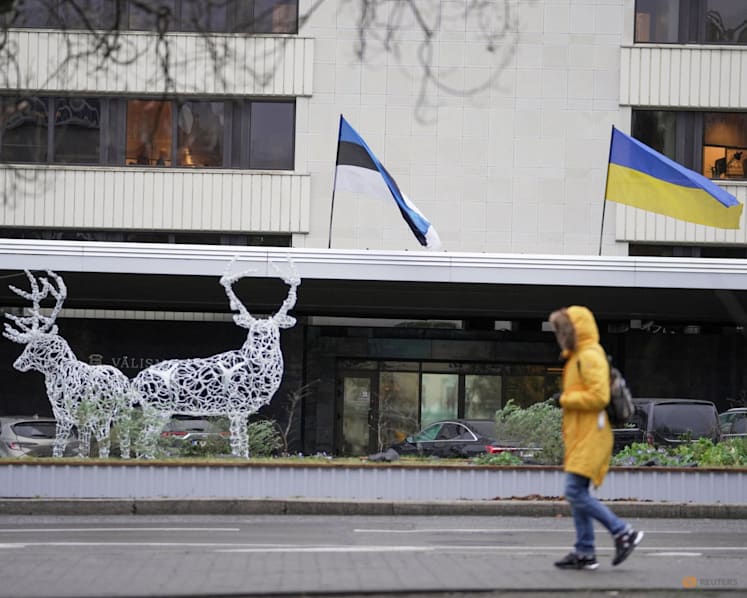 A pedestrian walks past Estonia's Ministry of Foreign Affairs, which is flying both the Estonia and Ukraine flags, in Tallinn, Nov 24, 2026. (Photo: Reuters/Janis Laizans)
Estonian Foreign Minister Margus Tsahkna warned that Russia could escalate its provocations to test the resolve of the North Atlantic Treaty Organization (NATO).
“We will probably see something more serious like terror attacks or sabotage, anything against NATO to test and push the lines,” he said.
“Estonia is pretty resilient about that, but my question is whether the other capitals in Europe are.”
During a visit to Estonia last month, NATO Secretary General Mark Rutte sought to reassure allies that such incidents would not weaken the alliance's resolve.
“We will react when we need to react. The most important thing is to … stay calm, carry on, invest in defence,” he said.
He also reiterated the need to ensure Ukraine receives the military assistance it requires.