Far from the Ukrainian front, Russia continues to enjoy a privileged place in European public life. In schools, museums and cultural institutions, Europeans encounter its renowned writers, artists and historical figures – Tolstoy, Pushkin, Soviet general Ivan Konev … and many others.
Yet something that might seem distant from the realities of war, something as abstract as art and culture, is in reality another front in this conflict.
As Ukraine fights for its very existence, it is also fighting over its identity: how it sees itself, how it defines its history, and how it understands the identity of its enemy – Russia.
Should Russian cultural figures continue to be celebrated in European public spaces? Should streets named after Pushkin be renamed? Where do we draw the line between rejecting Russian imperialism and preserving Russian cultural heritage? These are some of the questions director general of the Ukrainian Institute Volodymyr Sheiko discusses in the following interview.
Russian culture is frequently used in public discourse. Suppose the leader of a major EU country began a speech with the line, “Happy families are all alike; every unhappy family is unhappy in its own way”, the opening sentence of Tolstoy’s Anna Karenina. Would that be problematic for you?
It would trouble me, yes. Not because I believe Tolstoy should never be quoted, but because we need to ask what that quotation is doing at this particular moment.
When an EU leader opens a major speech with Tolstoy while Russia is bombing Ukrainian cities, the choice is not entirely neutral. It reinforces the idea that Russian culture is still the natural source of universal wisdom, something every European is expected to recognise and admire.
And I think we need to question that reflex. For generations, Russian culture was presented as universal, while Ukrainian, Georgian or Crimean Tatar cultures were treated as regional or secondary. Russia was the centre; everyone else was the periphery.
So, my first response would be: why Tolstoy? Why not Lesia Ukrainka? Her Cassandra, a masterpiece of literary modernism, is about someone who understands the truth but cannot persuade others to act before catastrophe arrives. That seems painfully relevant to European politics today. The work is now available in a contemporary English translation and is increasingly recognised for its treatment of political blindness, colonial subjugation and the isolation of the person who voices an inconvenient truth.
Or take Taras Shevchenko’s words, “Fight, and you will prevail.” Or Ivan Franko’s Moses, with its vision of Ukraine taking its place among the world’s free nations, “in your own house, in your own fields’ broad spaces”. A politician could also invoke Mykola Khvylovy’s call to turn “away from Moscow” and towards a confident European cultural future. These references are no less powerful or universal. Europeans simply don’t know these amazing writers.
So, I am not calling for Tolstoy to disappear from libraries. I am asking why a Russian writer still comes to mind so automatically when a European leader wants to say something profound about the human condition.
A political speech is not a literature seminar. It tells us whose words and experiences Europe places at the centre. At a time when Russia is trying to destroy Ukraine as a distinct culture and political nation, European leaders should be especially aware of that choice.
Are literature and art exempt from war, or are they part of the soft power used by an aggressor state?
My short answer is that there is nothing soft about Russian soft power.
We usually think of soft power as attraction: a country presents its culture and values and hopes others will find them appealing. Russia’s cultural power has often worked in a much harder way. It tells the world that Ukrainian language, history and culture are not fully separate, that Ukraine belongs naturally within a Russian cultural space, and that Russia has a special right to speak for our entire region. Such mindset prepares the ground for political control and military invasion.
You can see it in museums that have described Ukrainian artists as ‘Russian’, in universities where “Eastern European studies” effectively meant Russian studies, or in international media that continued to use Russian versions of Ukrainian toponyms. Each example may seem small. Together, they create a mental map in which Russia is the centre and its neighbours are merely its extensions.
Read more
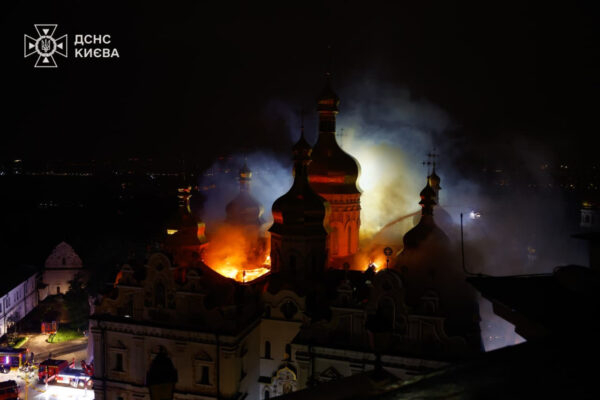
Russian attack against Kyiv’s holiest monastery shows Kremlin’s desire to wipe out Ukraine heritage, says theologian
The full-scale invasion made that connection impossible to ignore. Russia is destroying hundreds of museums, archives, theatres and historic buildings in Ukraine. In the occupied territories, it removes and burns Ukrainian books, suppresses Ukrainian education and rewrites local history. The military violence follows the cultural claim: if Ukraine is not a real nation, then its sovereignty can be treated as a collateral accident.
Russia tries to occupy the imagination before it occupies the territory. That is why I would not describe its cultural influence as “soft”.
At the same time, I do not want Ukraine to respond by turning its own culture into propaganda. Ukrainian literature, music, cinema and art matter because they are strong, independent and diverse, not because they illustrate a government message or the latest news from the front.
This article continues, but the full version is available only to EUobserver.com subscribers. Visit account.euobserver.com/membership