Those who confess to cheating and report their accomplices can also receive the full reward, while facing reduced penalties.
Glasses lie to be inspected as people wait for the start of the annual college entrance examinations at an exam hall in Seoul, South Korea, on Nov 19, 2026. (Photo: Reuters/Kim Hong-Ji/Pool)
Glasses lie to be inspected as people wait for the start of the annual college entrance examinations at an exam hall in Seoul, South Korea, on Nov 19, 2026. (Photo: Reuters/Kim Hong-Ji/Pool)

SINGAPORE: People who report cheating in South Korea's annual national university entrance examination can receive rewards of up to 500 million won (US$370,000) per case, even if they did the cheating themselves.
The country's Anti-Corruption and Civil Rights Commission said it would pay at least 100 million won for each tip-off that uncovers cheating, with the reward increasing by 100 million won for each additional offender identified, local media reported on Monday (Nov 23).
The maximum payout is capped at 500 million won per case, but individuals can report up to 10 cases annually, the Chosun Ilbo reported, citing a source from the commission.
“Mathematically, one person could receive up to 5 billion Korean won in annual rewards,” the source said.
CNA Games
 Guess Word
Crack the word, one row at a time
 Buzzword
Create words using the given letters
 Mini Sudoku
Tiny puzzle, mighty brain teaser
 Mini Crossword
Small grid, big challenge
 Word Search
Spot as many words as you can
Show More
Show Less
Those who confess to cheating and report their accomplices will also receive the full reward, while facing reduced penalties for their own misconduct.
The commission said the identities of whistleblowers will be protected, and they can request for personal protection if threats are made to their lives or physical safety, Seoul Economic Daily reported.
The increased rewards were announced after authorities initially offered up to 100 million won for reporting cheating, according to Yonhap News Agency.
The commission is accepting reports until Jan 19 as part of a two-month campaign targeting cheating in the College Scholastic Ability Test (CSAT), South Korea's annual university entrance examination.
The measures followed concerns over cheating involving artificial intelligence (AI) and sophisticated electronic devices, including smart glasses, miniature cameras and wireless earphones.
Just days before CSAT, the top scorer in a national tax accountant exam confessed to using a miniature camera and smartphone to achieve a near-perfect score.
The confession sent officials scrambling to roll out a slew of preventive measures - including blocking public Wi-Fi in testing areas and placing stickers over clothing buttons.
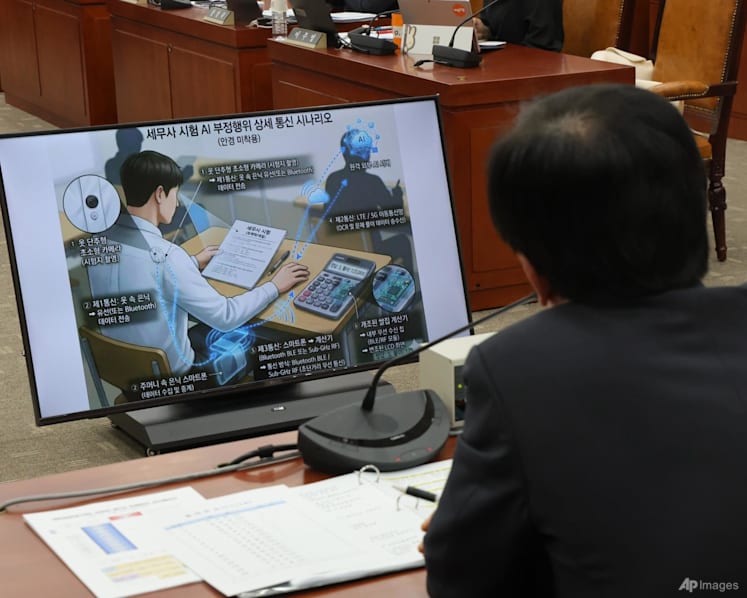
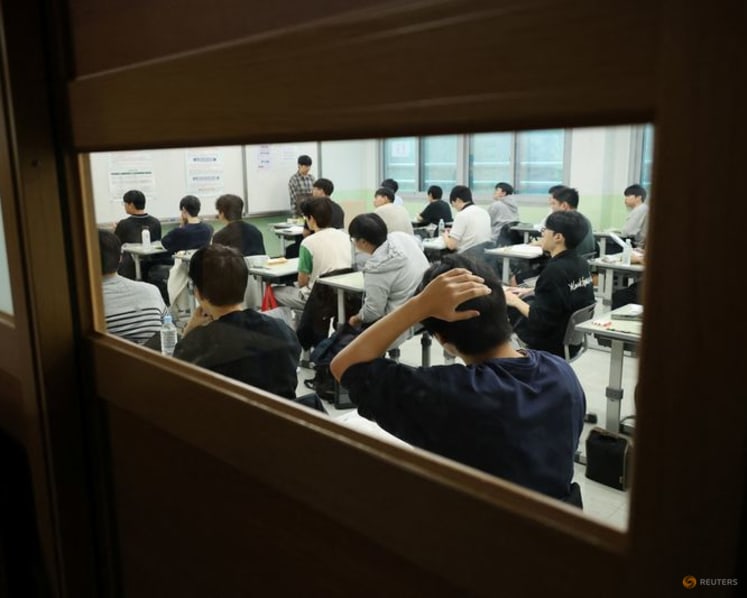
The Chosun Ilbo reported that South Korea's Ministry of Education on Monday referred five candidates caught using smart devices during the Nov 19 examination to prosecutors.
Police have begun investigation into four cases, including one candidate who used smart glasses, another who used a miniature camera and wireless earphones, and two who used mobile phones.
In all, a total of 111 candidates were found in possession of or using smart devices during the examination.
Police were also checking the authenticity of 19 online posts relating to suspected examination cheating, according to the Chosun Ilbo.
The government said it would investigate suspected cheating in previous examinations as well, although a substantial number of past examination papers that could serve as evidence had already been discarded.
Schools are required to retain examination papers for one year, after which they may dispose of them.
The deadline for retaining papers from the previous year's examination expired on Nov 12, but the Education Ministry only instructed education offices to preserve them on Nov 18, the Chosun Ilbo reported.
"While test papers are important evidence for confirming cheating, other materials can also serve as evidence,” the ministry said.
The annual nine-hour exam, also known as the Suneung, is a major event for South Korean students after years of preparation.
It is widely seen as a ticket to prestigious universities, well-paid jobs and even better marriage prospects in the highly competitive country.
Authorities last week announced plans to bar candidates caught cheating from taking the examination for 10 years, Yonhap reported.
On Sunday, South Korea's Education Minister Choi Kyo-jin resigned after coming under pressure over the government’s handling of exam cheating.
Week in Review

Our chief editor shares analysis and picks of the week's biggest news every Saturday.