
In brief: Lithuania is pushing for the EU to designate Russia’s Main Intelligence Directorate (GRU) as a terrorist organization, citing its alleged involvement in cyberattacks, sabotage and other covert activities. The agency has been accused of cyberattacks targeting Ukrainian government agencies and explosions at a Czech arms factory in 2014.
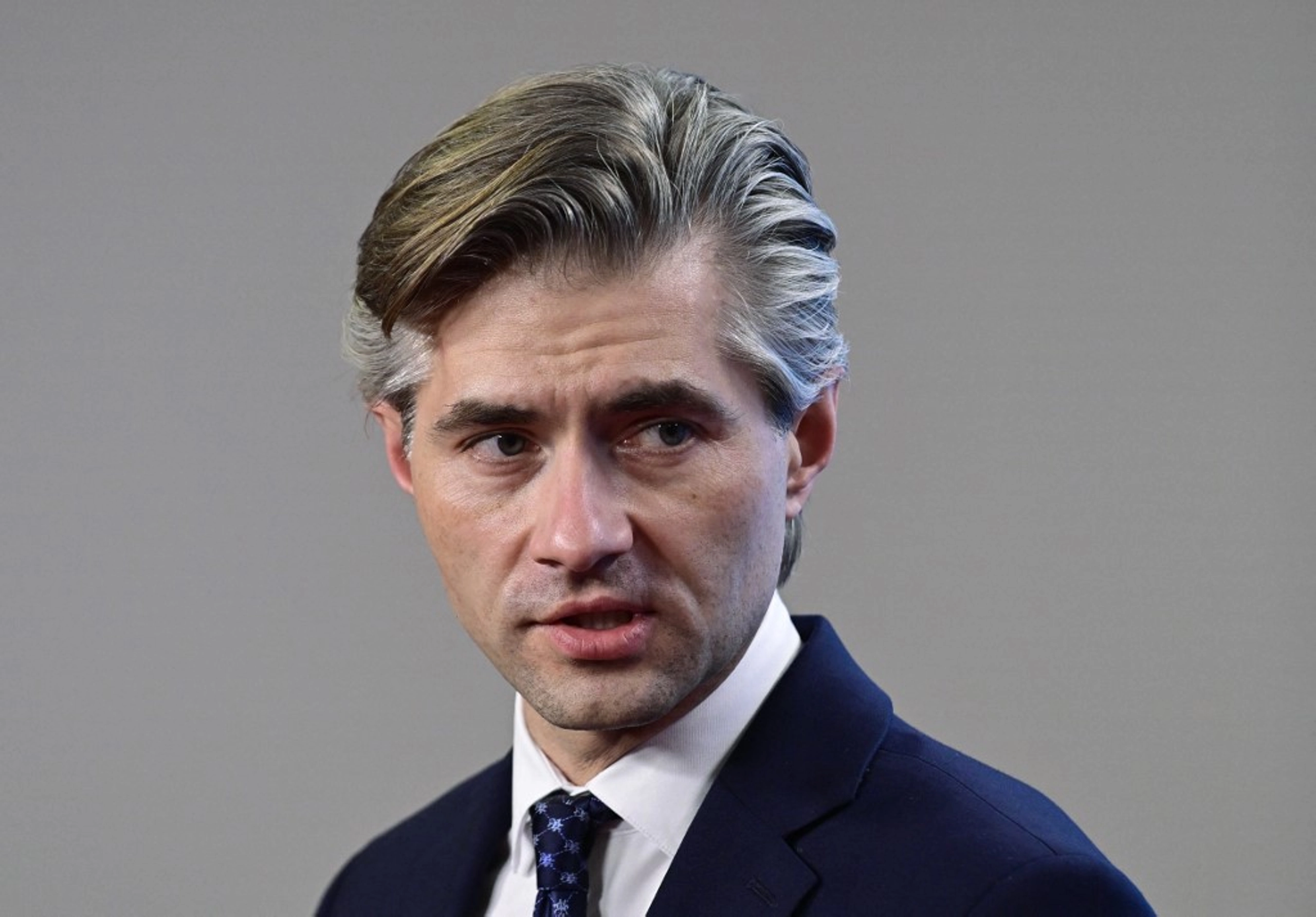
Lithuanian Foreign Minister Kestutis Budrys has called for the EU to designate Russia’s Main Intelligence Directorate (GRU) as a terrorist organization, citing the agency’s threat to European security.
In an interview with German outlet Die Welt published on Thursday, Budrys said the agency has been conducting operations targeting European societies, government officials and critical infrastructure.
Follow our coverage of the war on the @Kyivpost_official.
He argued that the EU should move beyond conventional sanctions.
Budrys said Lithuanian intelligence has identified GRU-linked operatives in numerous cases, some of which have resulted in court convictions. He urged European governments to coordinate their response and hold those responsible for sabotage and covert attacks accountable.
He described Moscow’s activities as “unconventional warfare,” warning that some operations could reach the threshold for invoking NATO’s Article 5 collective defense clause.
Budrys also argued that Russia’s campaign is intended to pressure Western governments into reducing their military and political support for Ukraine.
GRU’s global campaign of cyberattacks, sabotage
GRU has been linked to a series of high-profile secret operations across Europe, including assassinations, poisonings, ammunition depot explosions and cyberattacks.
One of the cases was the October 2014 explosion at an ammunition depot in Vrbetice, Czechia, which killed two people and destroyed 58 tons of ammunition.
A 2021 investigation by Bellingcat, The Insider and other media organizations identified at least six operatives from the GRU Unit 29155 involved in the operation. The investigation also established that the unit’s commander, Col. Gen. Andrey Averyanov, personally traveled undercover to Central Europe around the time of the explosion.

Czech authorities subsequently attributed the explosions to GRU operatives Alexander Mishkin and Anatoly Chepiga, who had also traveled under false identities,
The same intelligence unit has been linked to the 2018 poisoning of former Russian intelligence officer Sergei Skripal and his daughter in Salisbury, UK, the poisoning of Bulgarian arms manufacturer Emilian Gebrev in 2015 and sabotage operations targeting Ukraine’s interests.
Ukraine among GRU targets
The GRU’s activities have also directly targeted Ukraine’s government institutions and defense capabilities.
In February 2022, days before Russia launched its full-scale invasion against Ukraine, Ukrainian government websites were hit by a major cyberattack. Investigators identified infrastructure linked to previous cyber operations tied to Russian state interests.
A Microsoft report, “Defending Ukraine: Early Lessons from the Cyber War,” published in June 2022, documented destructive cyberattacks against 48 Ukrainian government agencies and enterprises. It also identified Russian state-sponsored cyber operations targeting organizations in 42 countries outside Ukraine, including NATO members.
In July 2025, the UK sanctioned three GRU units and 18 military intelligence officers over cyber operations, espionage and sabotage targeting Ukraine and its Western allies. The measures included Unit 29155, which was linked to the destructive cyberattack against Ukraine in 2022.
More recently, European security services have warned of an expanding Russian sabotage campaign involving locally recruited individuals.
In November 2026, Estonian authorities announced they had thwarted an attempted explosion and arson attack against drone manufacturer Threod Systems over its assistance to Ukraine, directly attributing the operation to GRU.
Russian intelligence reportedly uses Telegram, Discord and WhatsApp to conduct surveillance and sabotage across European countries.
Budrys’s proposal comes amid growing concern among European governments that Russia is expanding its covert operations beyond Ukraine’s borders. Lithuania is calling for a coordinated European response, arguing that GRU’s activities should be treated as a security threat to the continent.
Oksana Martsun is a philology graduate of Zhytomyr State Ivan Franko University. She has worked as a professional writer and has joined several international humanitarian missions to communities near the front lines, documenting the realities of life during Russia’s war against Ukraine.