On Monday (9 November) Moldova inaugurated a new electric grid, the Vulcănești–Chișinău power line, which links the c0untry to Romania and the European grid and is seen as a issue of pressing national independence.
As winter rolls in, concerns about energy dependence on Russia are once again at the forefront, particularly in countries that have historically relied heavily on Russian supplies. Moldova is one of them.
Today we launched the Vulcănești–Chișinău power line, linking Moldova to Romania and the European grid. For decades, Moscow used energy to blackmail us. No more: Moldova buys zero Russian gas, and two more power lines to Romania are on the way. Thanks to all who made it happen. pic.twitter.com/Q8OrgDbtBV
— Maia Sandu (@sandumaiamd) November 8, 2026
In recent years, however, the country has made significant efforts to reduce its dependence on Moscow’s supplies and strengthen its energy security, while accelerating its integration with the EU.
In an exclusive interview with EUobserver, Moldova’s minister of energy, Dorin Junghietu, discusses the country’s efforts to secure alternative energy supplies, modernise its infrastructure and keep prices affordable, as the country is moving closer to EU integration.
For many years, Moldova relied heavily on Russia for its energy supplies, both natural gas and electricity. How sustainable was this dependence, and was Moldova ever in a position to realistically reduce or eliminate it?
Indeed for more than three decades, Moldova depended on a single source of gas, while most of its electricity came from a power plant fuelled by Russian gas.
We understood how this structural dependence affected our economy and social life. There were several instances when it proved to be a wrong long-term strategy. Russia uses energy as a weapon, and they did it also to Moldova. Whenever we tried to take pro-European political decisions, Russia cut or reduced gas supplies.
Gas contracts were also renegotiated in the final days of each year, with Moldovan politicians travelling to St Petersburg or Moscow to negotiate conditions.
These experiences confirmed the need to diversify away from a single supplier. Since 2022 [Russia’s full-invasion of Ukraine], these efforts have accelerated.
Read more
Moldova seen as ‘best performer’ on EU-accession reforms, despite onslaught of Russian sabotage
Transnistria has long been an important part of Moldova’s energy vulnerabilities, particularly because of its dependence on Russian gas and the role of the Cuciurgan power plant in supplying electricity. How does the situation in Transnistria affect Moldova’s overall energy security, and what is your government’s strategy for addressing this vulnerability?
Until 1 January 2025, approximately 70 percent of Moldova’s electricity needs were supplied by the power plant at Moldavska Kuchurgan in Transnistria.
When Russian gas transit through Ukraine stopped on that date, the plant could no longer produce electricity. We shifted to imports from Romania and Ukraine.
This was a decisive moment, making clear the need to completely phase out Russian-linked energy sources. Since then, the right bank of the Dniester has not purchased any commercial electricity from that source. We rely on local generation and imports from Romania and Ukraine when available.
However, a structural vulnerability remains because our electricity network was configured during Soviet times. Major interconnection and transmission lines were directed towards the power plant in Transnistria. Even the existing Vulcănești–Moldavska–Chișinău line passes through that node.
The new Vulcănești–Chișinău overhead power line will bypass it and directly connect the Vulcănești and Chișinău electricity nodes.
How has Moldova’s energy situation changed in recent years, particularly in terms of its dependence on Russian supplies? Why is this change so important for the country’s energy security?
Our first structural dependence was reduced when the Iași–Ungheni–Chișinău gas pipeline was commissioned, allowing us to import gas from Romania and access European supplies.
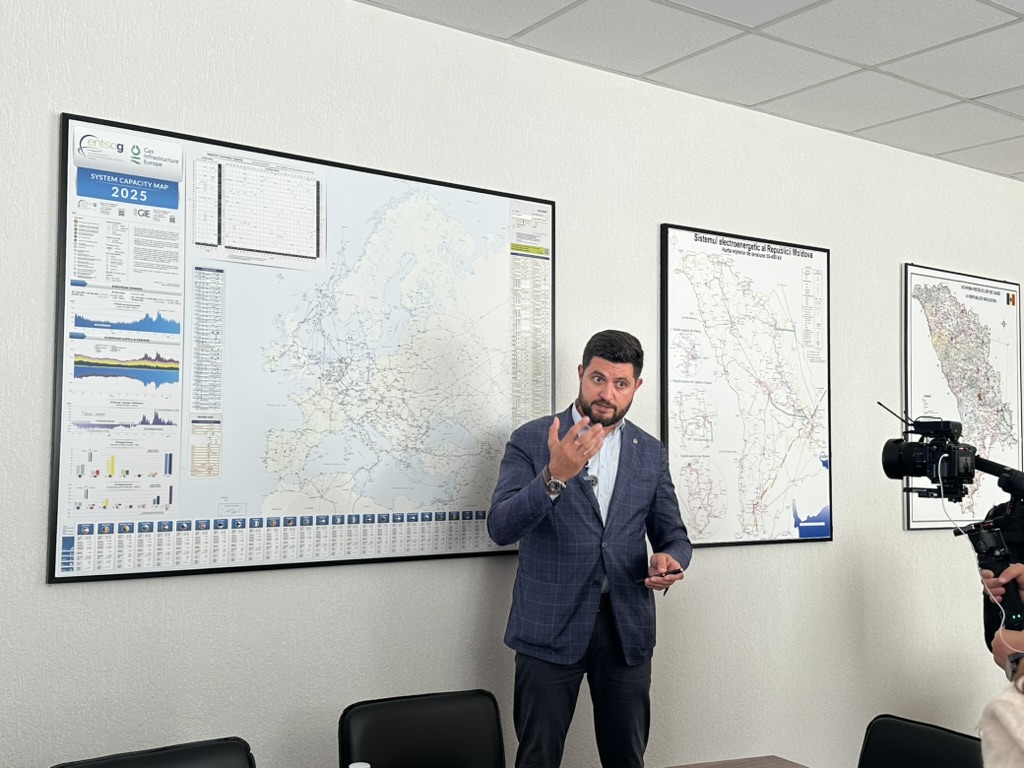 For Moldovan energy minister the country’s last winter experience shows that integration into EU energy market and European solidarity are essential for regional security. Source: Petra Pavlovičová
Last year, Energocom, the state-owned company responsible for purchasing gas, had approximately 24 to 26 contracts with different suppliers.
Electricity diversification also accelerated in 2021 and 2022, when private investors began focusing on renewable energy. In just four to five years, our wind and solar capacities increased 13 to 15 times.
This article continues, but the full version is available only to EUobserver.com subscribers. Visit account.euobserver.com/membership