Conclusion
QUEZON PROVINCE, Philippines – For residents living near a sprawling piggery designed to accommodate up to 50,000 hogs, the concern is no longer just the loss of agricultural land. It is whether the facility’s waste management system can protect their water sources, farms, and livelihoods, and whether government agencies will act if those safeguards fail.
The 12-hectare development of Mighty Livestock Farms in Barangay Callejon, San Antonio, Quezon, has raised concerns among residents of surrounding communities who rely on nearby irrigation waterways and groundwater for farming and household use.
The project has also become a source of frustration for former rice farmhands who found temporary employment during its construction, only to abruptly lose their jobs.
Must Read Ricefields to piggery: Questions over land conversion for 50,000-hog facility in Quezon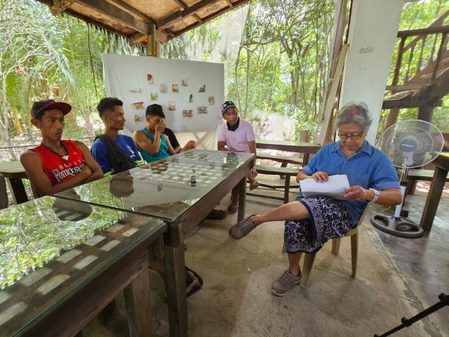
For Emma Alday, a resident in her eighties whose farm lies just 250 meters from the development, the controversy has become a prolonged struggle to obtain answers from government agencies responsible for protecting agricultural land, farmers, and the environment.
Threat to water, farms, and communitiesBeyond the loss of productive agricultural land, residents fear the environmental consequences of a facility designed to accommodate as many as 50,000 pigs.
Alday estimates that each hog could produce approximately five kilograms of waste daily. Using that figure, the facility could potentially generate as much as 250,000 kilograms, or 250 metric tons, of waste every day if operating at full stocking capacity.
“Siguradong maaapektuhan ang aming water. Kahit sabihin nilang modern na. The air, and the langaw. We will only find out when it starts,” Alday said.
(Our water will definitely be affected, even if they say the facility is modern. The air quality will also be affected, as well as attract flies.)
For residents who rely on nearby waterways for irrigation and groundwater for household use, these are not abstract concerns.
Former construction worker Arnel Las, who previously worked as a farmhand in the ricefields, said the proposed waste-treatment facilities are situated near agricultural areas and waterways.
“Yung tubigan namin mismong kalapit ng piggery. Yung lagoon ang nagpapatubig sa palay. Yung lagoon nila 20 meters, hindi nilagyan ng flooring, talagang lupa, kaya derecho yun sa palayan,” he alleged.
(Our irrigation waterway is right next to the piggery. The lagoon supplies water to the rice fields. Their lagoon is 20 meters and has no concrete flooring – it is just bare earth, so the water goes straight into the ricefields.)
Las also expressed concern about the potential impact on drinking water.
“Ang tubig na aming iniinom ay mula sa poso, kaya makakaapekto rin sa amin (The water we drink comes from a hand pump, so we will also be affected).”
According to Las, the communities potentially affected include barangays San Juan, San Francisco, Behia, Callejon, Sinturisan, and Briones, which he said share interconnected irrigation waterways.
Whether wastewater from the facility could seep into surrounding soil and groundwater, and whether its waste-treatment system can safely handle the expected volume, are among the questions residents want the Department of Environment and Natural Resources-Environmental Management Bureau (DENR-EMB) to answer.
The EMB issued an Environmental Compliance Certificate (ECC) for the project on October 24, 2023, covering a total land area of 113,973 square meters, or approximately 12 hectares.
The ECC identifies the development as a Livestock Farm Project with a maximum stocking capacity of 50,000 hogs at any given time.
However, an ECC does not, by itself, establish that a facility will have no adverse environmental impact. Rather, it sets environmental conditions and commitments with which the project proponent must comply.
For residents, the pressing question is whether those safeguards are sufficient and who will be held accountable if they fail.
Promises against environmental violationsThe municipal government of San Antonio maintains that Mighty Livestock Farms has complied with the documentary requirements for its development.
In an interview, Sangguniang Bayan Secretary Carlo Katigbak said the municipality has mechanisms to act against establishments that violate environmental regulations.
“Although nabibigyan sila ng authority to operate, once na nagkaroon ng non-compliances, nagkakaroon ng immediate action talaga ang local government unit,” he said.
(Although they are granted the authority to operate, the local government unit takes immediate action once there are any instances of non-compliance.)
He added that the municipality could revoke a company’s license to operate or business permit if violations were established.
“In case magkaroon ng mga violation may mga recourse din ang municipio such as revocation of license to operate or business permit, mahigpit po ang local government sa mga ganitong bagay lalo na kung may kinalaman sa environment.”
(In case of violations, the municipality has recourse, including revoking the license to operate or the business permit. The local government is strict on these matters, especially when they involve the environment.)
The assurances, however, have not dispelled residents’ concerns about the potential impact on irrigation waterways, groundwater, and neighboring farms.
Farmers turned workers, then left without jobsThe controversy has also taken a human toll on former rice farmers who found temporary employment during the first two years of the piggery’s construction.
Las said he and other residents initially believed that a feed mill would be built on the property.
“Ang sabi nila ay feedmill ang itatayo, nung binubuo na, piggery na (They said a feed mill would be built, but by the time construction began, it was a piggery),” he said.
After working on the construction site for nearly two years, Las said he and several other workers were abruptly dismissed.
“Kami po ay tinanggal ng walang sinabi. Nakatira doon mismo sa sitio na pinagtrabahuhan namin. Kami rin ang mga dating farmhands sa ricefields.”
(We were dismissed without being given any explanation. We lived right there in the sitio where we worked. We were also former farmhands in the ricefields.)
He said some employment benefits, including their 13th-month pay, remained unsettled at the time of the interview.
“Nag-report po kami sa San Antonio Mayor’s Office noong September, sabi sa amin tatawagan kami pero hanggang ngayon ay wala naman tumawag sa amin. Lumapit din kami sa aming barangay kagawad pero wala din.”
(We reported the matter to the San Antonio Mayor’s Office in September. We were told they would call us, but no one has contacted us to this day. We also approached our barangay councilor, but nothing came of it.)
Another former worker, Kenneth Ocampo, said 16 workers were dismissed after being told that the company needed to reduce its workforce because of financial constraints.
“Nagbabawas daw po sila ng trabahador dahil wala na silang pasahod. Ngayon nabalitaan namin, nagdadagdag naman sila. Sabi kasi priority kaming mismong taga doon, pero bakit naman po kami pa mismo ang tinanggal. Ang tinira nila ay yung mga taga malayong lugar,” he lamented.
(They said they were reducing their workforce because they could no longer afford to pay the workers. Now we’ve heard they are hiring more people. They said residents from the area would be given priority, so why were we the ones who were dismissed? They kept workers from faraway places.)
He said the workers were never given a clear explanation for their dismissal.
“Siguro po may nagawa kaming mali, pero hindi naman dapat na basta-basta na lang kami tatanggalin, dapat kausapin nila kami kung bakit.”
(Maybe we did something wrong, but they shouldn’t have just dismissed us without explanation. They should have talked to us and told us why.)
Today, Ocampo survives on occasional jobs, a far cry from the regular income he once earned.
The workers’ accounts raise additional questions about the impact of the development on residents who previously depended on the land for their livelihoods.
They appealed to the President and got no responseAs early as three years ago, Alday and other concerned residents began organizing opposition to the project.
They gathered approximately 300 signatures from residents of San Antonio and neighboring Tiaong and sent a petition to President Ferdinand Marcos Jr..
“Ang pangunahing pagkain natin ay BIGAS (Our staple food is rice),” the petition emphasized, warning of the continuing loss of ricefields.
The appeal, dated November 28, 2024, did reach the national government.
A memorandum dated January 27, 2025, signed by DAR-Calabarzon Director Cupido Gerry Asuncion, documents the referral of Alday’s complaint from the Presidential Action Center through the DAR Central Office to the provincial office in Quezon.
The memorandum specifically directed the provincial office to respond to Alday and report any action taken. But Alday says the referral has not resulted in a satisfactory response.
“So I was asking the DAR people kung ano ang gagawin nilang pagkilos, eh ang dami daw nilang ginagawa kaya hindi nila mabigyan ng attention up to now, so wala,” she recalled.
(So I asked the DAR personnel what action they would take, but they said they had so much work that they had been unable to attend to the matter up to now. So nothing has happened.)
She also approached the EMB office in Lucena, whose personnel visited the project site and inspected the biogas and lagoon facilities.
“Yung EMB na Lucena all they do is investigate and report to the region (The EMB office in Lucena only investigates and reports to the regional office),” she said.
For Alday, the visits, referrals, and repeated follow-ups have yet to produce clear answers to the concerns she has raised.
The difficulty in obtaining answers is not confined to the affected residents.
In an effort to establish the facts and present all sides, Rappler contacted the Department of Environment and Natural Resources–Environmental Management Bureau (DENR-EMB) IVA, the National Irrigation Administration (NIA) in Quezon, the Department of Agrarian Reform (DAR) Quezon, and Mighty Livestock Farms through email and/or phone.
Rappler subsequently followed up with all four parties on several occasions. Yet more than two weeks after the initial inquiries, none had responded to questions concerning matters that fall directly within the mandates of the government offices approached or to the allegations involving the company’s development.
Who protects the farmers?For Alday, the fight has become an exhausting search for accountability. She has spent the past two years writing letters, visiting government offices, following up on referrals, and asking questions she believes should have been answered long ago. Her efforts have taken her from local offices to regional agencies and even to the Office of the President.
Yet the central questions remain unanswered. How was irrigated riceland allowed to give way to a 50,000-head piggery? Were the farmers’ rights adequately protected? Were surrounding communities properly informed and consulted? Can the facility’s waste-management system safeguard the waterways and groundwater on which nearby residents depend?
And perhaps most importantly, why has it been so difficult for ordinary citizens to obtain clear explanations from the very institutions mandated to protect agricultural land, farmers, and the environment?
For Alday and the residents who joined her appeal, the answers remain elusive even as the development that prompted their concerns continues to take shape. – Rappler.com