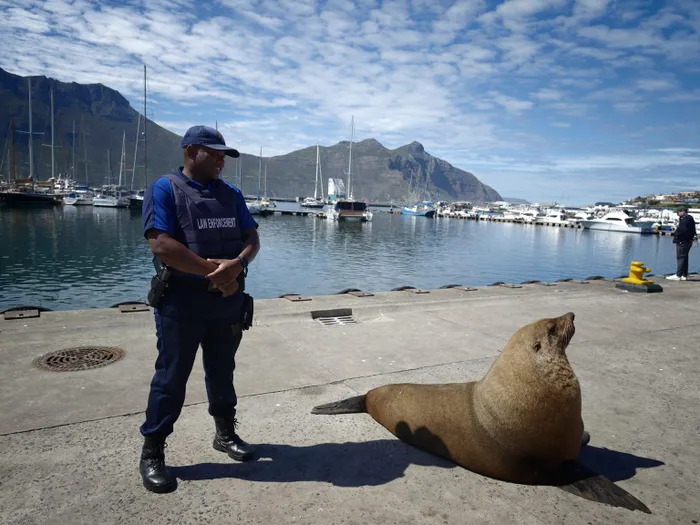
The public has urged anyone who witnesses tourists or members of the public feeding, harassing or touching seals at Hout Bay Harbour to report the incidents immediately.
Animal welfare organisations have sounded the alarm over the growing exploitation of Cape fur seals at Hout Bay Harbour, warning that tourists and members of the public are being put at risk of serious injury through feeding, touching and posing for photographs with the wild animals.
The warning comes amid growing concerns about people feeding seals and encouraging close encounters, sometimes in exchange for money, despite this being prohibited by law.
Kim Krynauw, operations director at Seal Rescue Centre, who has raised concerns about the escalating incidents, said they've noticed a rise in people feeding seals at Hout Bay Harbour.
"Seals are unpredictable wild animals with powerful jaws capable of inflicting serious injuries. Feeding them can also encourage dependency on humans and disrupt their natural hunting instincts," she said.
Krynauw has also cautioned against claims that seals are safe to touch because they have been vaccinated, describing such assurances as false and highly irresponsible. "There's also a growing misconception that all seals carry rabies. This isn’t true. These animals need urgent protection, not fear or stigma. Admire seals from a safe distance. Don’t feed, touch or interfere with them," she said.
The warnings come as enforcement action has already resulted in convictions.
On 13 May 2026, two men were convicted in the Wynberg Magistrates’ Court for unlawfully feeding and exploiting Cape fur seals at Hout Bay Harbour.
Each received a sentence of an R80 000 fine or 24 months’ imprisonment, wholly suspended for five years on condition that they are not convicted of a similar offence during that period.
Cape of Good Hope SPCA has also raised concerns about ongoing complaints involving activities that bring visitors, including children, into dangerously close contact with wild seals in exchange for paid photographs.
Cape of Good Hope SPCA spokesperson Belinda Abraham said members of the public, including children, had been bitten during interaction at the harbour.
"What may look like a memorable holiday photograph can expose both the visitor and the animal to unnecessary risk. Rabies has been confirmed in Cape fur seals, adding a serious health risk to close encounters and reinforcing the need to avoid physical contact; anyone bitten or scratched by a seal must seek urgent medical attention," she said.
"We recognise that many people are struggling to earn a living, and that some visitors and residents see seal feeding as a harmless way to support someone financially. These concerns deserve a compassionate response. Earning an income must, however, be done in a way that is lawful, protects animals and keeps people safe," Abraham said.
The City of Cape Town says it has assisted the National Department of Forestry, Fisheries and the Environment (DFFE) and the SPCA Wildlife Unit in taking action against individuals found unlawfully feeding Cape fur seals at Hout Bay Harbour.
The City said the feeding of seals is regulated by the DFFE under the Marine Threatened or Protected Species Regulations, with feeding the animals, or paying someone else to do so, constituting an offence.
"The DFFE has also erected signage at the harbour to inform visitors that feeding seals, or paying someone else to feed them, constitutes an offence.
In addition, the City's Law Enforcement officers are empowered to respond to reported incidents of seal harassment and take appropriate action against offenders," the City said.
The public has urged anyone who witnesses tourists or members of the public feeding, harassing or touching seals at Hout Bay Harbour to report the incidents immediately.