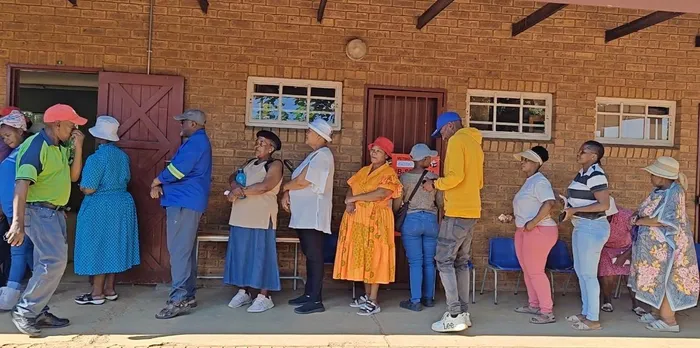
Sebokeng residents cast their votes in the local government elections, hoping for an end to years of poor service delivery in Emfuleni.
Image: Masabata Mkwananzi National Media Group
The local government election results have left me deeply disappointed and concerned about the future of our democracy. It is particularly troubling that, more than three decades into our democratic dispensation, food parcels, blankets, political T-shirts and other short-term incentives still appear to influence electoral choices in some communities.
While I respect the constitutional right of every citizen to vote for the political party of their choice, I firmly believe that our democracy deserves an informed, accountable and development-oriented electorate. Political parties must be judged not by the number of food parcels, blankets or T-shirts distributed during election campaigns, but by their record of governance, service delivery, job creation, infrastructure development and improvement of people’s living conditions.
Equally concerning is the sudden acceleration of service delivery initiatives immediately before elections, particularly in communities that have endured years of neglect. While service delivery is a constitutional obligation of government, its timing and apparent political presentation raise legitimate questions about whether public resources are being used to advance the electoral interests of particular political parties.
Where state-funded projects are deliberately timed, selectively implemented or politically branded to influence voters, such conduct may constitute an abuse of public resources and undermine the principles of fairness, accountability and democratic integrity. This is completely unacceptable and warrants appropriate scrutiny and investigation.
Public funds belong to the people of South Africa, not to political parties. Government services must be delivered consistently, equitably and according to genuine community needs, rather than being concentrated around election periods for potential political advantage.
A food parcel may feed a family for a few days, a blanket may provide warmth during winter, a T-shirt may last a few months, and a hastily implemented project may create the appearance of progress. However, none of these can substitute for reliable water, sustainable employment, functioning healthcare facilities, quality education and accountable local government.
We must acknowledge that poverty, unemployment and inequality create conditions in which vulnerable communities may become susceptible to political patronage. The tragedy is not that struggling families accept assistance, but that their socioeconomic vulnerability can potentially be exploited for political advantage. Our people deserve dignity, not dependency; sustainable development, not temporary political generosity; and accountable leadership, not election-season promises.
Accepting a food parcel, receiving a blanket or wearing a political T-shirt does not necessarily mean that someone has surrendered their independent political judgement. Nevertheless, attempts to influence electoral choices through material inducements, or the potential misuse of state resources, should concern everyone who values democratic integrity. Democracy must be about the power of citizens to hold leaders accountable, not the power of politicians to exploit poverty or use public resources for electoral survival.
My disappointment is therefore not simply about which political party wins or loses. It concerns whether electoral choices sufficiently reflect the lived realities of communities, the performance of elected representatives and the long-term development needs of our country.
South Africans deserve municipalities that deliver services throughout their terms of office, not merely when elections approach. Service delivery is a constitutional responsibility, not a political favour for which citizens must demonstrate electoral gratitude.
Until political accountability, transparent governance and sustainable development become central considerations in our democratic discourse, meaningful transformation at local government level will remain a challenge. Our votes must be informed by the future we want to build, not merely the temporary benefits offered during election campaigns.
Democracy is not for sale. Poverty must never become a political campaign strategy, and public funds must never be treated as electoral campaign resources.
Moloke Peter Lentswane is a PhD candidate at the University of Pretoria. He writes in his personal capacity, and all views expressed are personal and independent of his professional, employment and governance responsibilities.