Despite growing awareness of environmental issues, Singapore's domestic recycling rate has fallen to 11 per cent. Interviews and a Mediacorp-YouGov survey of 3,558 respondents shed light on what is holding people back.
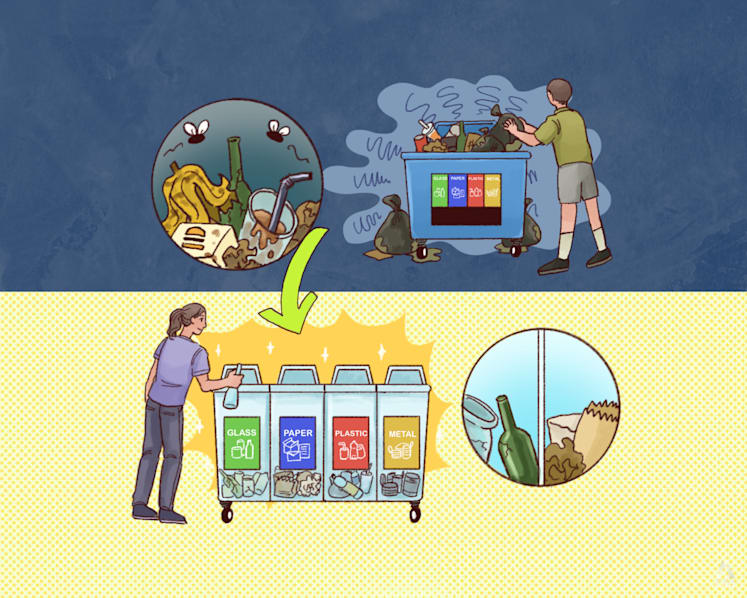
Most Singaporeans believe recycling is their responsibility, yet many struggle to make it a regular habit. (Illustration: CNA Graphics)
Most Singaporeans believe recycling is their responsibility, yet many struggle to make it a regular habit. (Illustration: CNA Graphics)

This article is part of Beyond the Bin, a Mediacorp initiative raising awareness of the 3Rs – reduce, reuse and recycle – and more sustainable waste habits in Singapore.




Despite practising sustainable habits such as reducing and reusing since secondary school, Ms Nur Sorfina Mohammed Shahfiran, 22, finds that keeping up these routines consistently can be exhausting.
The fourth-year environmental earth systems science student at Nanyang Technological University (NTU) has spent the past three years living in a university hall, where she encouraged her roommates to recycle and even occasionally offered to wash their used plastic containers so they could be recycled.
While her roommates eventually got into the habit of washing their own recyclables, Ms Sorfina said she continued to do most of the sorting and recycling of their trash. But at times, when she was too tired to clean everything at the end of the day, containers would pile up in the room.
"I think one of the biggest challenges with practising the 3Rs is maintaining that commitment consistently," she told CNA, referring to the practice of reducing waste, reusing items and recycling materials.
CNA Games
 Guess Word
Crack the word, one row at a time
 Buzzword
Create words using the given letters
 Mini Sudoku
Tiny puzzle, mighty brain teaser
 Mini Crossword
Small grid, big challenge
 Word Search
Spot as many words as you can
Show More
Show Less
"There are ups and downs. Some days, you have more energy to put in the effort to be environmentally friendly, while on other days, you just don't."
When her studies get particularly busy, she sometimes takes a break from recycling, although she eventually resumes the habit.
Then, there's project coordinator Scott Lee, 29, who recognises the importance of recycling but has never developed a consistent habit, partly because he finds it inconvenient.
He described the recently introduced Beverage Container Return Scheme (BCRS), Singapore's 10-cent bottle deposit scheme, as a good public initiative, and said that he had made an effort to return used bottles to reclaim the deposit.
"But it's not always convenient ... You might not be able to find a return machine, and you end up losing that 10 cents you paid for the drink."
Mr Lee, who lives in Punggol, occasionally recycles cardboard boxes from online purchases, but otherwise disposes of plastic bottles, cans and other recyclables with his rubbish.
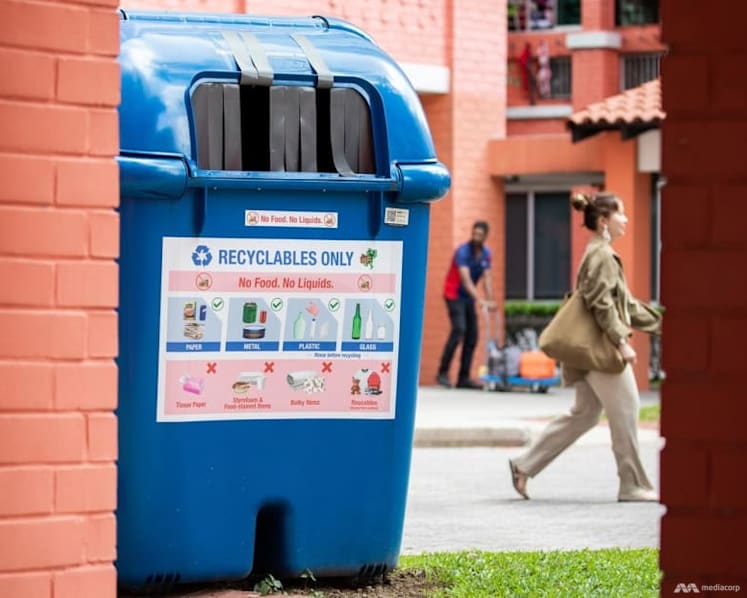
This habit is compounded by the fact that his HDB block's blue recycling bin is frequently filled to the brim, often leaving him little choice but to toss his recyclables into the general rubbish bin.
"I do see the need (for practising sustainable habits), but sometimes it's just not convenient to do it."
Such experiences reflect a broader challenge in Singapore. While people generally think it's important to do their part for the environment, practical obstacles and everyday inconveniences can easily discourage them from following through, a new study has found.
A survey of 3,558 respondents across different generations, commissioned by Mediacorp and conducted in September by global research data and analytics group YouGov, found the following self-reported attitudes:
As for actual practices, only 55 per cent of respondents reported using blue recycling bins at least once a week, and 49 per cent said they used the beverage bottle and can return scheme at least weekly instead of throwing away their recyclables.
But respondents also reported practical barriers, including full or dirty recycling bins and the inconvenience of cleaning recyclables.
Beyond these practical hurdles, the survey revealed prevailing misconceptions about what can and cannot be recycled, with knowledge gaps varying across generations.
Respondents also expressed uncertainty about the effectiveness of Singapore's recycling system, with some questioning whether the materials collected were actually recycled.
Financial incentives emerged as the most commonly indicated primary motivation for recycling, mentioned by 23 per cent of respondents. This was narrowly ahead of protecting the environment for future generations, indicated by 22 per cent of the respondents.
These figures highlight a stubborn reality after more than two decades of government efforts to encourage recycling, including public education campaigns, expanded recycling infrastructure and more recent measures aimed at reducing disposable waste.
Singapore's domestic recycling rate stood at 11 per cent in 2025, down from 20 per cent in 2019, even as the proportion of households reporting that they recycle rose from 72 per cent in 2023 to 78 per cent in 2025.
Experts said the survey highlights Singapore's challenge of moving beyond awareness to make the 3Rs – reducing, reusing and recycling – easier to practise and sustain in everyday life.
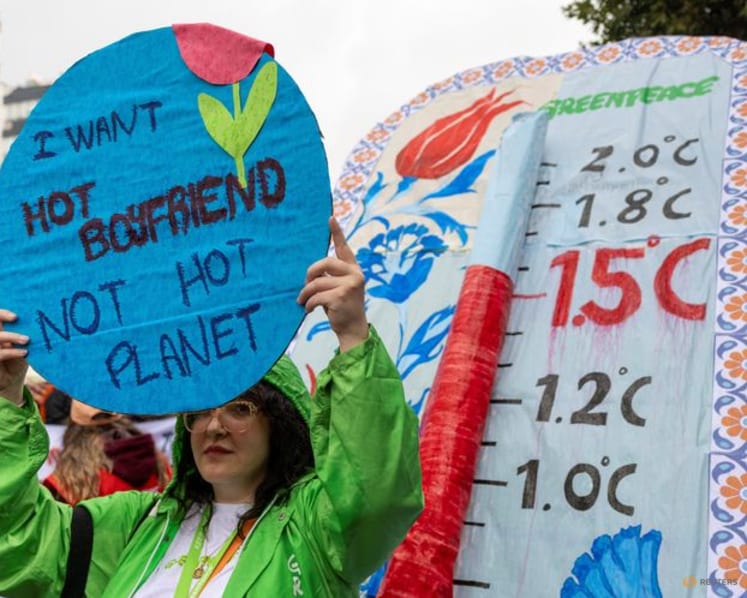
WHEN CONVENIENCE GETS IN THE WAY
In CNA's conversations with about 20 Singapore residents, many said that practising the 3Rs required considerable planning and effort.
Although some practise sustainable habits from time to time, they can struggle to maintain them in the midst of everyday demands.
Ms Clara Lim, for example, has become less consistent about using reusable cups and food containers since she started working.
The 28-year-old dog trainer said that during her university days, she was quite passionate about the 3Rs, bringing her own containers, separating recyclables from her rubbish and setting aside time to take them to recycling bins.
"But nowadays, I don't bring my own cups or containers as much as I used to because of inconvenience or because I'm forgetful," she said.
"I move around a lot for work. Sometimes I have to leave home by a certain time, and I'm not always consistent about waking up early enough to wash my cup or container.
"Eventually, it became more convenient to just buy a drink in a disposable cup or take away food without a container."
The experiences of Ms Lim, Ms Sorfina and Mr Lee largely tally with the survey's findings on the barriers to recycling:
Over the years, various measures have been introduced to make recycling more accessible to Singaporeans.
Since the launch of the National Recycling Programme in 2001, Singapore has expanded its household recycling infrastructure, with public waste collectors now required to provide at least one blue recycling bin at every Housing and Development Board block. The authorities have also deployed additional bins at around 700 locations and increased collection frequency at more than 1,100 locations to address overflowing bins and higher demand.
Beyond the blue bins, there are about 870 e-waste collection points across Singapore, at locations such as community centres, shopping malls and electronics retailers.
Separately, social enterprise Cloop and its partners operate around 450 textile recycling bins islandwide, according to the organisation's website.
There is also no shortage of online resources to guide residents.
The National Environment Agency (NEA) has a Recycling Search Engine to help the public check what can and cannot be recycled, as well as a Bloobin AI chatbot on WhatsApp and Telegram that allows users to describe or upload pictures of items for recycling advice.
NEA also provides online maps to help residents locate recycling and collection points for different types of waste.
But the availability of these facilities and information does not necessarily mean that people will make use of them, experts said.
Associate Professor Terry Van Gevelt, who specialises in urban sustainability at Singapore Management University (SMU), described the situation as the "classic value-action gap", where many want to recycle more than they do, but are held back by certain barriers.
He said that while online resources and dedicated recycling collection points are useful, accessing them often requires additional effort, such as stopping to look up information or travelling to a collection point.
These extra steps create what he described as "cognitive friction", where people are more likely to default to the easiest option, which is often throwing the item into a rubbish bin.
Instead, he suggested designing recycling systems so that the right information and disposal options are available when people decide what to do with an item, making it easier and more intuitive to recycle correctly.
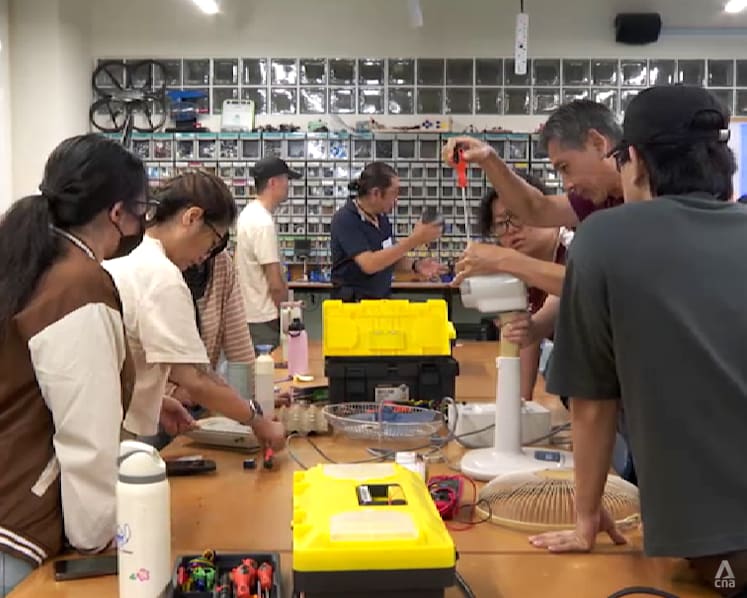
For Madam Chan Yuet Ngoh, a 69-year-old cleaner, the motivation to reduce waste comes from thrift rather than environmental concerns.
Such habits were also more prevalent among older respondents in the Mediacorp-YouGov survey, with 76 per cent of baby boomers and those from the silent generation – those born between 1918 and 1945 – saying that they avoided buying more than they needed every time or most of the time, compared with 61 per cent of Gen Z respondents.
Mdm Chan, who grew up in a low-income family, reuses plastic bags multiple times and brings her own containers when buying takeaway meals to save money.
"Times are tough. A meal already costs $5, and if you have to pay another 30 cents for the takeaway container, that's $5.30," she said.
"You pay 30 cents for the container, use it once and then throw it away. It's very wasteful."
Dr Corinne Ong, a senior lecturer at the National University of Singapore's (NUS) Residential College 4, said such habits could reflect the circumstances in which older Singaporeans grew up.
Having experienced a less affluent society, they were more likely to have been brought up valuing thrift, unlike younger generations raised amid a more pervasive consumer culture, she said.
The Mediacorp-YouGov survey also found that 29 per cent of Gen Z respondents believed individual actions could make the biggest difference in environmental sustainability, compared with 15 per cent of baby boomers and those from the silent generation.
While motivations for practising the 3Rs vary, Assoc Prof Van Gevelt argued that public education campaigns alone have their limits, as knowing what to do does not necessarily mean people will follow through.
Rather than focusing on further awareness campaigns, he suggested improving the way recycling systems are set up so that the environmentally responsible choice is also the easiest to make.
Mr Yasser Amin, chief executive officer of environmental organisation Stridy, pointed to Singapore's efficient waste-management system as a possible reason recycling has yet to become an ingrained habit.
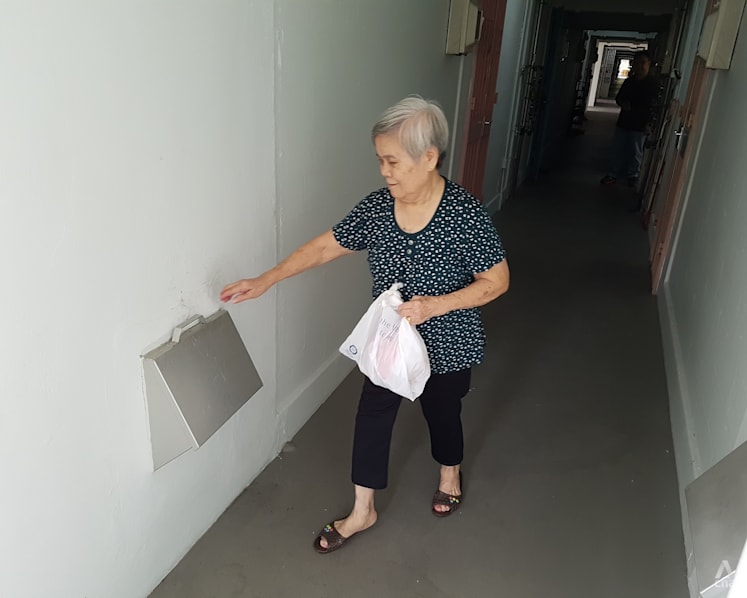 Singapore's efficient waste-management system makes disposing of rubbish convenient, but environmental experts say this may also discourage residents from making the extra effort to recycle. (Photo: CNA file)
He noted that Singaporeans have grown accustomed to the convenience of simply throwing things away, without having to think about what happens to their rubbish afterwards.
"Our single-chute system (in public housing blocks) makes disposing of rubbish incredibly easy," he said.
"We're so efficient at managing waste that recycling becomes deprioritised."
RECYCLING MISCONCEPTIONS AND MISTRUST
Some Singapore residents struggle to identify what can and cannot be recycled. Others are sceptical about whether their efforts would make a difference.
Uncertainty over recycling rules sometimes discourages Mr Dion Heng, 26, a first-year PhD student at NTU's School of Mechanical and Aerospace Engineering, and recent graduate Annabelle Lee, 23, from recycling altogether.
Mr Heng said he would rather throw potentially recyclable items into a general rubbish bin than risk contaminating an entire batch of recyclables.