
In brief: Ukraine has defended its naval drone operation against Russian military assets near Libya, saying the strikes were a legitimate act of self-defense and did not target Libyan interests. Kyiv blamed Moscow’s military presence and weapons shipments for exposing Libya to security risks.
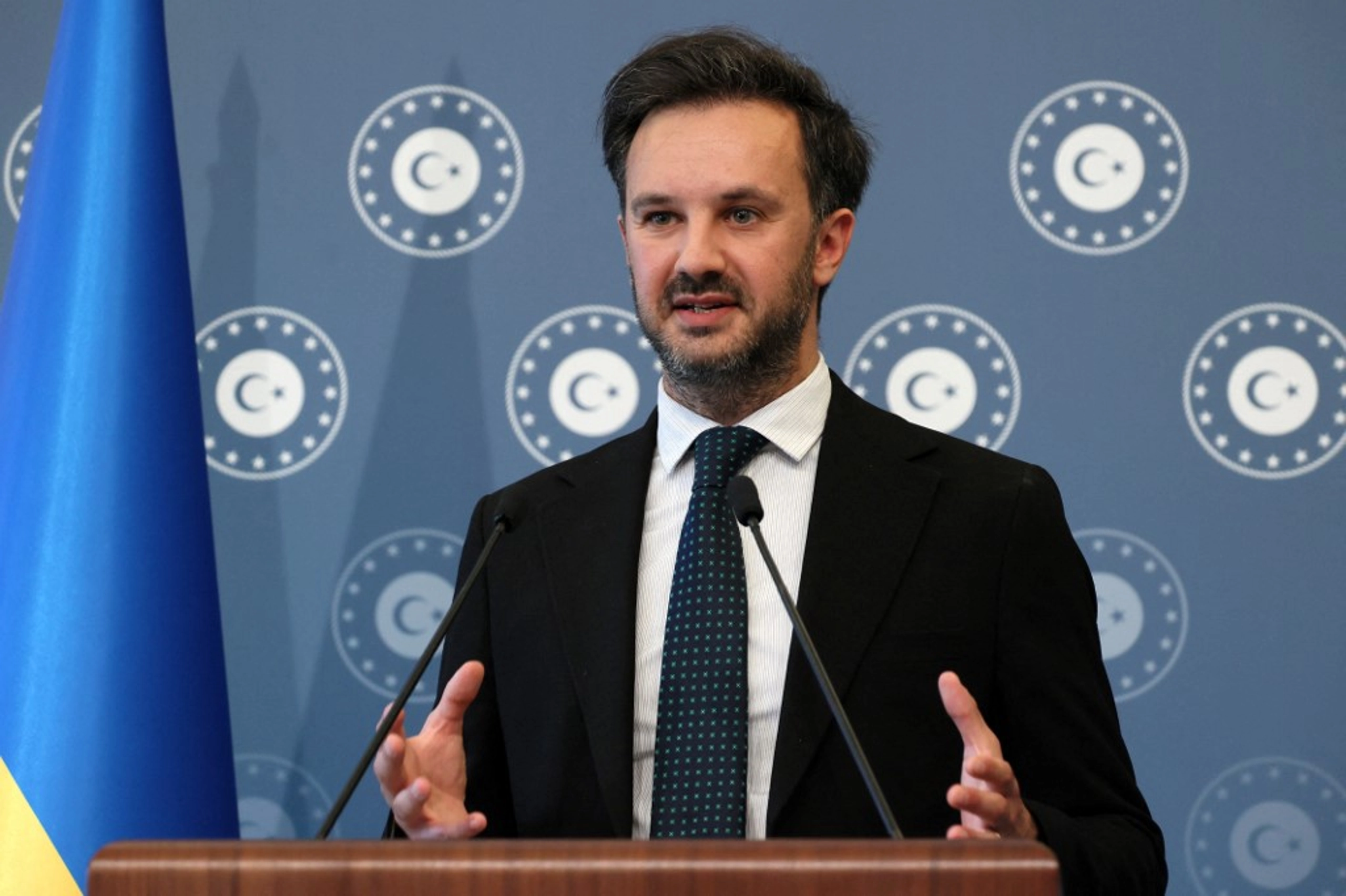
Ukraine has rejected accusations that its military operations against Russian naval assets near Libya threaten the country’s sovereignty, arguing that Moscow’s growing military presence and weapons shipments cause the real danger to Libyan security.
Ukrainian Foreign Ministry spokesperson Heorhii Tykhyi said Kyiv’s actions were conducted under its right to self-defense, guaranteed by Article 51 of the UN Charter, and targeted exclusively at Russian military objectives.
Follow our coverage of the war on the @Kyivpost_official.
“Ukraine is not dragging anyone into the war and is not moving the war anywhere,” Tykhyi told journalists on Tuesday, Nov. 24, as reported by Interfax Ukraine.
He said Ukraine’s targets included Russian military vessels, cargo ships transporting military equipment and resources, and shadow fleet tankers supporting Moscow’s war effort.
Tykhyi added that international law does not restrict a state’s right to self-defense based on the geographical location of a response, whether on the territory of the attacked state, the aggressor’s territory or international waters.
He also said Ukrainian operations comply with international humanitarian law, including the principle of proportionality, and that their goal is to reduce risks to third parties, according to state media Ukrinform.
Responding to concerns raised by Libyan officials, Tykhyi argued that responsibility for the security risks surrounding the incident should be directed at Russia. He accused Moscow of using civilian infrastructure in third countries to support military operations, exposing those countries to potential danger.

“The threat to Libya was created by Russian military vessels and Russian arms carriers that regularly arrive there,” Tykhyi said.
The corvette involved was the Russian Navy’s Merkury, a guided-missile warship. On Nov. 22, an explosion and fire were reported aboard the vessel while it was docked at the port of Benghazi. Satellite imagery and subsequent footage showed that the ship had sunk alongside the pier.
According to Tykhyi, Russia systematically uses its military presence and logistical infrastructure abroad, particularly in Africa, to support military operations and strengthen its capacity to continue its war in Ukraine.
In January 2025, Ukraine’s Main Directorate of Intelligence (HUR) reported that Russian military units stationed at the Port of Tartus in Syria were preparing to relocate to Africa following the collapse of the Moscow-backed Bashar al-Assad regime.
According to Ukrainian intelligence, several Russian vessels were expected to arrive in Tartus to transport personnel, military equipment, and weapons from Syria to Libya.
By April 2026, reports suggested that Ukraine was also expanding its security and military cooperation in Libya, sending more than 200 Ukrainian officers and military specialists to operate in western Libya. The reported deployment included personnel at a military air academy in Misrata, a drone operations facility near the coastal city of Zawiya, and a coordination site in Tripoli.
Ukraine’s HUR did not publicly confirm the reported deployment.
However, in March 2026, Ukrainian naval drones reportedly struck a Russian gas tanker using a covert base in Libya. The tanker was subsequently reported drifting in the Mediterranean after the attack. Kyiv has not publicly confirmed its involvement in that operation.
Libya’s power divisions give Russia room to expand military presence
Libya’s fragmented political and security structure has made the country an important arena for competition between foreign powers.
Since the 2011 overthrow of longtime ruler Muammar Gaddafi, Libya has remained divided between rival political administrations.
The internationally recognized Government of National Unity operated from Tripoli in the west, while a parallel administration based in eastern Libya is backed by military commander Khalifa Haftar.
Haftar’s forces control substantial territory, military assets and key oil infrastructure, making him one of the country’s most influential figures despite not formally heading a nationally recognized government,
Russia has developed close ties with Haftar, providing military support and maintaining a presence through Russian personnel and affiliated forces.
A March 2026 article by The Guardian described how Moscow supported competing interests in Libya, while Russian personnel helped protect Haftar’s oil infrastructure and participated in regional military operations.
Kyiv Post is Ukraine’s first and oldest English news organization, reporting since 1995. Its international reach – 90% of readers are outside of Ukraine – make it truly Ukraine’s global voice.